
Estimated reading time: 4 minutes
Despite the below average rainfall realised between February and March in Limpopo this year, developing producers are gearing up for the potato planting season. With its rich soils and favourable climate, the Capricorn District is a prime region for potato cultivation, contributing significantly to the province’s agricultural output. However, successful potato farming requires careful planning, preparation and execution.
Irrigation planning
Potatoes SA realised that most developing producers under its programmes who plant between March and June, depend on the last rains of summer before starting to prepare land and enable savings on electricity.
Given the low rainfall in February and March, producers are expected to incur more costs than usual when irrigating the fields using pivots, before ripping and discing the soil. With underground water levels also expected to be under pressure towards the third quarter of the year, producers are continuously advised to plant manageable hectares.
The heatwave experienced between late February and early March made it unfavourable for most developing producers to plant early crops. This was coupled with a shortage of certified seed. The need for crop rotation remains essential, and diversification is encouraged.
Planning ahead
An Enterprise Development producer, Solomon Makobela, said he is currently harvesting butternuts and peppadews to maintain cashflow in these uncertain periods. He plans to plant potatoes in May on his new fields that still require ripping and discing. Although he has an irrigation system in place, he hopes for more rain to fall.
With last year’s better prices, sufficient returns were realised to settle portions of debts and reinvest in infrastructure, said most producers in the Capricorn District who also received support from Potatoes SA, the Department of Agriculture, Land Reform and Rural Development, and AgriEnterprises.
Producers are advised to assess the soil and climate conditions specific to their region before they start planting. Limpopo’s diverse landscape has different soil types and microclimates, which can significantly impact potato growth. Conduct soil tests to determine pH levels, nutrient content, and soil structure.
Potatoes thrive in well-drained, sandy loam soils with a pH between 5 and 6.5. Developing producers also need to familiarise themselves with Limpopo’s climate patterns. Foremost, they need to monitor weather forecasts regularly to plan planting dates, and avoid extreme temperatures and frost risks.
Seed selection and preparation
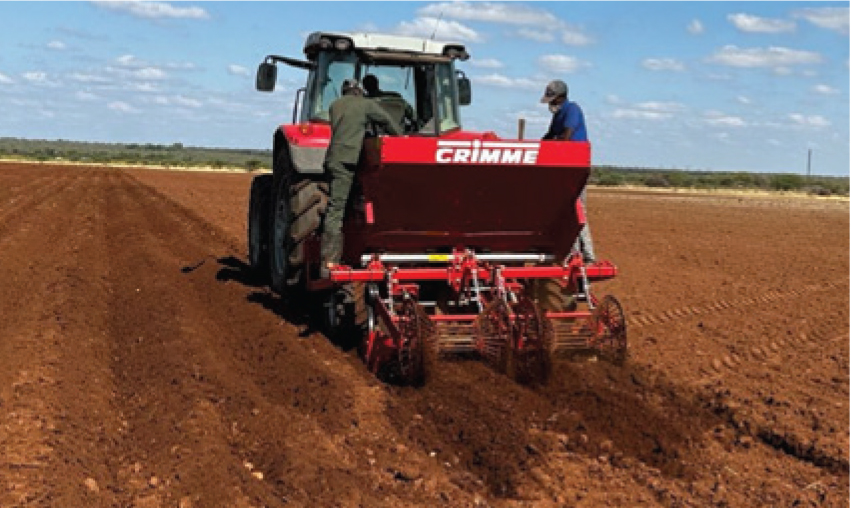
Selecting high-quality seed potatoes is fundamental to a successful harvest and producers should choose certified seed potatoes from reputable suppliers to ensure a disease-free crop. Varietal selection depends on factors such as market demand, disease resistance, and suitability to local conditions. Popular varieties in Limpopo include Mondial, Sifra, and Panamera. New cultivars are also currently being introduced. In Limpopo’s sandy soils, ridge planting is commonly preferred as it improves drainage and soil warming.
Producers often plant seed potatoes in rows spaced around 90 cm apart, with seed placed 25 to 35 cm apart in the row. To avoid sunburn, ensure proper seed depth by burying seed potatoes approximately 10 to 15 cm deep, and irrigating immediately after planting to encourage germination and establishment. Diligent crop management practices are essential to promote vigorous growth and minimise pest and disease incidence.
Fertilisation and pests
Producers need to implement a comprehensive fertilisation programme based on soil test results and crop nutrient requirements. Monitor plants regularly for signs of pests such as aphids, potato tuber moths, and nematodes. Employ integrated pest management strategies as needed. Common potato diseases in Limpopo include late and early blight, and bacterial wilt, which can significantly impact yields if left unchecked.
Preparing for the potato planting season in Limpopo requires careful attention to detail and adherence to best agricultural practices. By understanding soil and climate conditions, selecting quality seed potatoes, and implementing proper land preparation and crop management techniques, producers can optimise yields and ensure a successful harvest. – Rachichi Marokane, national transformation co-ordinator, Potatoes SA
For more information, email rachichi@potatoes.co.za.