
Estimated reading time: 9 minutes
The Potato Industry Development Trust (PIDT) has made significant progress in building a well-educated, skilled workforce for the potato industry. Recognising the need for research, innovation, and specialised expertise, the Potatoes SA bursary programme was introduced to support undergraduate and postgraduate students in fields that contribute to the sustainability and growth of the potato industry. Managed by Potatoes SA in a transparent and equitable manner, this bursary programme provides financial assistance to students, particularly those from previously disadvantaged backgrounds, giving them the opportunity to pursue their studies without financial strain.
The initiative does not just address immediate skills and research needs; it also fosters long-term industry development by equipping students with practical knowledge, professional networks, and industry exposure.
2025 bursary induction
Fifteen students received bursaries in 2025, seven of which are undergraduates and eight postgraduates. Understanding that funding alone is not enough, the PIDT afforded the students greater exposure to the potato industry through its bursary induction programme held from 20 to 23 July.
The journey began at Grow Fresh Produce Agents at the Johannesburg Market, where students got a behind-the-scenes look at the fresh produce value chain in action. Under the guidance of Deon van Zyl, Grow’s chief commercial officer, they learned that this market is the biggest fresh produce market in South Africa and in the world. It serves as a central trading hub for fresh produce from all over South Africa, receiving fresh produce from more than 5 000 producers.
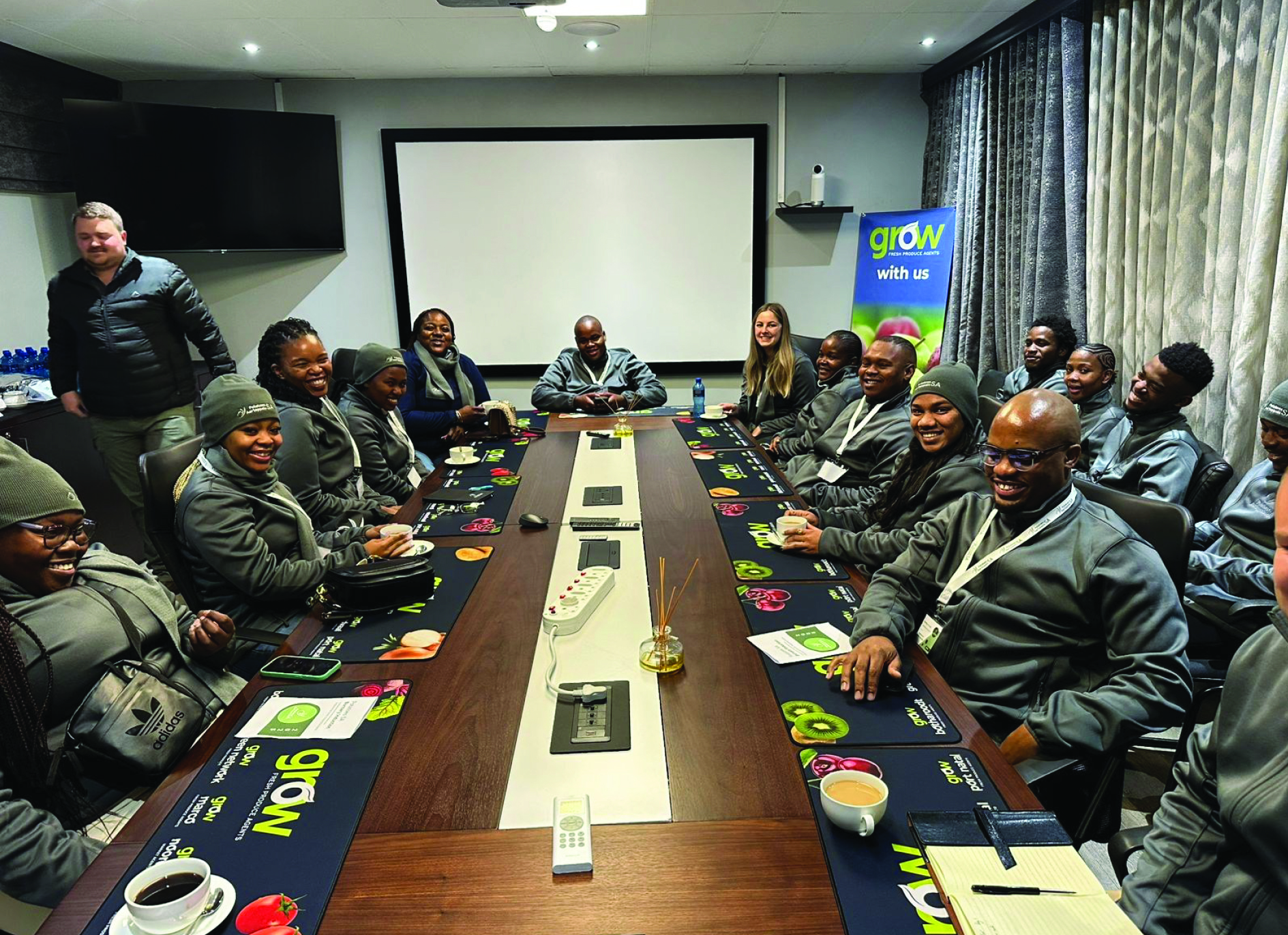
They also learned about the Agricultural Produce Agents Act, 1992 (Act 12 of 1992) which protects producers and affords them the right to see market transaction reports, prices paid for produce, and commissions charged.
The route then took the students to Nile.ag where they could explore how an African digital marketplace connects producers directly to buyers, affording the producers less reliance on traditional markets and agents by allowing them greater control over pricing and distribution.
The next stop was the Potatoes SA headquarters, where students learned about the organisation’s work in research, transformation, marketing, information, and industry development.
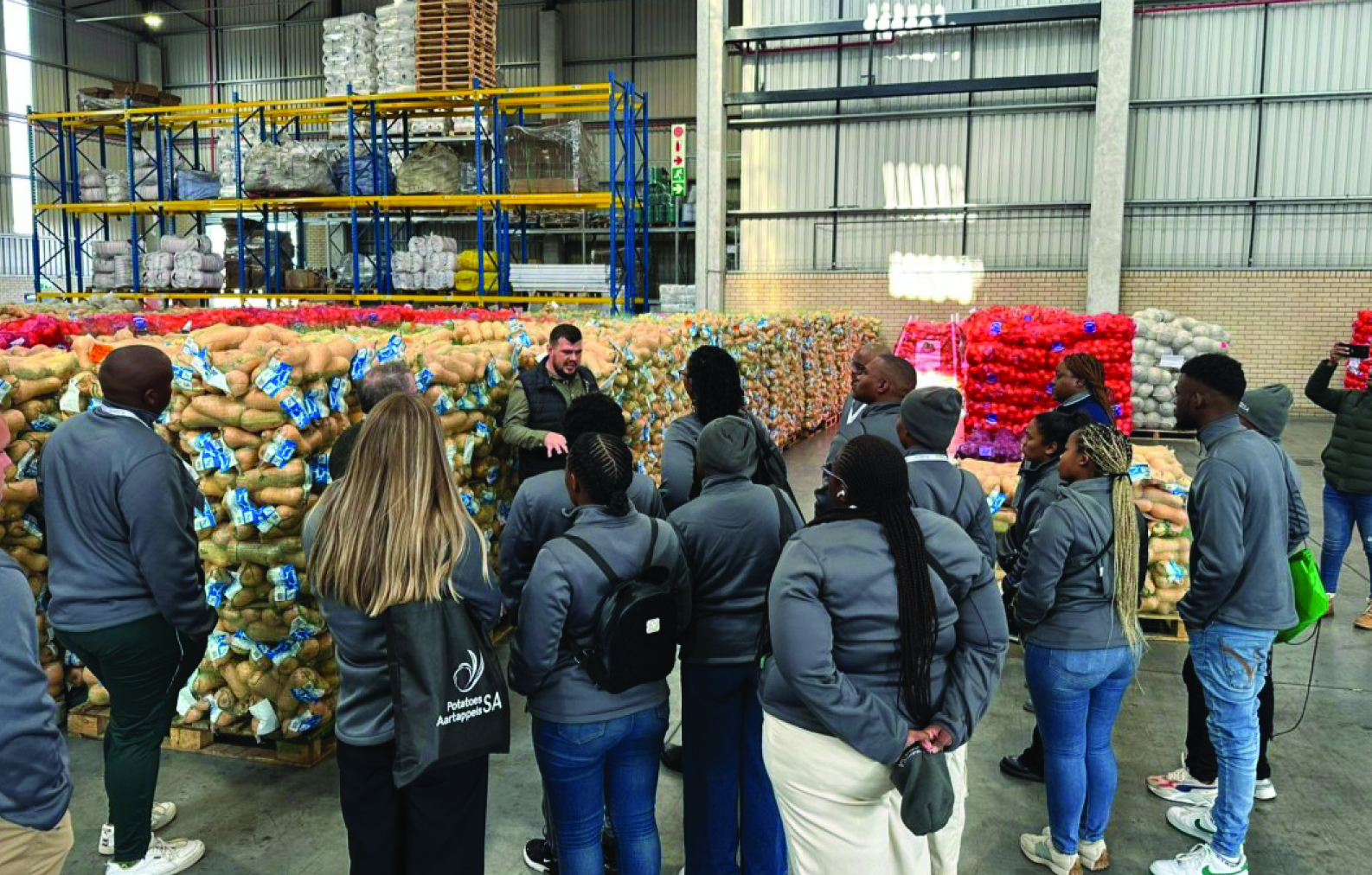
The second day started with a visit to Syngenta, where representatives provided insight into the world of crop protection. At the National Agricultural Marketing Council (NAMC) students were introduced to this agency’s work in supporting the development of the agricultural sector by providing market information and price trends to producers to assist them in their marketing efforts and planting decisions.
The next stop was the Agricultural Research Council (ARC) which included a tour of the potato gene bank, where cultivars are preserved for future generations. The students were told about the ARC’s research and the important role it plays in South Africa’s potato production industry. Among others, it is involved in developing improved potato varieties and new high-yielding, pest- and disease-resistant cultivars.
The final stop was Plantovita where the students were able to witness firsthand how early disease detection in potatoes is achieved through laboratory testing. Plantovita plays an important role in seed potato quality assurance in South Africa, protecting producers and the industry by way of stringent disease and certification testing, protocols, and quality standards.
From 23 to 24 July the studstudents were able to attend the annual Potatoes SA Research Symposium held at the Council for Scientific Industrial Research (CSIR)’s International Convention Centre.
The postgraduate student group was given the opportunity to present their research and interact with industry experts. Tanja du Toit, supported by her supervisor Debora van der Merwe, presented impactful research.
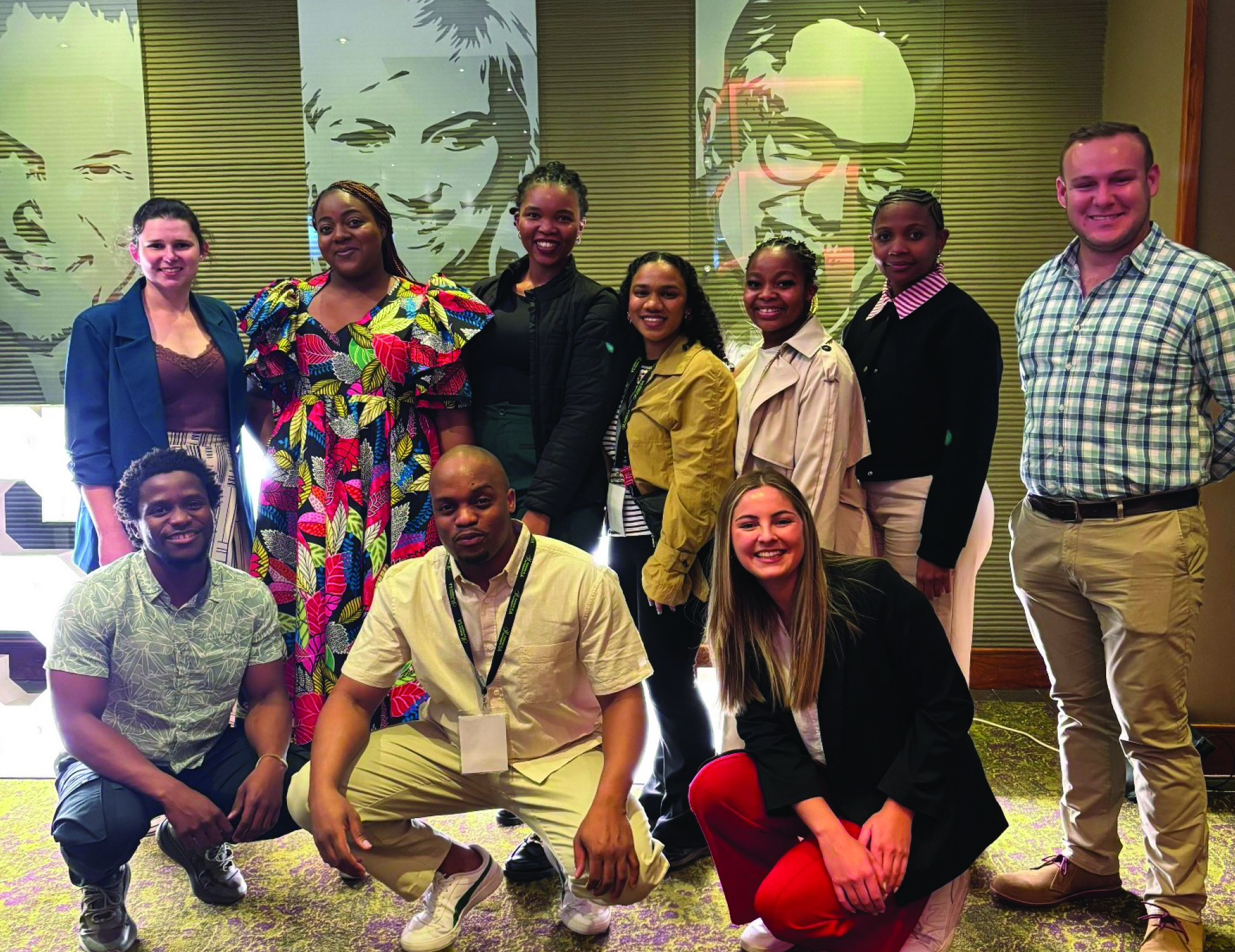
Who better to give feedback on this year’s induction session than the students who were part of it? We asked a number of the participants to share their insights and convey what they have learned.
Thoba Bonkosi Tumbo, BSc Soil Science, University of Venda
During the Potatoes SA bursary induction, I learned about the Joburg Market, which I previously didn’t know existed. I discovered how prices for fresh produce are determined and how green bananas are ripened using ethylene gas, unlike the household method of wrapping. As a soil science student, I was not aware of regulated diseases, so learning about bacterial wilt and the different potato varieties was very informative.
Chelsea Laura Mbhokota, BSc Plant Production, University of Limpopo
I learned that gene banks play a crucial role in preserving different varieties of crops such as potatoes to protect their genetic diversity. At the ARC gene bank, I observed how these conserved potatoes are used to develop new varieties that are resistant to diseases and better adapted to changing environments. I also learned how these cultivars are cloned using different propagation methods to produce healthy planting material.
Junior Dalamba, Diploma in Mixed Agriculture, Potchefstroom College of Agriculture
At Syngenta, I gained knowledge of how artificial intelligence is used in agricultural inputs to enhance food security and production. I also became familiar with the procedures of the Potato Certification Service, which proved to be both enlightening and eye-opening. I also learned about the potato seed certification process and how diseases are detected at an early stage to ensure quality and healthy crop production.
Konwaba Sifuba, Diploma in Agricultural Management, Cape Peninsula University of Technology
It was such an informative induction at all the organisations we visited. From what I‘ve learned, perhaps in the next coming years, as I am working hard towards owning my own farming enterprise one day, I will make use of the markets. But first I will learn the mechanics of how the markets actually work, analyse how market prices impact a farmer’s income, and learn how to plan production based on market demand.
Nosipho Phungula, PhD Botany, University of Johannesburg
The bursary induction provided a rare opportunity to visit leading industry facilities, including Joburg Market, Nile.ag, Syngenta, the NAMC, the ARC’s gene bank, and Plantovita, giving me firsthand exposure to the potato value chain. The Research and Innovation Symposium provided an inspiring platform. Through presentations, exhibitions, and networking sessions I was able to learn about the latest research developments, technological advancements, and market trends. The event also allowed me to connect with potential employers and collaborators, opening doors for future career opportunities.
Likhanyise Matebese, MSc Agricultural Economics, University of Free State
The tours provided insight into the potato value chain stages and also highlighted real-world challenges. At the symposium I learned about networking and industry engagement. Interacting with farmers, researchers and other stakeholders illustrated the importance of relationships for knowledge sharing and opportunities. It emphasised how the different agricultural subsectors are linked and shouldn’t work in isolation.
Taryn Jean Armfield, PhD Plant Science, University of Pretoria
The induction and Research Symposium provided the valuable opportunity to meet new peers, form new collaborations, and learn about the various aspects involved in potato production. I have learnt much about aspects such as marketing and economics, as well as the research and career opportunities available in my field of plant pathology. The symposium provided the opportunity to engage with colleagues and research leaders that will help with my PhD study, as well as future research.
Kwenama Buthelezi, PhD Soil Science, University of KwaZulu-Natal
I learned about the marketplace as well as collaboration between Potatoes SA and other organisations. I now have a better understanding of where the funding comes from, and the important role Potatoes SA plays in supporting potato production. I found the research symposium to be highly informative. The study on potato flour was particularly interesting to me. Overall, the symposium gave me a broader perspective on the depth and diversity of potato-related research being conducted.
Gretchen Leila Jeftha, MSc Plant Biotechnology, Stellenbosch University
I learned about the major challenges farmers face, including late blight, soil-borne diseases, and market pressures, and saw how agricultural and biological companies work relentlessly to innovate chemical and biological solutions to support farmers. The symposium was equally impactful, closing knowledge gaps I had about the sector’s current hurdles and future needs. It reinforced how my role as a plant biotechnologist can contribute through research, innovation, and collaboration to building a stronger, more resilient potato industry in South Africa.
Tanja du Toit, MSc Food Science, Stellenbosch University
As a food science student, I don’t often get to see the farming and agricultural side up close, so it was a real eye-opener. I had the privilege of presenting my research alongside my supervisor, Debora van der Merwe, to the largest audience I have presented to so far. What stood out was seeing how everything is connected: from soil health and crop management to innovation and the final food products. It was a powerful reminder that quality food starts long before it reaches our plates.
Ryno van der Merwe, MSc Agriculture, Stellenbosch University
The majority of the companies we visited focussed on the marketing aspect of the industry. It taught me how farmers can access the markets and how the produce is managed there. At the research symposium, the most interesting talk was about the makeshift potato that tracks the movement of potatoes throughout the value chain. I have a big interest in the potato seed certification programme and have already applied for an internship.
Samukeliswe Vilikazi, PhD Soil Science, University of KwaZulu-Natal
I came to appreciate how collaboration is not just about sharing resources, but about building relationships that open doors to mentorship, networking, and future opportunities. Overall, the symposium was not just an event I attended; it was an experience that expanded my knowledge, sharpened my research vision, and reminded me that research is part of a much bigger conversation, one that thrives when we share, connect, and work together towards solutions that benefit society as a whole. – Relebogile Tlomatsane, Potatoes SA
For more information about the bursary programme, send an email to rendani@potatoes.co.za