
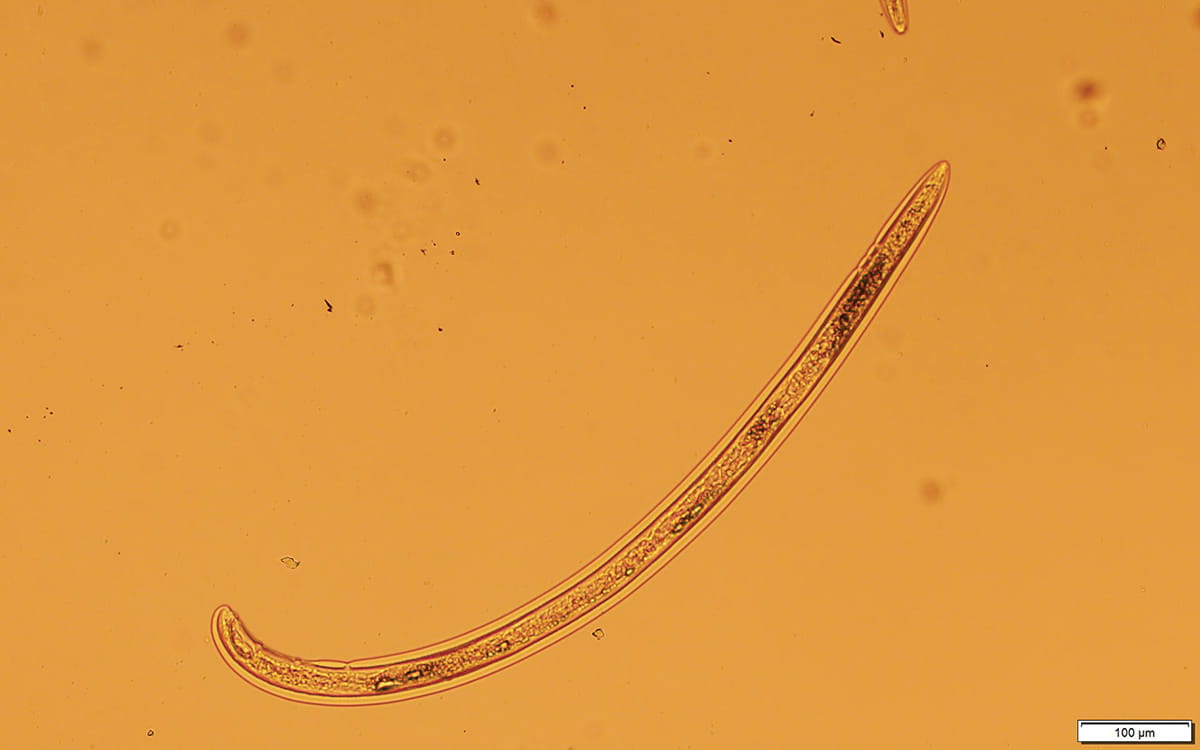
Nematodes: Hidden vectors of PepRSV
Estimated reading time: 6 minutes
Unlike other viruses in South Africa, such as potato virus Y (PVY) and potato leafroll virus (PLRV), tobraviruses, including pepper ringspot virus (PepRSV) and the closely related tobacco rattle virus (TRV), are not transmitted by insects but by nematodes belonging to the family Trichodoridae.
These nematodes are soil-dwelling, plant-feeding nematodes capable of transmitting plant viruses as they feed on roots or other underground plant parts. Although only four nematode species in the family can transmit PepRSV, their impact can be severe and persistent.
Living underground and microscopic, these nematodes often escape notice, allowing viruses to persist in fields for many years (Girgan et al., CHIPS September/October 2025). Recent findings linked to PepRSV in South Africa highlight the importance of understanding these hidden vectors and their role in the spread of disease. Read more about this elsewhere in this issue.
A brief history
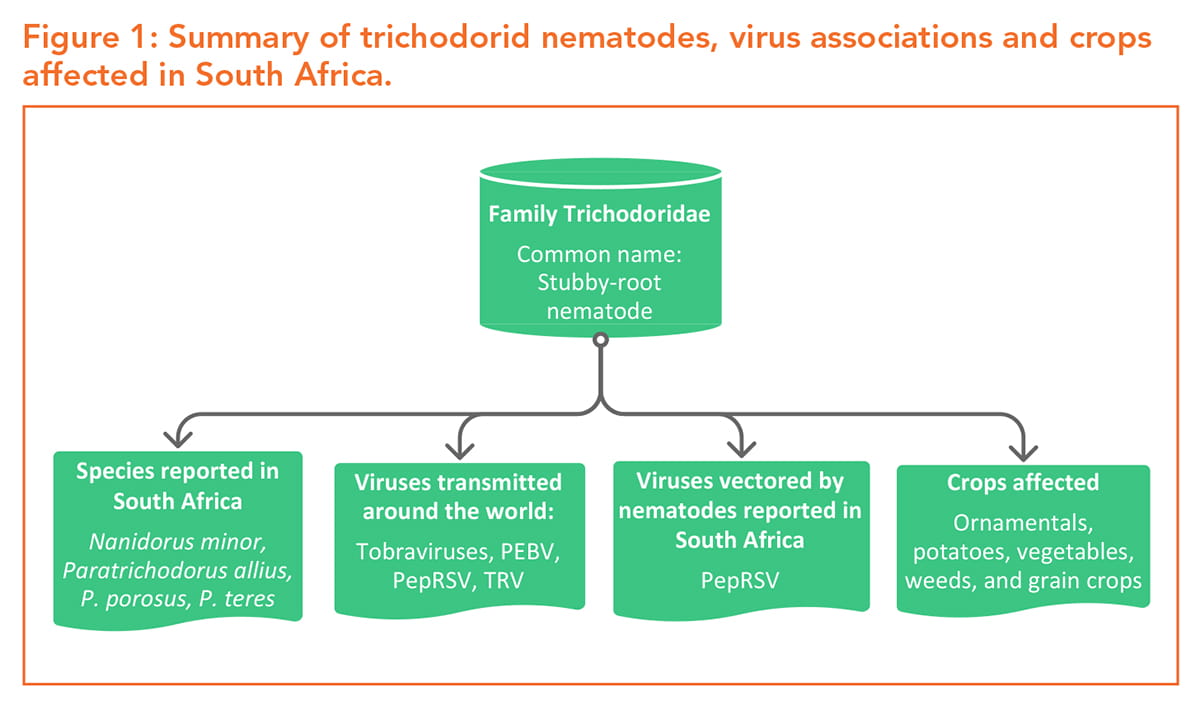
Only two of the 12 plant-feeding nematode families reported from South Africa are known to transmit plant viruses. The family Longidoridae transmits nepoviruses, which are not relevant to potato. Tobraviruses, including PepRSV and TRV, are transmitted by genera in the family Trichodoridae, namely Nanidorus, Paratrichodorus, and Trichodorus (Figure 1).
The first evidence of virus transmission by a plant-feeding nematode was reported in 1958, when Hewitt et al. demonstrated that Xiphinema index transmits grapevine fanleaf virus (GFLV). This discovery laid the foundation for understanding nematode-transmitted viruses, including in South Africa, where GFLV has been reported for decades, and its nematode vector is subject to regulatory control.
Two years later, Sol et al. showed that Paratrichodorus pachydermus could transmit TRV. In 1961 Walkinshaw et al. reported that Nanidorus minor is also a vector of the virus, which causes corky ringspot in potato.
Transmission and persistence
Upon feeding on viruliferous plants, the transformed sap passes through the lumen of the stylet and oesophagus. The virus particles attach to specific sites, such as the onchiostyle and the cuticle lining of the oesophagus. All life stages of the nematodes can acquire virus particles. The virus particles retained by nematodes do not pass through moulting or embryogenesis and are lost when the nematode sheds its internal cuticle.
Interestingly, when a viruliferous nematode feeds on a host, only a small fraction of the virus particles it retains is released and thus available for future transmission. PepRSV and TRV are highly stable and can persist in the field for several years, sometimes even decades, particularly when protected within their nematode vectors or in host weeds.
Long-term field studies on TRV have shown that it can persist in soil for extended periods, often well beyond a single crop rotation cycle. In several European studies, TRV remained detectable and capable of infecting potatoes after five to ten years without a susceptible host crop.
Notably, field trials in Scotland demonstrated that even after five consecutive years of crop rotation with non-host plants, including Medicago species that do not support Paratrichodorus populations, TRV infection re-emerged once potatoes were replanted. These findings highlight the remarkable persistence of TRV in agricultural soils, driven by its association with trichodorid nematode vectors and the presence of alternative host plants, including weeds, which maintain both virus and vector populations over long periods.
Local nematode vectors
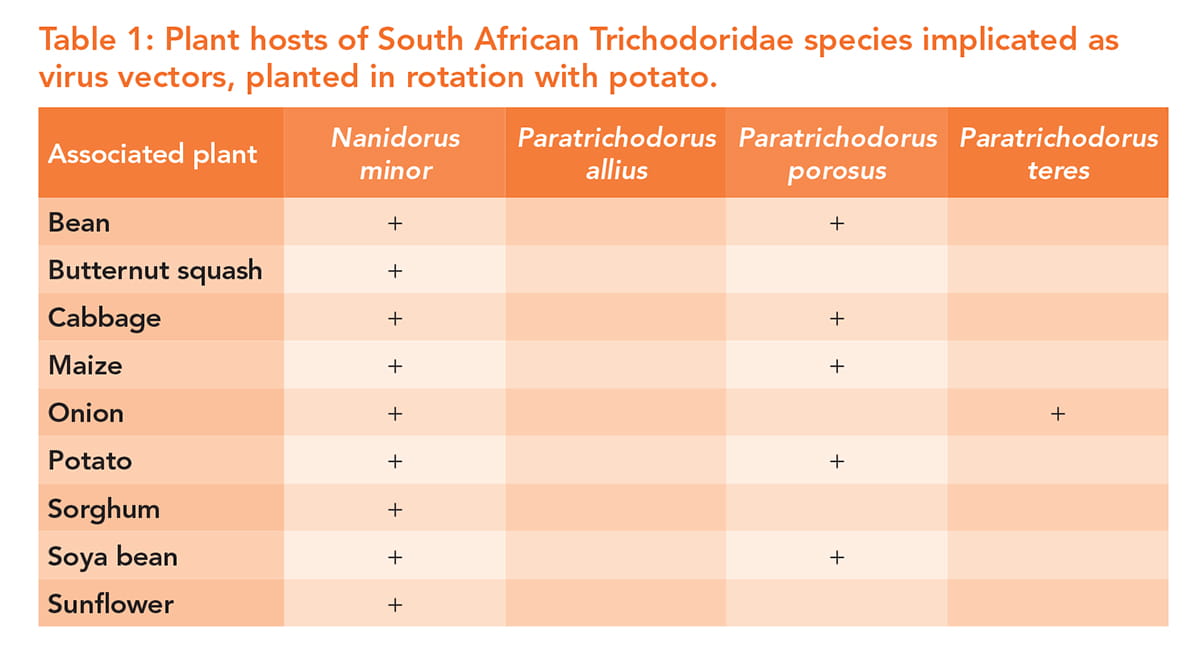
Four species of South African trichodorids (members of the nematode family Trichodoridae) can vector PepRSV and TRV. The trichodorid species implicated as virus vectors in South Africa are polyphagous (Table 1) and distributed across the country (Figure 2).
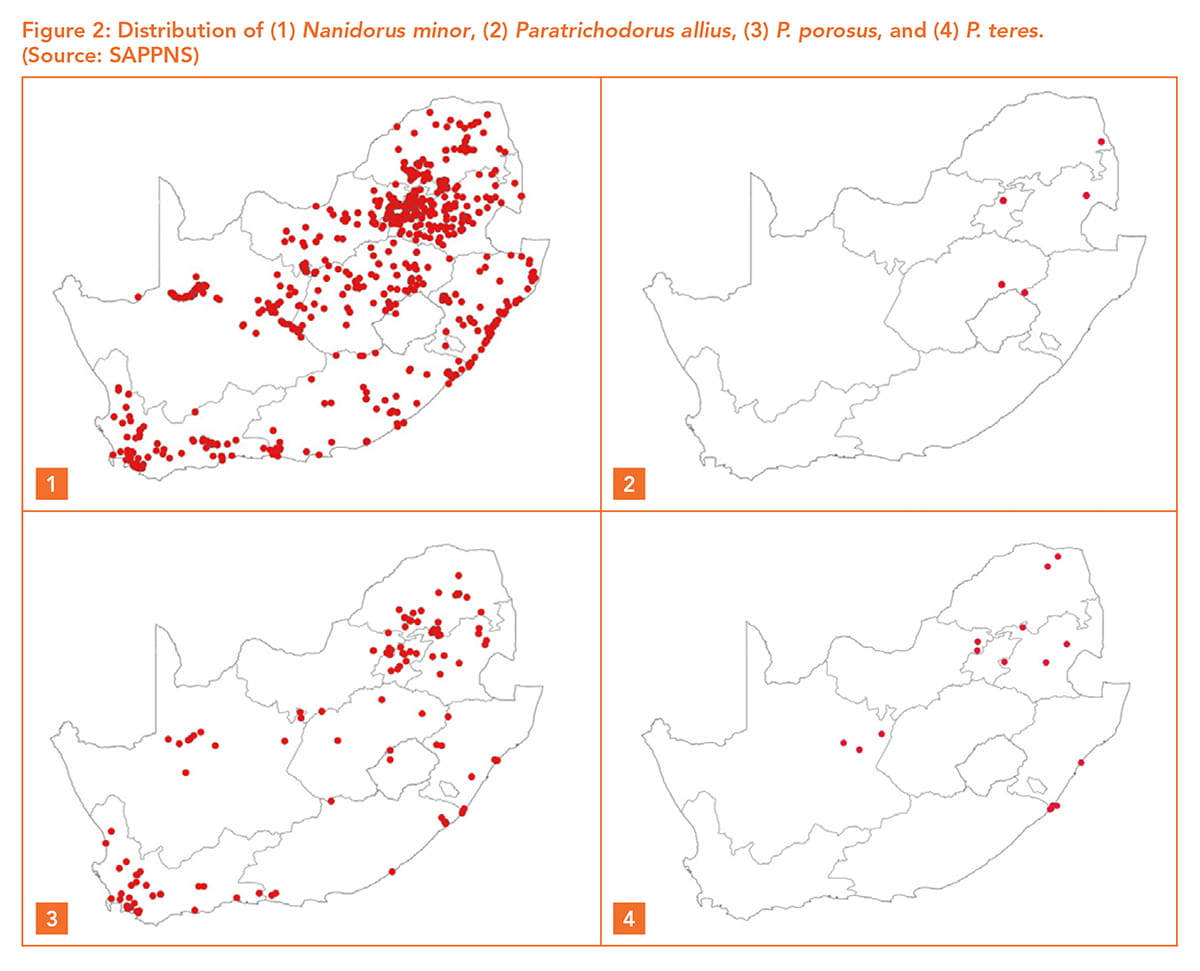
Nanidorus minor can vector both PepRSV and TRV. Research conducted by Dr Lindy Esterhuizen and her team at the Agricultural Research Council’s Plant Health and Protection campus (ARC-PHP) proved the transmission of PepRSV by N. minor in a series of soil transmission experiments, using potato and sunflower as virus sources to various hosts, including tomatoes, spinach, peppers, and several grass crops.
In addition, the presence of PepRSV in the nematode vector was confirmed by reverse transcription polymerase chain reaction (RT-PCR).
TRV can be transmitted by both Paratrichodorus allius and P. porosus, while P. teres is implicated as a vector of pea early browning virus (PEBV); however, these two viruses have not been reported in South Africa.
Primary data on the distribution of plant-parasitic nematodes in South Africa, as well as associated host plants, were obtained from the South African Plant-Parasitic Nematode Survey (SAPPNS) and the National Collection of Nematodes (NCN).
Established in 1987, SAPPNS now includes more than 10 100 data locality points and has documented nematode species across all biomes over nearly four decades (Marais et al., CHIPS September/October 2023). The NCN was established in 1961 and houses almost 200 000 nematode specimens.
Managing trichodorids
Why are genera of the family Trichodoridae hard to manage? We can begin by noting that these nematodes have unique characteristics. Firstly, they are polyphagous, with an extremely diverse host range that includes both monocotyledonous and dicotyledonous plants, thus making crop rotation as a means of nematode control extremely difficult.
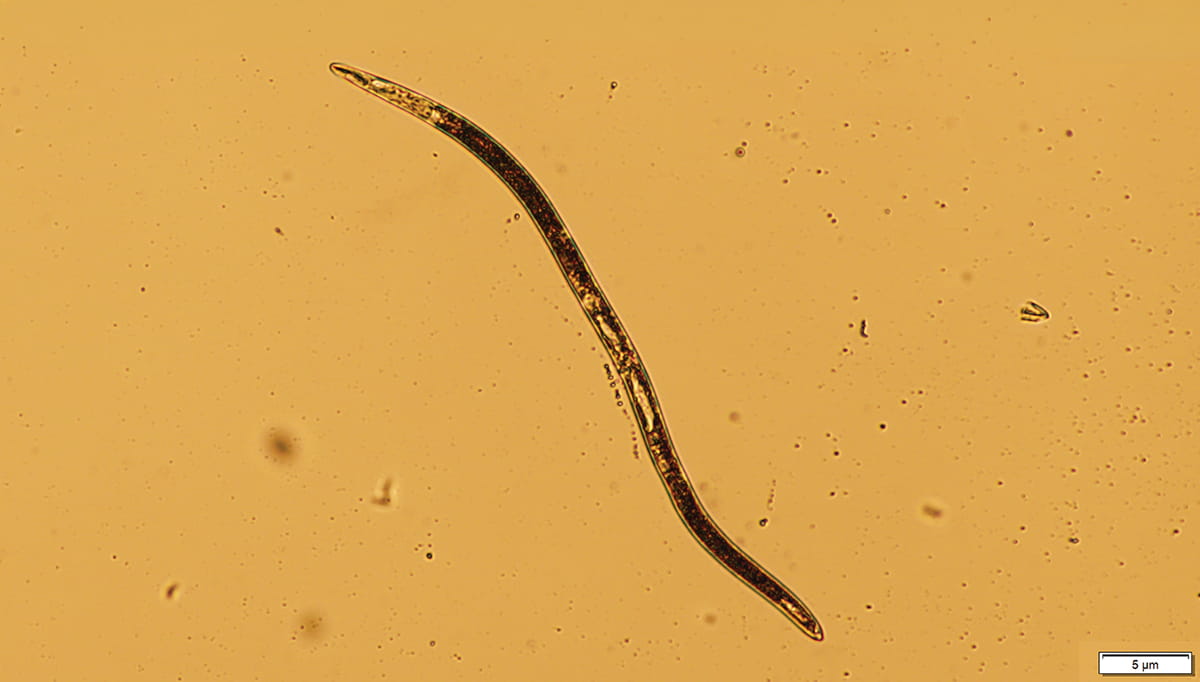
These nematodes can survive in deeper soil layers, migrating vertically to depths of about 60 to 70 cm, particularly in lighter soils or in response to unfavourable surface conditions. This vertical movement allows populations to escape some control measures, such as fumigation or nematicide applications, which are often limited to the upper soil layers. The ability to move through soil layers also enables the nematodes to quickly reach the rhizosphere of newly planted crops.
While nematicides can temporarily reduce trichodorid populations, nematodes in deeper soil layers or those associated with weeds can reinfest the rhizosphere of newly planted crops, making long-term control problematic.
Trichodorids thrive in sandy soils but are also capable of surviving in a range of soil conditions, as reflected in their diverse geographical distribution across South Africa. Limited chemical options along with the need to identify nematode species further complicate management.
Effective management often requires an integrated pest management approach that includes maintaining strict weed control to eliminate potential hosts, using only certified, virus- and nematode-free seed potatoes, and monitoring for the presence of nematodes and the virus.
Conclusion
Managing nematode-transmitted viruses starts with knowing what is present in the soil and planting material entering a production system. The South African Seed Potato Certification Scheme plays a critical role in supplying virus-free planting material and limiting the long-distance spread of these pathogens. Field-level decisions can then be strengthened through soil and plant testing for nematode vectors and viruses.
In this context, the ARC offers diagnostic support to producers, providing testing capacity for both viruses and nematodes to support informed, system-level management. By managing production systems based on sound knowledge of soil, planting material and crop history, long-term disease risk can be reduced more sustainably. – Drs Mariette Marais and Lindy Esterhuizen, ARC-PHP
Send an email to MaraisM@arc.agric.za or esterhuizenl@arc.agric.za for more information or references.