
When the weather moves the goalposts: Lessons from the Northern Hemisphere’s 2026 potato season
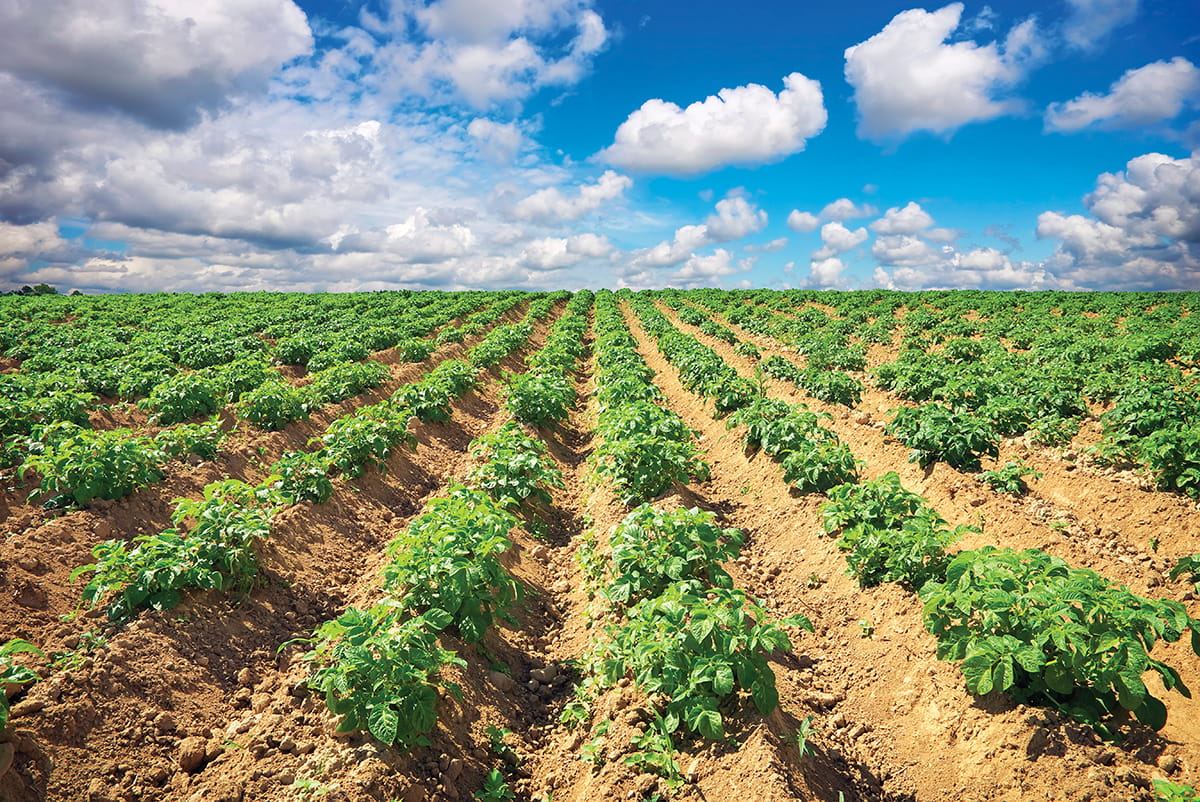
For potato growers, climate change is no longer a distant discussion about what conditions may look like several decades from now. Growers encounter it season by season and field by field, in the timing of rainfall, unusually persistent heat, irrigation demand, planting opportunities, and the difficult decisions they must make before a crop reaches harvest. The 2026 growing season in the Northern Hemisphere provides a particularly revealing example.
It would be misleading to suggest that potato production across Europe and North America has suffered equally this year, while it has not. Some regions have experienced severe drought and exceptional heat, while others have received excessive rainfall or enjoyed relatively favourable growing conditions. That unevenness is perhaps the most important lesson.
Climate risk in potato production does not simply mean that everywhere becomes progressively hotter and drier. It means growers must contend with greater weather variability, more pronounced extremes, and, critically, unfavourable conditions occurring during sensitive stages of crop development. By late August, the effects were becoming evident across several important potato-producing areas in the Northern Hemisphere.
Western Europe takes the brunt
Western Europe has been at the centre of the most serious potato weather story of 2026. According to the Copernicus Climate Change Service (C3S), Western Europe experienced its warmest combined June/July period in the ERA5 record, dating back to 1979.
The two months’ mean temperature reached 21.62°C, which is 2.79°C above the 1991 to 2020 average and almost 0.9°C warmer than the previous June/July record set in 2022.
France, Belgium, parts of Germany, England, Ireland, the Netherlands, and neighbouring production regions endured repeated spells of unusually high temperatures, often accompanied by severe rainfall deficits. For potatoes, the timing could hardly have been worse.
The crop is fundamentally adapted to moderate temperatures. Scientific studies show that temperatures favourable for canopy growth are generally higher than those most favourable for tuber initiation and bulking. Extended periods of high temperatures can delay tuber initiation, alter carbohydrate movement from foliage into tubers, and reduce both tuber growth and dry-matter accumulation.
Water stress compounds the problem. A potato crop has a relatively shallow root system compared with many field crops and can therefore respond quickly when available soil moisture declines.
When high temperatures increase evapotranspiration while rainfall disappears, irrigation demand rises rapidly. That combination was widely observed in Europe this summer.
The European Commission’s Joint Research Centre reported in August that persistent heat and exceptional water deficits had substantially worsened prospects for summer crops across western and much of central Europe. Cooler weather and rainfall arriving later in the season could provide some relief, they noted, but in the worst-affected areas, much of the damage had already occurred.
France
France has offered perhaps the clearest indication yet of what extreme weather can mean for potato production.
On 24 August, Reuters reported estimates from the French potato growers’ organisation UNPT, indicating that the country’s 2026 main potato crop could be approximately 23% smaller than in 2025 – a reduction of roughly two million tonnes.
The organisation attributed the expected decline mainly to exceptionally hot, dry summer conditions. Those figures remain estimates, not final harvest results, but the scale is significant. France has become one of Europe’s largest potato producers and an important supplier to the rapidly expanding French fry processing industry.
What happens in French fields therefore has consequences well beyond the farm gate. Reduced yields can tighten raw material availability for processors, influence potato prices, and alter trade flows between neighbouring European countries. At the same time, growers may incur much higher production costs when they need irrigation simply to keep crops growing. This is an important distinction: A crop that survives drought is not necessarily an economically successful crop.
Belgium, the Netherlands, and Germany
Across the wider north-west European potato belt, reports in July and August described crops under increasing moisture stress. However, conditions have varied considerably, even within relatively small geographical areas. Soil type, planting date, variety, rooting depth, irrigation capacity, and highly localised thunderstorms have created enormous differences between fields.
Trial digs reported from Belgium during early August illustrated the problem. Trading company Bruwier Potatoes reported a net yield of 27.6 t/ha during week 31, substantially behind the previous season at the comparable stage. Elsewhere, irrigated crops have generally performed better than fields without irrigation, although irrigation itself has become a complicated component of the climate equation.
During prolonged drought, water availability can become restricted precisely when crop demand is greatest. Growers must then weigh the value of additional irrigation against water availability, energy costs, and the crop’s remaining yield potential. It is a situation that will sound familiar to many South African producers.
Britain and Ireland
Perhaps one of the more striking aspects of the 2026 season has been the intensity of drought in areas not normally associated with prolonged summer water shortages. England recorded its driest July on record, according to official Environment Agency reports. By mid-August, rainfall for the month to date amounted to only 17% of England’s long-term average, putting pressure on river flows, groundwater resources, and reservoir levels.
Potato growers faced declining soil moisture, irrigation restrictions in some catchments, and difficult decisions about maintaining crops late into the bulking period.
Ireland experienced similar concerns. In August, the Irish Farmers’ Association reported that potato crops in numerous regions were under significant moisture stress. In some areas, potential yield reductions of up to 40% were discussed, although the association cautioned that the full impact would only become evident as the maincrop harvest progressed.
This illustrates another recurring problem with reporting weather-related crop losses: Dramatic early estimates should not automatically be confused with final national production figures. Potato crops can recover surprisingly well if rain arrives at the right time. Conversely, a crop that appears healthy above ground can disappoint when it is eventually lifted. For that reason, the final 2026 European production picture will only become clear once harvest data are available.
North America
Cross the Atlantic, and the situation becomes considerably less uniform.
According to Statistics Canada, the country planted roughly 395 176 acres (159 922 ha) of potatoes in 2026, down only 0.5% from the previous year. Alberta, Prince Edward Island, and Manitoba remain Canada’s three largest potato-producing provinces by planted area.
Weather conditions have varied sharply between these regions and even within individual provinces. Agriculture and Agri-Food Canada (AAFC)’s August agroclimate assessment described drought and water restrictions in parts of British Columbia, while portions of the Prairies experienced earlier excess moisture, flooding, hail, and severe storms. Extremely high temperatures in several areas accelerated crop development.
Manitoba provides an interesting example of how complicated the relationship between weather and potatoes can become. The province’s late-August potato report indicated large differences in seasonal rainfall between production areas. Since May, some locations had received only about 60 to 70% of normal precipitation, while others exceeded 130%.
Early-season heat and high soil moisture had affected Russet Burbank tuber size profiles in some fields, according to Manitoba Agriculture. Yet by late August, cooler nights combined with daytime temperatures in the mid- to upper-20s were creating favourable conditions for rapid tuber bulking in later crops.
In other words, difficult early-season weather did not necessarily translate into crop failure. That nuance matters.
The Pacific Northwest
The major potato-producing region of the northwestern United States offers another contrast. Idaho experienced persistent heat during July and early August, raising concerns about crop development. Reports from the region indicated that growing conditions had been favourable through June before sustained summer heat became an increasing concern.
Washington State, however, reportedly experienced generally favourable conditions, with early-harvested crops showing good yields and large tuber sizes. This illustrates why broad statements such as “climate change is reducing potato yields in the Northern Hemisphere” are too simplistic.
Weather operates locally, and agriculture operates locally. The same atmospheric system may bring drought to one production region, excessive rainfall to another, and near-ideal growing conditions somewhere in between.
Why heat matters
Nevertheless, potato growers are watching rising temperatures closely for a biological reason. Potatoes evolved as a relatively cool-season crop. Research reviewed by AAFC scientists shows that temperatures of about 15 to 20°C are particularly favourable for tuber growth, while much higher temperatures can interfere with tuberisation. The effect depends on cultivar, crop stage, heat-event duration, and night temperatures.
The last factor deserves particular attention. A hot afternoon followed by a cool night is physiologically very different from a crop experiencing both hot days and persistently warm nights. Cooler nights allow respiration to decline and generally favour tuber growth. Where nighttime temperatures remain elevated, plants consume more of the carbohydrates produced during the day rather than storing them in developing tubers.
The implications extend beyond t/ha. Heat and moisture stress can influence tuber size distribution, dry matter, specific gravity, secondary growth, and processing quality. A crop may therefore achieve an acceptable gross yield while still failing to deliver the size or quality profile a particular market requires.
Is this climate change?
Here, some caution is necessary. No responsible assessment can attribute every drought, heatwave, storm, or disappointing potato crop directly to climate change. Weather has always varied, and potato producers have always dealt with difficult seasons. What has changed is the background climate in which weather events now occur.
C3S calculated that the global average surface temperature in July 2026 was roughly 1.47°C above the estimated 1850 to 1900 pre-industrial average. Western Europe’s extraordinary June/July heat occurred within that warmer global climate.
Climate science indicates that continued warming increases the likelihood and potential intensity of many heat extremes while also altering evapotranspiration, soil-water demand, and parts of the hydrological cycle. For potato production, therefore, climate change is less useful to view as a single event than as a shifting set of probabilities.
The question is no longer whether next season will simply be ‘hotter’. The more practical questions are whether heat will coincide with tuber initiation, whether rainfall will arrive when required, whether irrigation water will remain available, whether nights will cool sufficiently, and whether extreme rainfall will prevent growers from entering fields when needed.
The lesson for South Africa
South African potato growers hardly need Europeans or North Americans to teach them about heat, drought, or irrigation. Many have been managing these constraints for decades. Indeed, growers operating in warmer and more water-limited production systems may have experience that is relevant internationally.
However, the 2026 Northern Hemisphere season does show that climate resilience is becoming part of mainstream potato production, even in regions once considered climatically dependable. That changes priorities.
Water-use efficiency becomes progressively important, as does irrigation scheduling rather than simply irrigation capacity. Soil structure and organic matter are vital because soils that retain usable moisture longer, buffer rainfall variability. Variety selection will involve heat and water-stress tolerance alongside disease resistance, yield and processing characteristics.
Planting windows may need continual reassessment as seasonal temperature patterns shift.
Crop monitoring will become more sophisticated, drawing increasingly on weather stations, satellite data, soil-water models, decision-support systems, and improved forecasting.
Breeding programmes face perhaps the biggest challenge of all: maintaining the yield and quality characteristics modern markets demand while expanding the environmental conditions under which potato plants can perform reliably.
None of these measures will make growers immune to extreme weather. It can, however, reduce vulnerability.
Potatoes as a climate indicator
Watching potatoes respond to a changing climate is particularly revealing. Few crops expose the interaction between temperature and water quite so clearly. A field can carry an impressive green canopy while tuber growth underneath has slowed. Rain arriving two weeks too late may be of little value. Irrigation can rescue yield, but only if sufficient water remains available and the cost is justified.
The 2026 Northern Hemisphere season is therefore worth watching from South Africa – not because Europe or North America provides a blueprint for what will happen here, but because producers thousands of kilometres apart are wrestling with versions of the same question: How do we continue producing a high-yielding, high-quality potato crop when the weather on which yesterday’s production systems were built becomes less predictable?
The final tonnage from the Northern Hemisphere’s 2026 harvest is still being determined. But one conclusion is already hard to ignore: For the potato industry, adapting to a more variable climate is rapidly moving from a discussion about the future to a present management requirement. – Lukie Pieterse, editor and publisher, Potato News Today
For more information, send an email to lukie555@gmail.com or lukie@potatonewstoday.com.