
Estimated reading time: 7 minutes
Verticillium wilt is known for causing early maturing and die-off in potato plants. In other words, it shortens the potato plant’s growing period, lowers its crop yield, and ultimately leads to major losses for the South African potato industry. Crop losses of between 10 and 50% have been reported in the United States.
Although various Verticillium species occur in potatoes across the world, early studies in South Africa have shown that Verticillium dahliae is the dominant species here. Verticillium dahliae produces hardy survival structures known as micro-sclerotia.
These structures can lie dormant in the soil and survive without a host for 15 years. To lower disease incidence, it is therefore important to apply control measures that can lower the soil’s micro-sclerotia counts.
Green manure is one available technique to do precisely this. The process entails directly working green material into the soil. Various organisms are involved in successfully suppressing disease by way of green manure. Biofumigation is one such mechanism.
Effective biofumigation
Biofumigation takes place when enzymes break down the green material and volatile solids are released. These volatile solids are toxic to most pathogens and can therefore suppress the germination process or kill the Verticillium micro-sclerotia even before they start to germinate.
A second mechanism entails green manure relocating the microbial population in the soil. This can lead to an increase in antagonists of Verticillium dahliae or organisms competing with Verticillium dahliae.
The infection of the pathogen is thus lowered, which leads to a lower incidence of disease. Green manure also alters the mineral content and organic matter content of the soil, and can increase the yield of a potato plant.
Material and methods
Various crops were tested for their suitability as green manure crops for the control of Verticillium wilt in potatoes. The crops tested included cowpeas, dolichos beans, faba beans, barley, grain sorghum, oats, Italian ryegrass, canola, triticale, crown vetch, lupines, maize, rye, serradella, sweet sorghum, soya beans, tef, feed sorghum, white buffalo grass, and white mustard.
A Verticillium dahliae silica-sand inoculum was first prepared and incorporated into the soil at a concentration of 20 micro-sclerotia per gram of soil. The various green manure crops were subsequently incorporated into the soil at an equivalent of 20 t/ha.
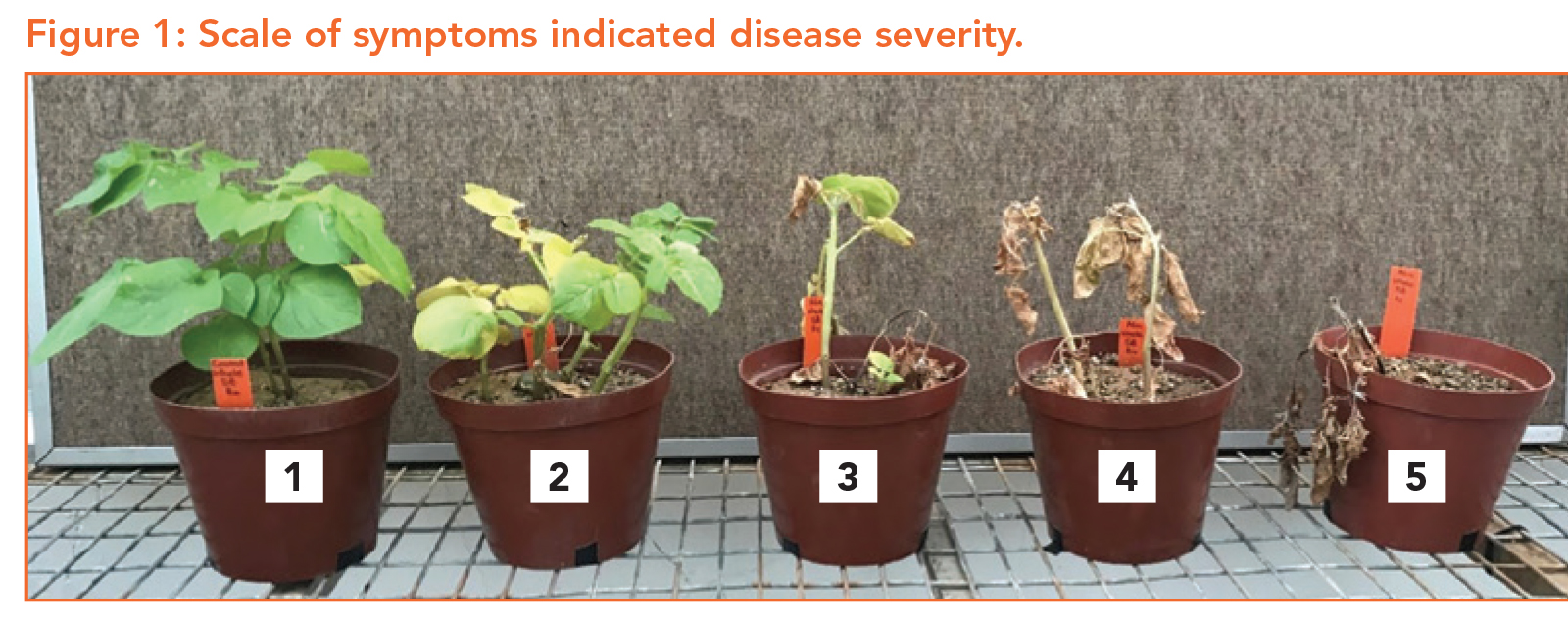
Mondial GG3 certified seed potatoes were then planted in the soil. The trial was brought to a halt 12 weeks after planting. The severity of disease was evaluated based on a scale of symptoms varying from 1 to 5:
- 1 – no wilt or yellowing of the plant.
- 2 – wilting or yellowing of one third of the plant.
- 3 – wilting and yellowing of two thirds of the plant.
- 4 – complete wilting and yellowing of the plant.
- 5 – the whole plant died (Figure 1).
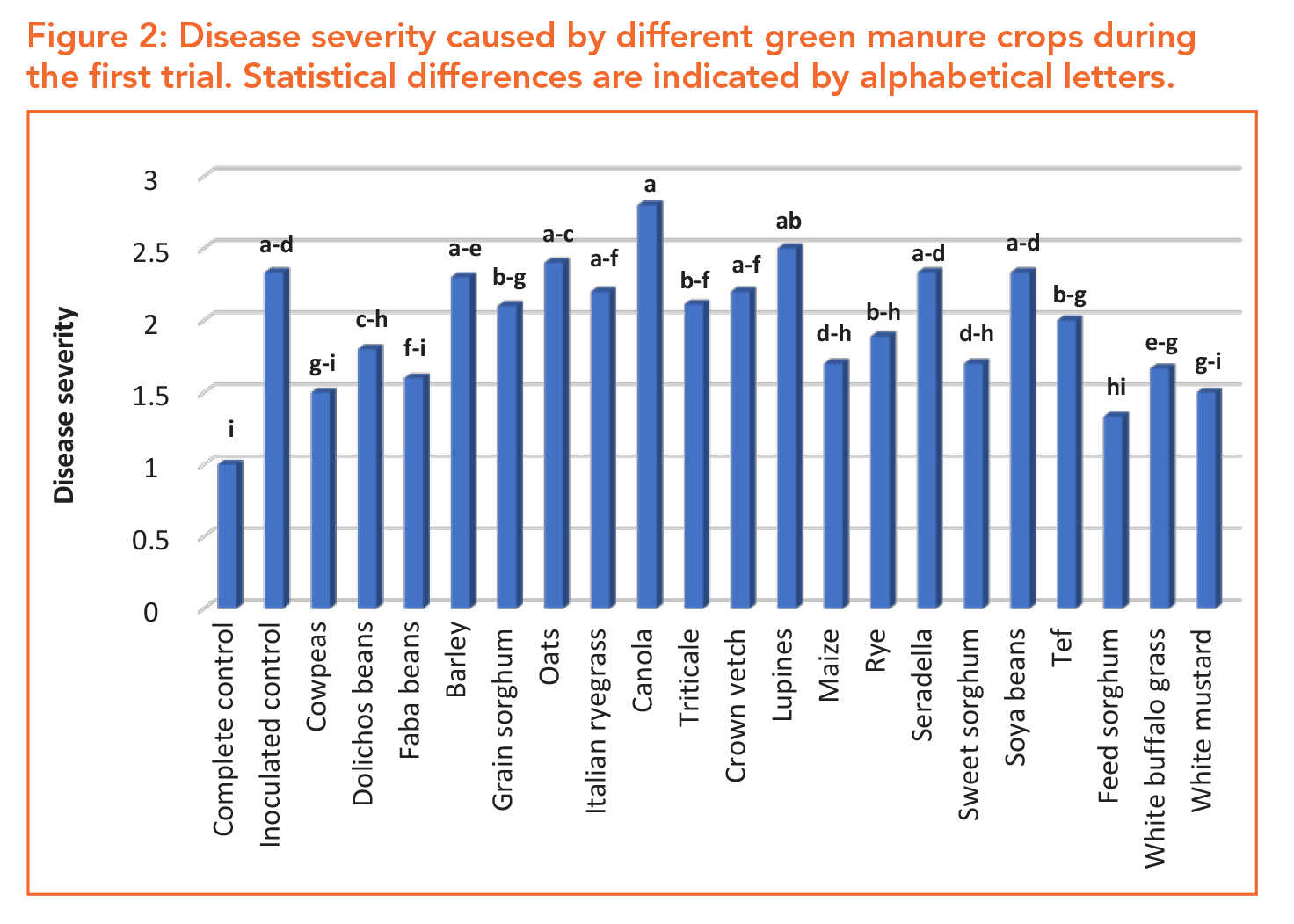
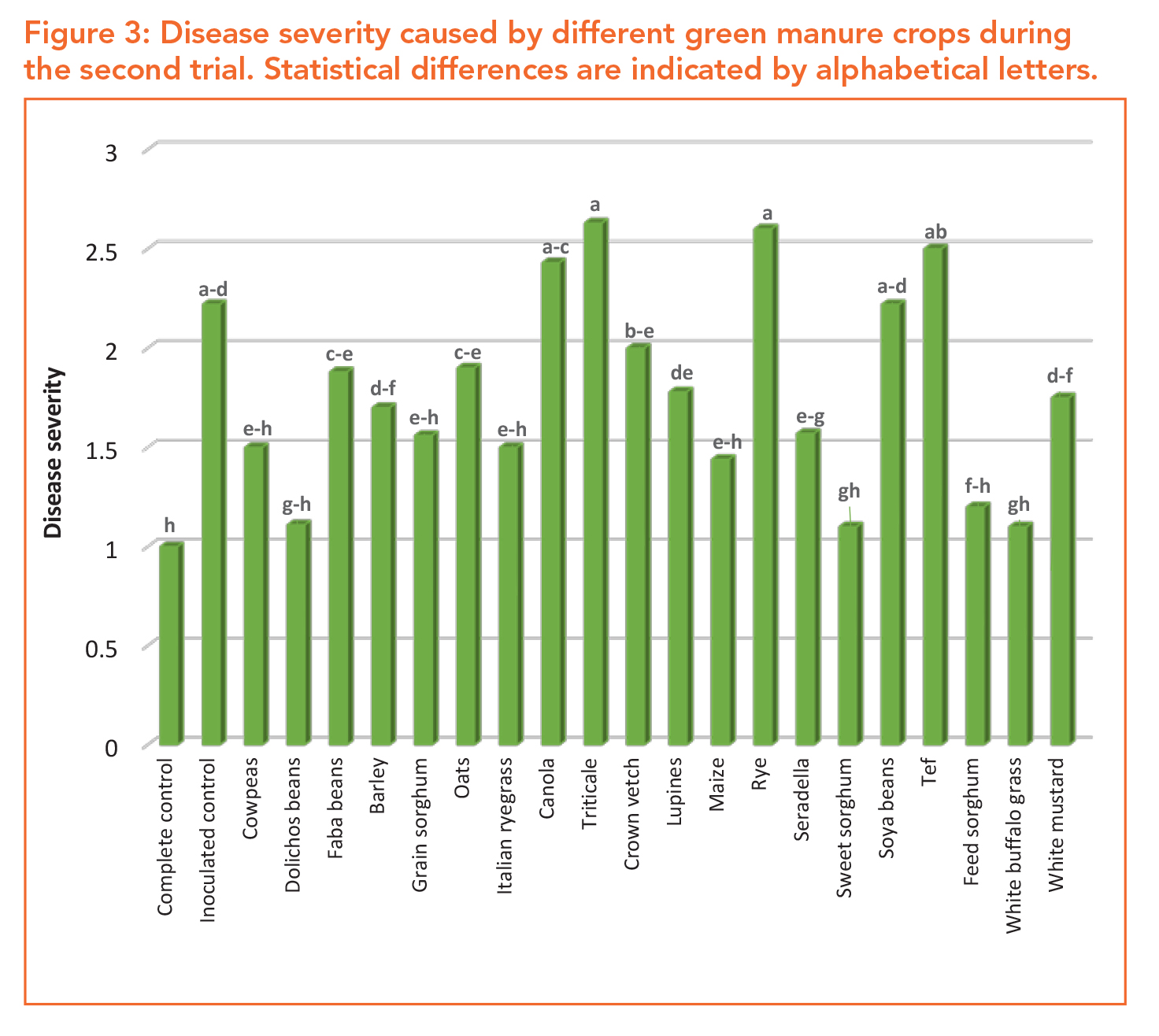
The trial was planted in a glass house for one year and repeated for another year. The results are illustrated in Figures 2 and 3.
Results and discussion
While the results from the two trials differed, some of the results were also consistent. In both trials canola green manure gave rise to a higher disease severity compared to the unfertilised, inoculated control plants. However, the results differed from a published study which found that canola successfully suppressed Verticillium wilt in potatoes. That study indicated that applying canola as green manure led to an increase in indigenous Streptomycetes which led to increased pathogen inhibition.
The differences between our study and the published study can be ascribed to the fact that the effect of green manure on the microbial population is largely dependent on the soil type. The soil used in our glass house trial likely contained another microbial population that did not benefit from the application of canola. The same probably applied to the application of oats and lupines in the first trial, and triticale, rye and tef in the second trial in which the conditions created by the green manure were more conducive for the development of Verticillium wilt.
In both trials soya bean green manure led to the same disease severity as was observed in the unfertilised, inoculated control plants. Thus, this crop offered no beneficial effect in combatting Verticillium wilt in potatoes.
Disease severity results
In the second trial, the use of faba beans recorded a more serious disease severity than in the first trial although it still led to a decrease in disease severity. Faba beans are sometimes used as green manure due to a substantial increase in nitrogen-rich biomass.
In the case of cowpeas, no difference was detected in disease severity between the two trials.
Cowpea green manure used in this study also led to a decrease in potato scurf and Verticillium wilt.
Whereas white mustard performed very well in the first trial, it delivered inconsistent results in thesecond trial, which led to higher disease severity.
It is possible that the microbial population in the soil of the two trials differed. Although the same soil was initially used, a year passed between the two trials and it is possible that the microbial population relocated during that time, while the soil was exposed to weather conditions.
White mustard was used as green manure against Verticillium wilt in another study and combined with oriental mustard, successfully controlled Verticillium wilt in potatoes.
White mustard is often used as a green manure due to the volatile solids it releases, which is harmful to soilborne pathogens.
Effective green manure
Dolichos beans’ effectiveness in lowering the severity of disease in potatoes was comparable to that of the white buffalo grass treatment.
Dolichos beans have previously not been tested on any crop as a green manure against Verticillium wilt. This crop decomposes much quicker than other crops and increases soil fertility by quickly releasing nutrients. The plant is also known for its ability to bind nitrogen and is regarded as a highly efficient rotation crop.
Feed sorghum performed very well as a green manure in both trials. Although it did not completely eliminate the Verticillium dahlia inoculum, it nevertheless led to a very low disease severity.
Feed sorghum and sorghum x Sudan grass hybrids are typically used as animal feed and green manure crops.
In other published studies, feed sorghum was reported as an effective green manure crop for the control of Verticillium wilt and other soilborne diseases of potatoes. It is quite possible that more than one mechanism is involved in feed sorghum’s effectiveness, one being its dhurrin content. Sorghum contains a glycoside know as dhurrin that can hydrolise and release hydrogen cyanide which is very toxic to soil organisms. This explains why sweet sorghum performed well in both trials.
White buffalo grass had not previously been tested as a green manure crop against Verticillium wilt.
This study found that white buffalo grass, an indigenous and perennial grass cultivated mostly as fodder in South Africa, is well adapted to most provinces’ climates, except the Western Cape. It performs very well in the Limpopo Lowveld.
Other studies found that white buffalo grass is effective against human pathogens. The leaves and flowers contain extracts with alkaloids, flavonoids, saponins and tannins that possess anti-fungal characteristics. These compounds were also found to have a negative effect on nematodes. The significant effectiveness identified in white buffalo grass in this study can probably be ascribed to the production of toxic volatile solids.
Conclusion
The efficiency of the crops that performed well in glass house conditions in this study, must be tested in veld conditions. If green manure can be effectively utilised in veld conditions, it may well serve as an economical alternative to chemical fumigation or other conventional control measures.
However, it is important to realise that the efficiency of green manure can vary according to soil type and weather conditions. This was highlighted especially in studies conducted in veld conditions, where the results also varied between growing seasons. – Dr Estianne Retief, ARC-Plant Health and Protection
For more information, send an email to the author at RetiefE@arc.agric.za.