
Estimated reading time: 16 minutes
Approximately 18.5% of South Africa’s commercial potatoes are produced on 9 523 ha, 71.8% of which are planted under dryland conditions (2024 harvest year). The most prominent cultivars planted in this region are Mondial (56.6%), Panamera (19.3%), and Lanorma (11%).
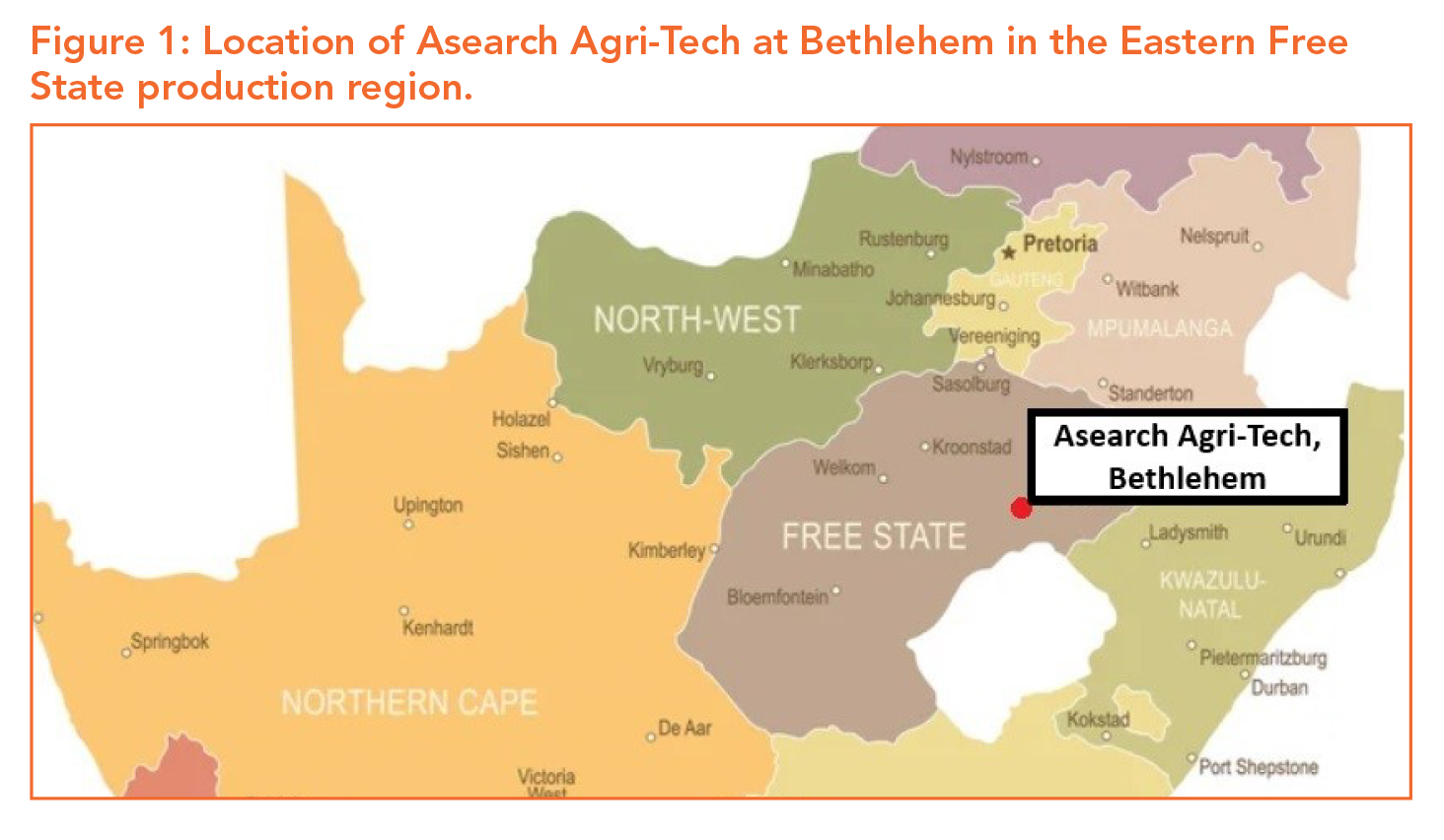
This trial was planted at the Asearch Agri-Tech trial farm at Bethlehem (Figure 1). Asearch Agri-Tech is an agriculture consultation company involved in the independent development of crop protection products and cultivars since 2013.
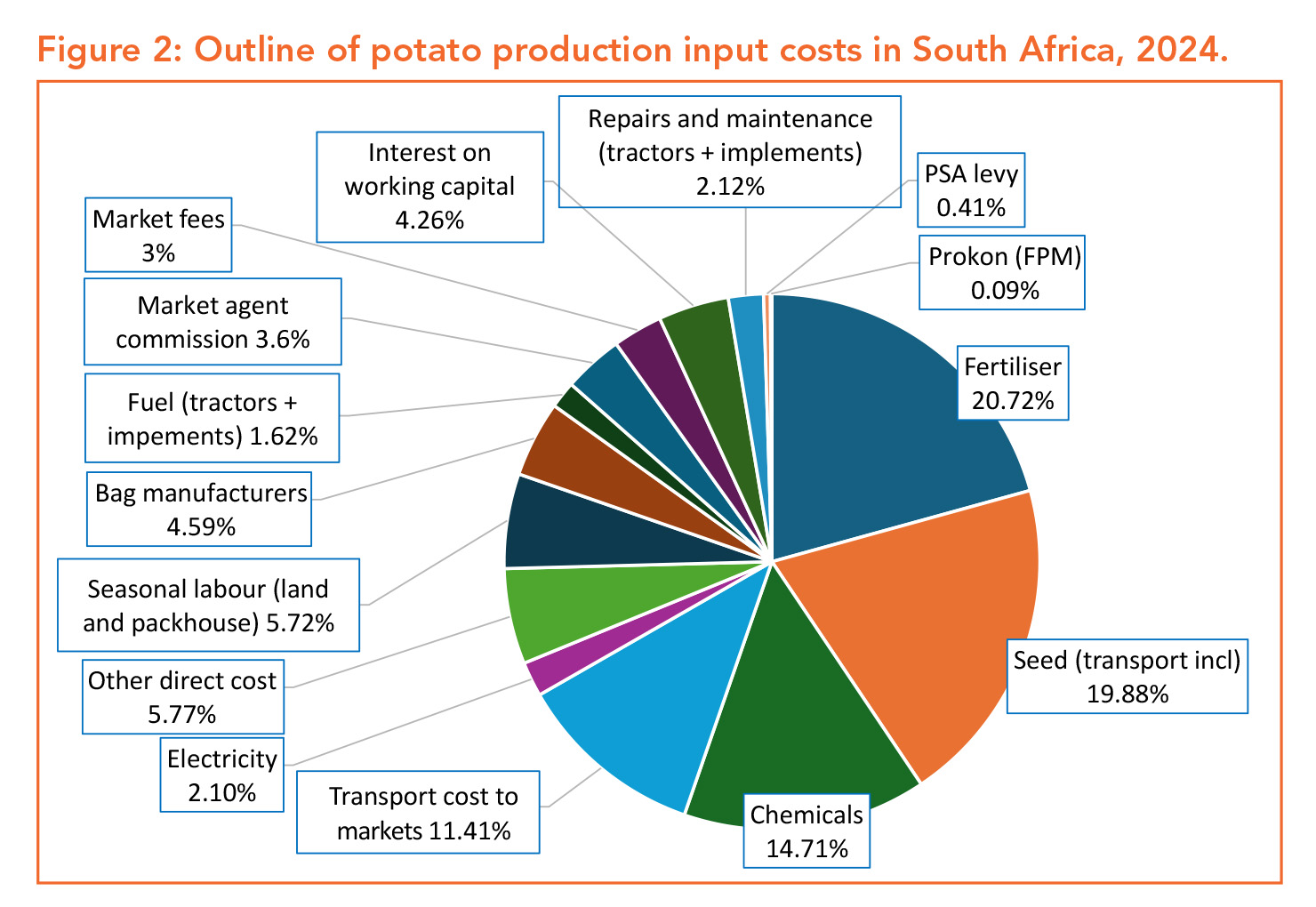
Crop protection products (agricultural chemicals) are costing South African potato producers an enormous amount of money annually, and makes up approximately 14.7% of all input costs. It is the third biggest seasonal expense besides fertiliser and seed (Figure 2). Therefore, it is important to work as as efficiently as possible when using chemical products in a potato programme.
The Eastern Free State potato working group appointed Asearch Agri-Tech to carry out and manage this product trial, which includes fertiliser and diverse crop protection programmes. This process, as far as possible, ensures the precision, independence, and integrity of a product trial carried out in a controlled manner and which is tailormade for each programme’s needs. The aim of this product trial is not product development for potatoes, but to test various potato programmes such as insecticides, fungicides, fertiliser and products that promote biological plant growth under Eastern Free State conditions.
Bethlehem is situated in South Africa’s moderate summer rainfall area and has recorded an annual average rainfall of 684 mm over the last 19 years. This region is characterised by very hot summers and very cold winters, with regular frost and even occasional snow.
Trial design and participation
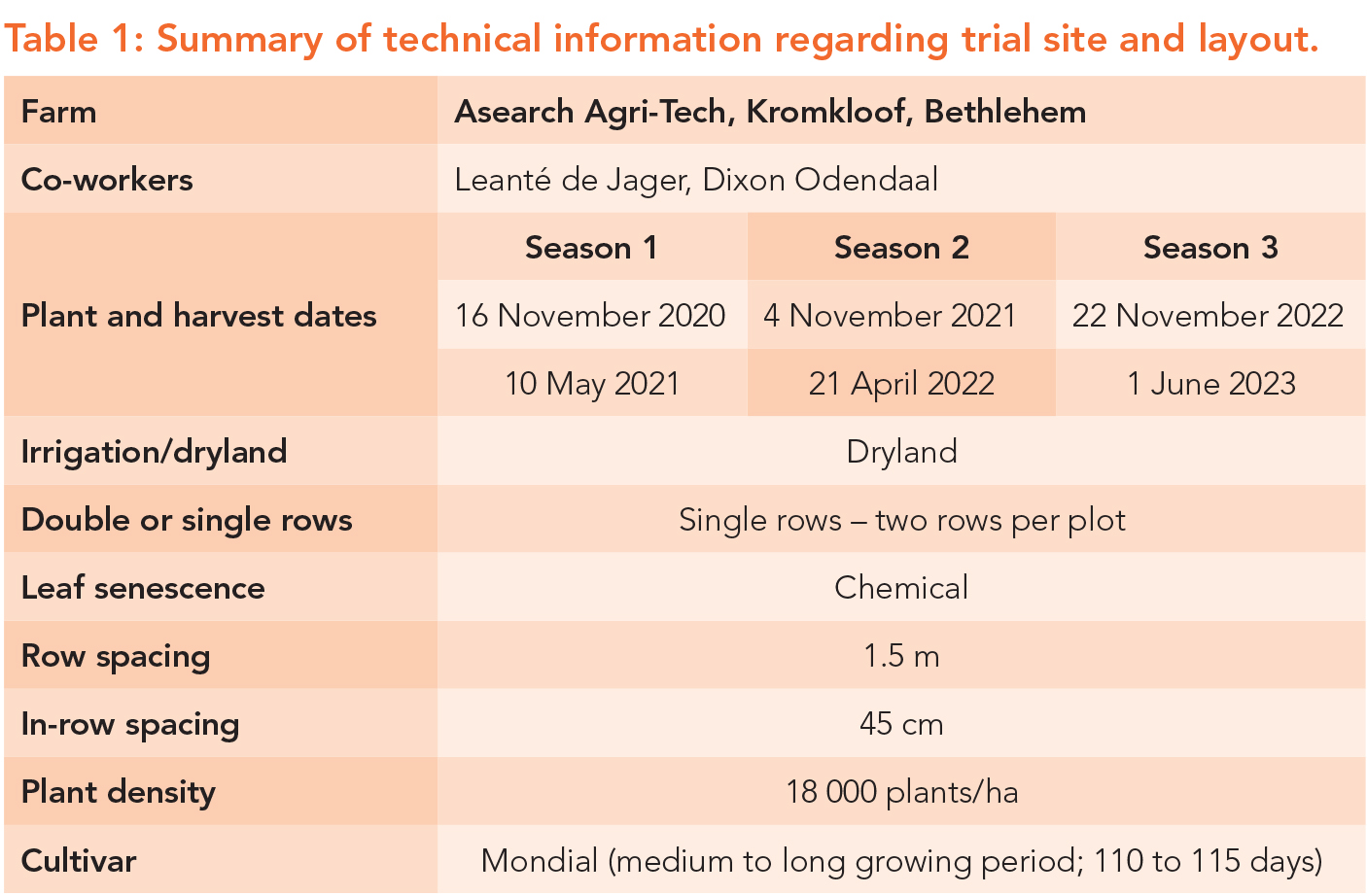
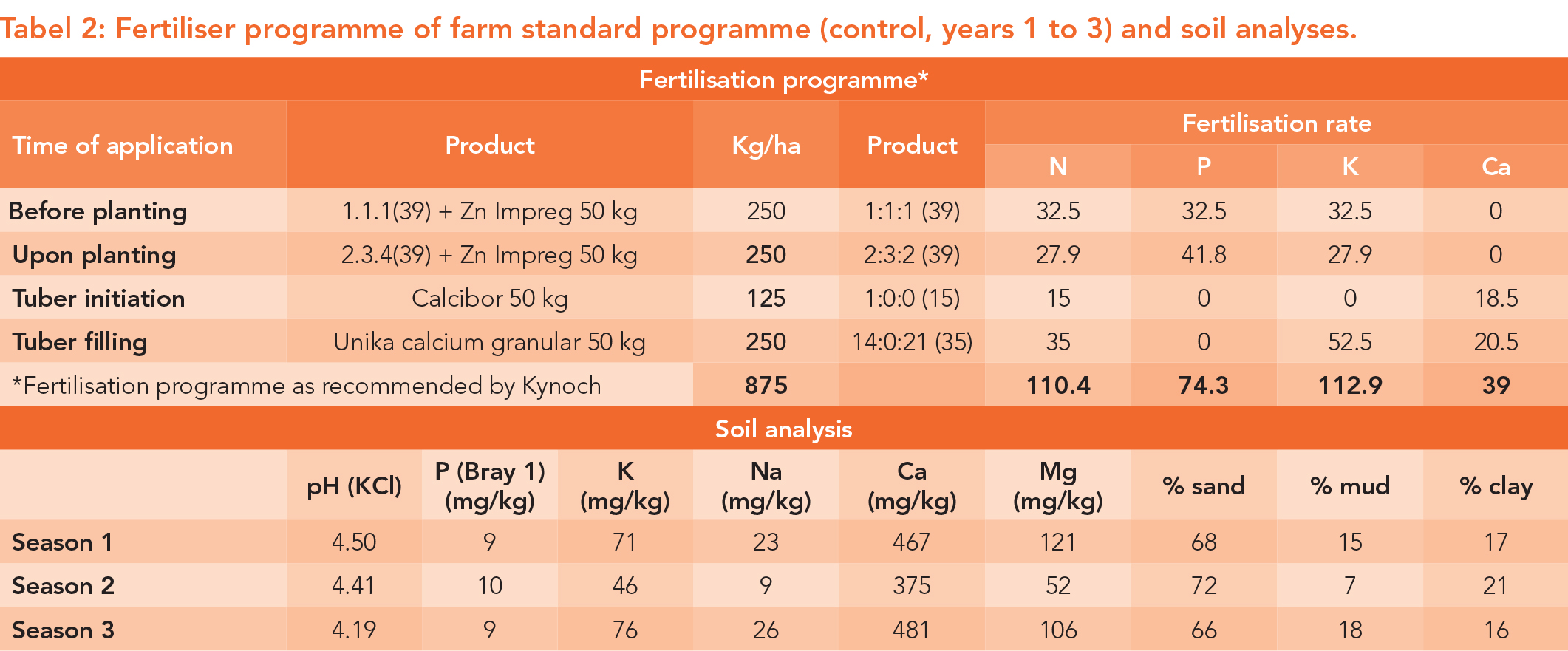
The product trial at Bethlehem was laid out in a randomised block design with four replications per cultivar. Relevant technical information relating to the trial is summarised in Table 1. The fertiliser programme and application for 2020/22 is illustrated in Table 2.
The product trial includes a variety of companies with diverse programmes. As dictated by policy, this article refers to only ten programmes (treatments) tested in the trial over three years. In all three trial seasons these programmes were tested in addition to the farm standard programme (control), using the cultivar Mondial.
The evaluation of treatments in the Betlehem product trial delivered, among others, results relating to yield and marketing indices. The goal of the trial is to determine how the programmes in question are performing in the region. Hence, it is very important to note that the programmes should not be measured against each other, but rather against the control or farm standard programme. Various programmes deliver different outcomes, and the finer details of each programme can be discussed with the relevant representative.
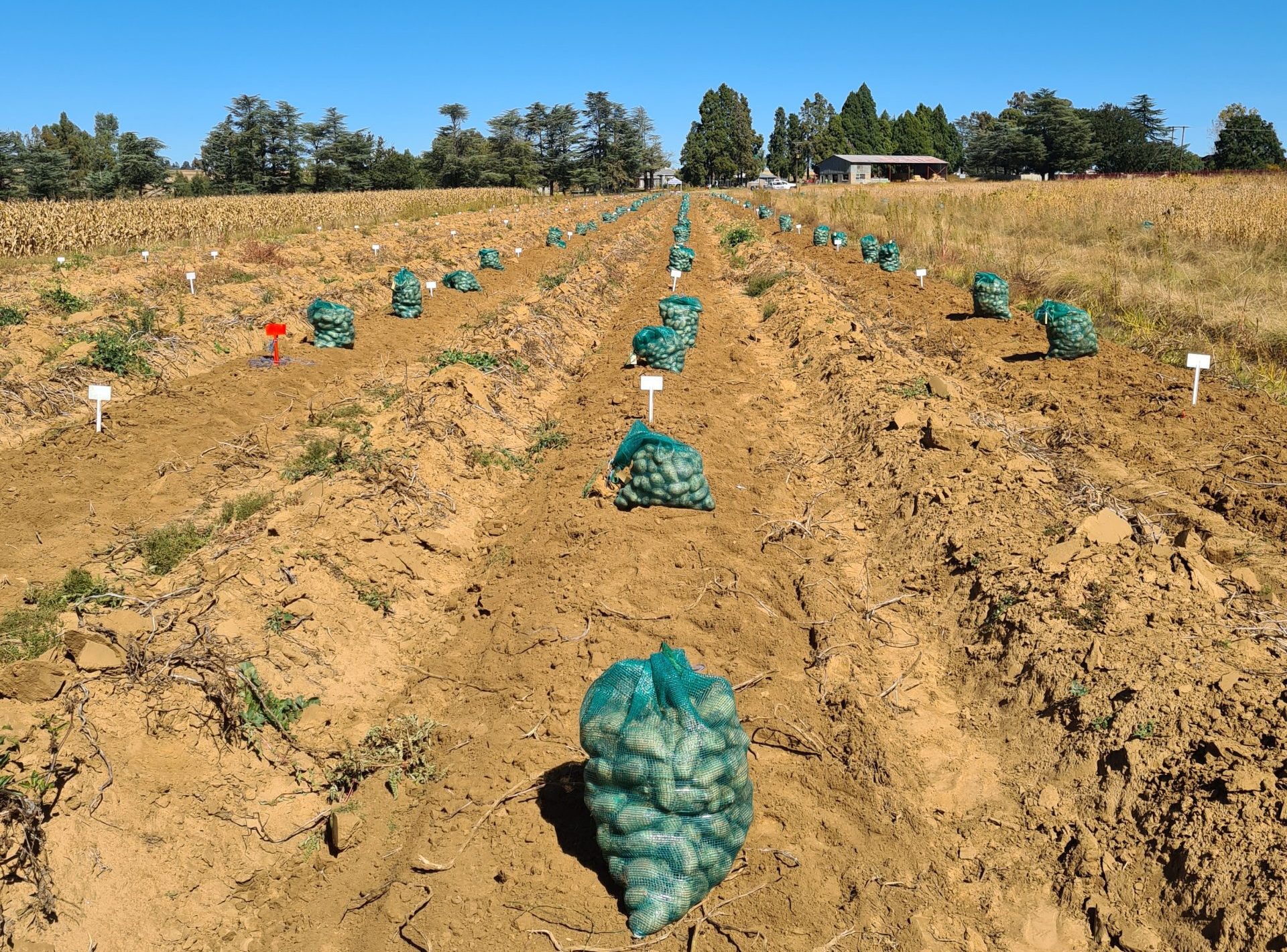
Composition of programme
The standard spraying and fertilisation programmes employed on the farm serve as the control treatment in the trial. Each participant is given the opportunity to observe the farm standard programme for fertiliser and crop protection purposes during the planning phase prior to each season, and to deliver his/her input, for example replacing or adding own products or removing spray treatments.
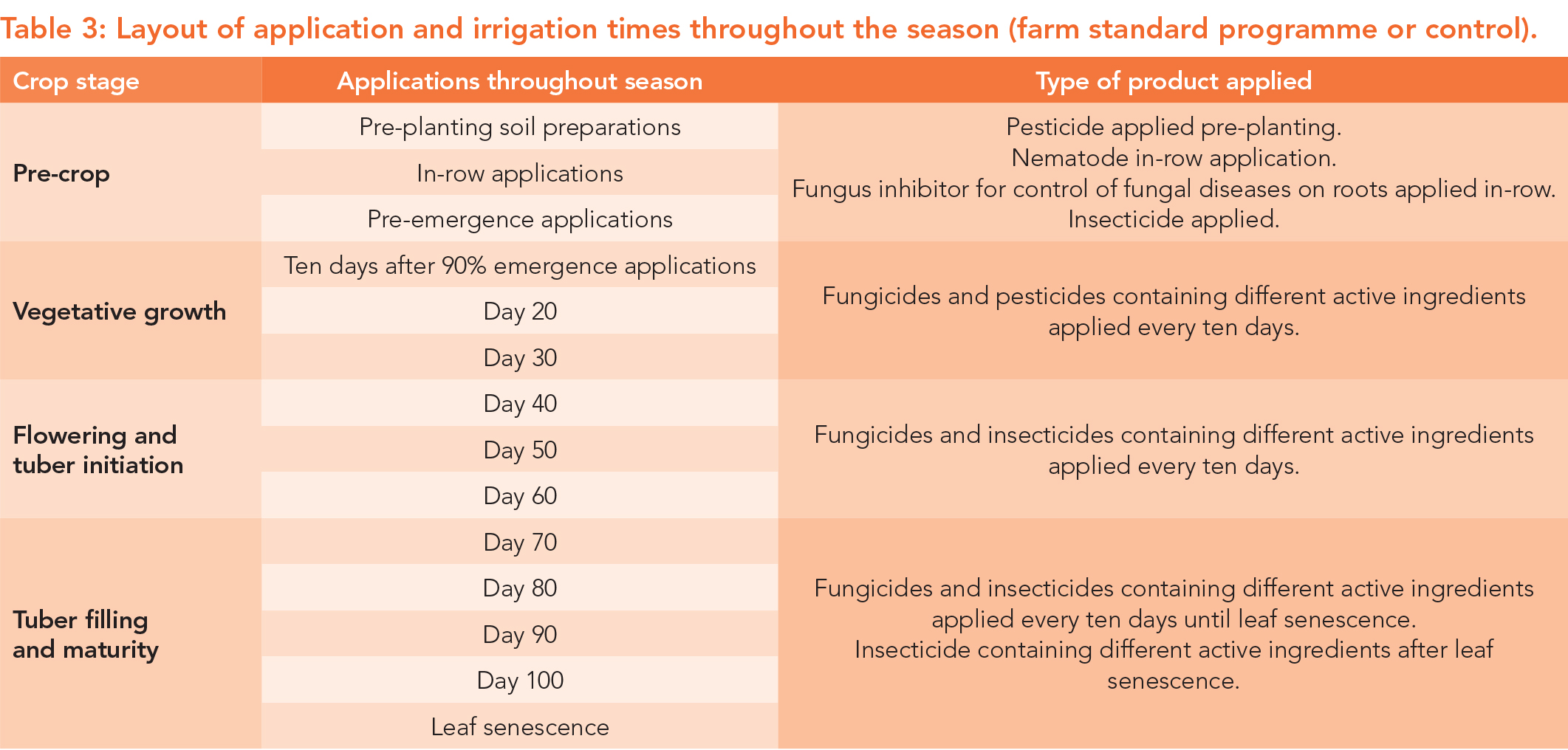
The programmes of the participants involved are therefore tailormade for spray programmes exactly as required. This article includes the farm standard programme (Table 3) as well as the programmes that will be discussed in brief.
Sorting and classing
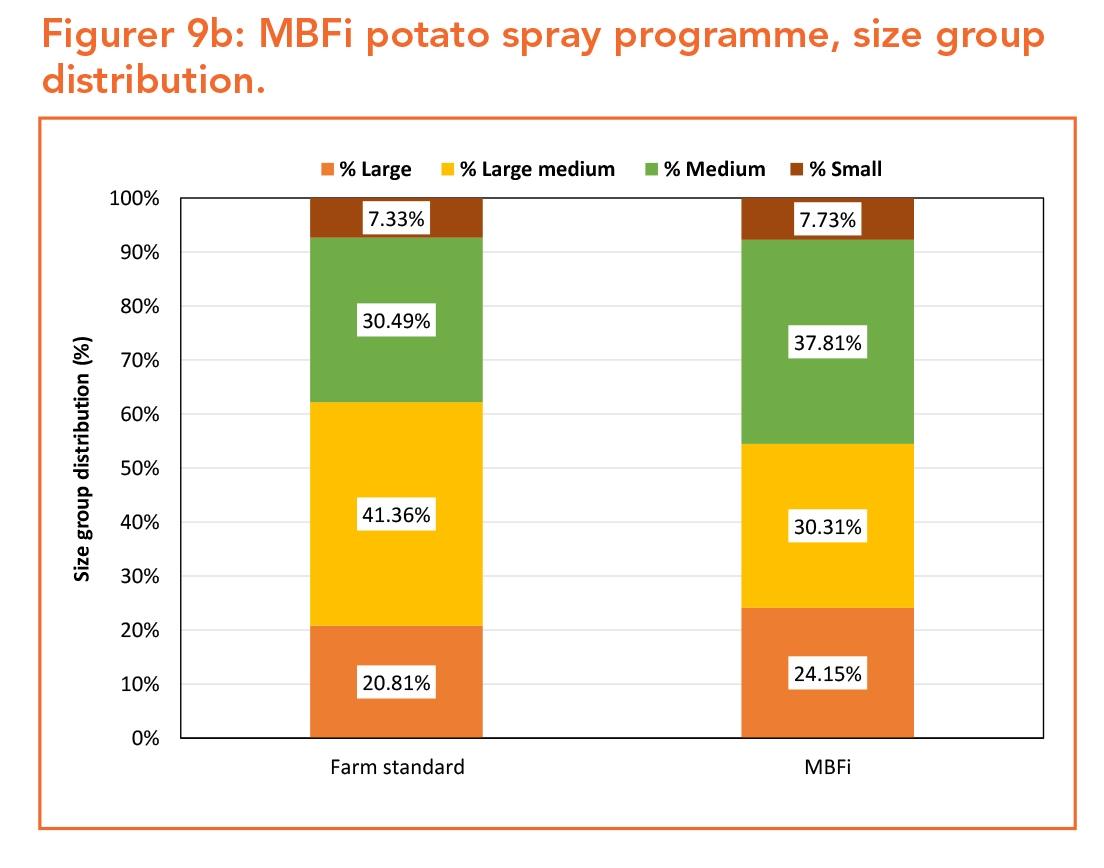
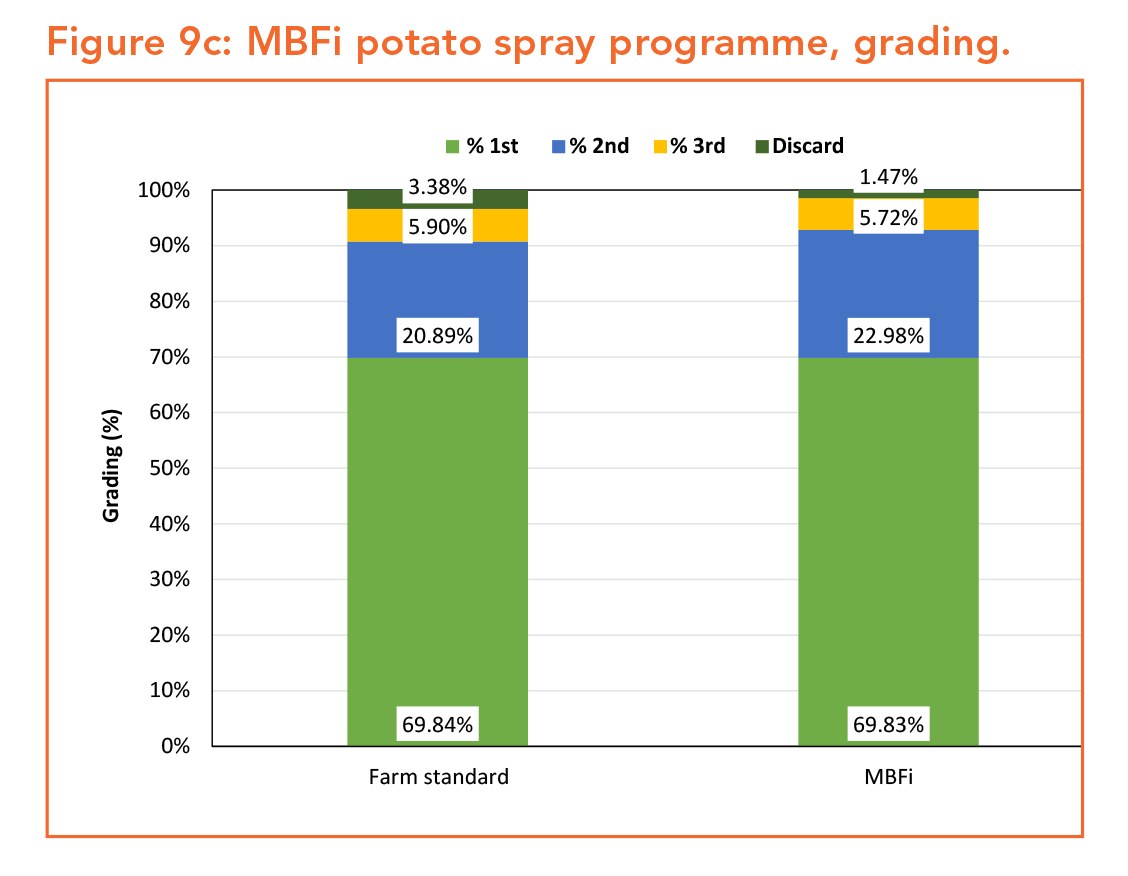
The marketing indices of the treatments are calculated by classing and sorting each cultivar according to quality and size distribution, such as Class 1 large or Class 2 large-medium.
All three replications from this trial were combined, washed, and sorted by the packing store. Prices were then compared to market prices at harvest time.
The performance of treatments cannot be based on the results of one specific season only, since climate can vary from one year to the next. Therefore, the programmes are preferably tested across at least three seasons.
Weather data
As with any crop, temperature, water availability (good irritation scheduling of rainfall), as well as heat units are important factors with a significant influence on the potato plant’s growth period. These factors are therefore taken into account when evaluating a trial. Relevant daily data relating to the seasons in question was obtained from a Metos weather station located 1 km from the trial site.
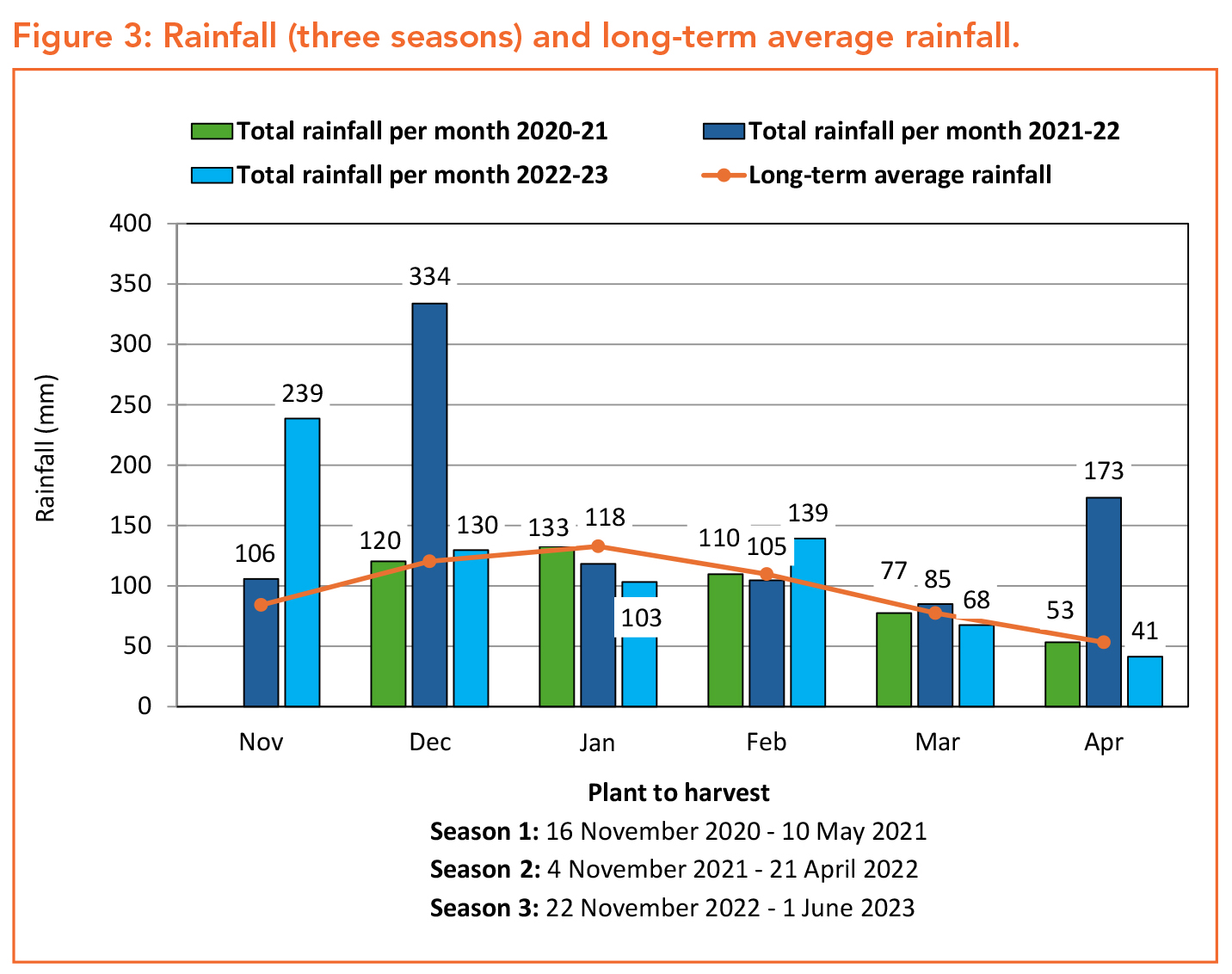
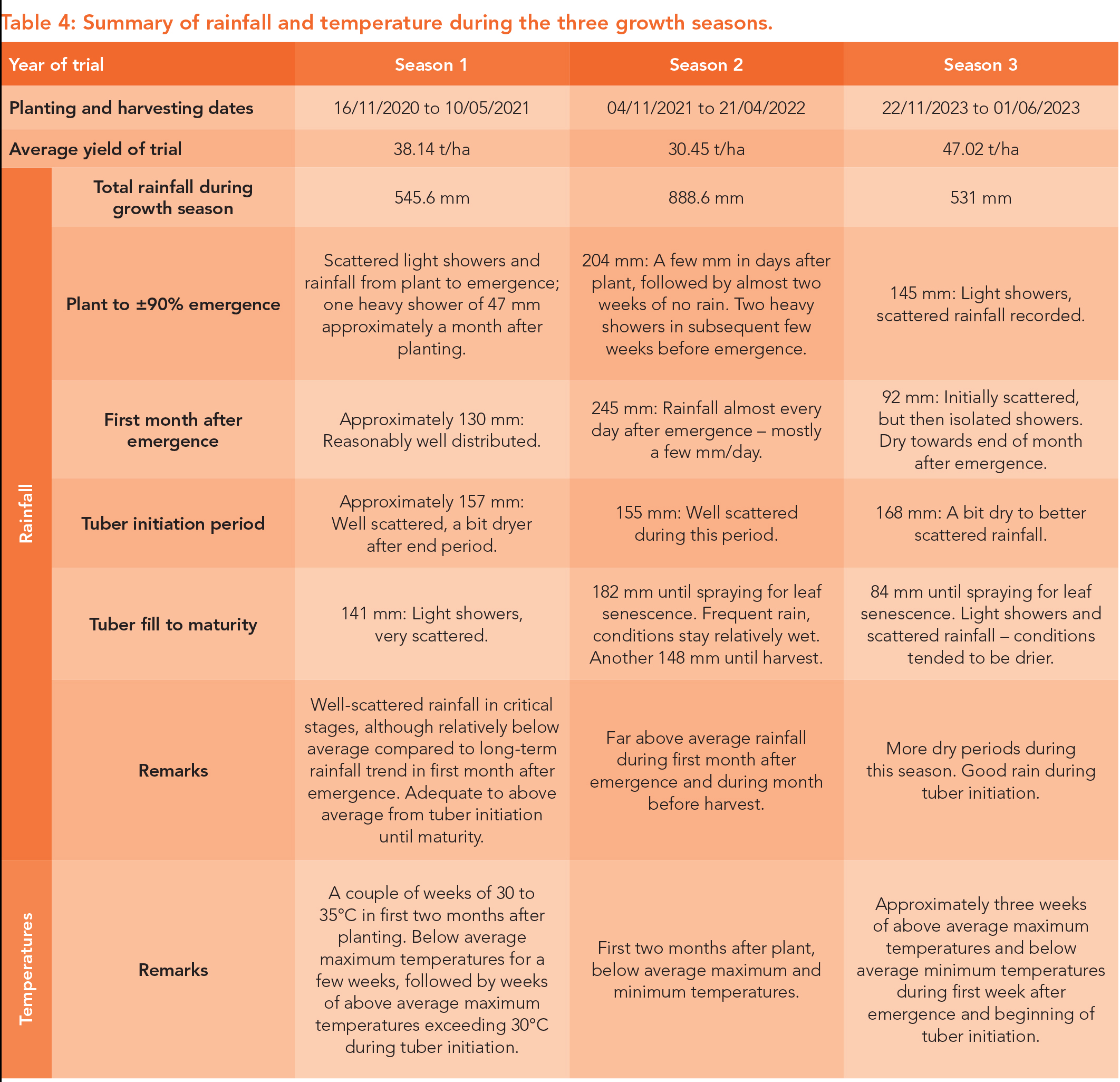
Figure 3 illustrates the rainfall trend of the past three seasons. Details of the season’s temperatures are illustrated in Table 4.
Trial reliability
Yield data collected during harvest day is statistically processed using the GenStat® programme. The mean was separated using the Tukey test of least significant differences (LSD). The treatment effect during this trial which spanned three seasons was statistically significant (p<0.05) while the coefficient of variation (CV) was low (12.8, 8.3 and 8.5%).
These factors indicate that the trials were well executed, and the results therefore reliable. The yield of each treatment is divided by the trial average (the average of all the treatments is accepted as 100%).
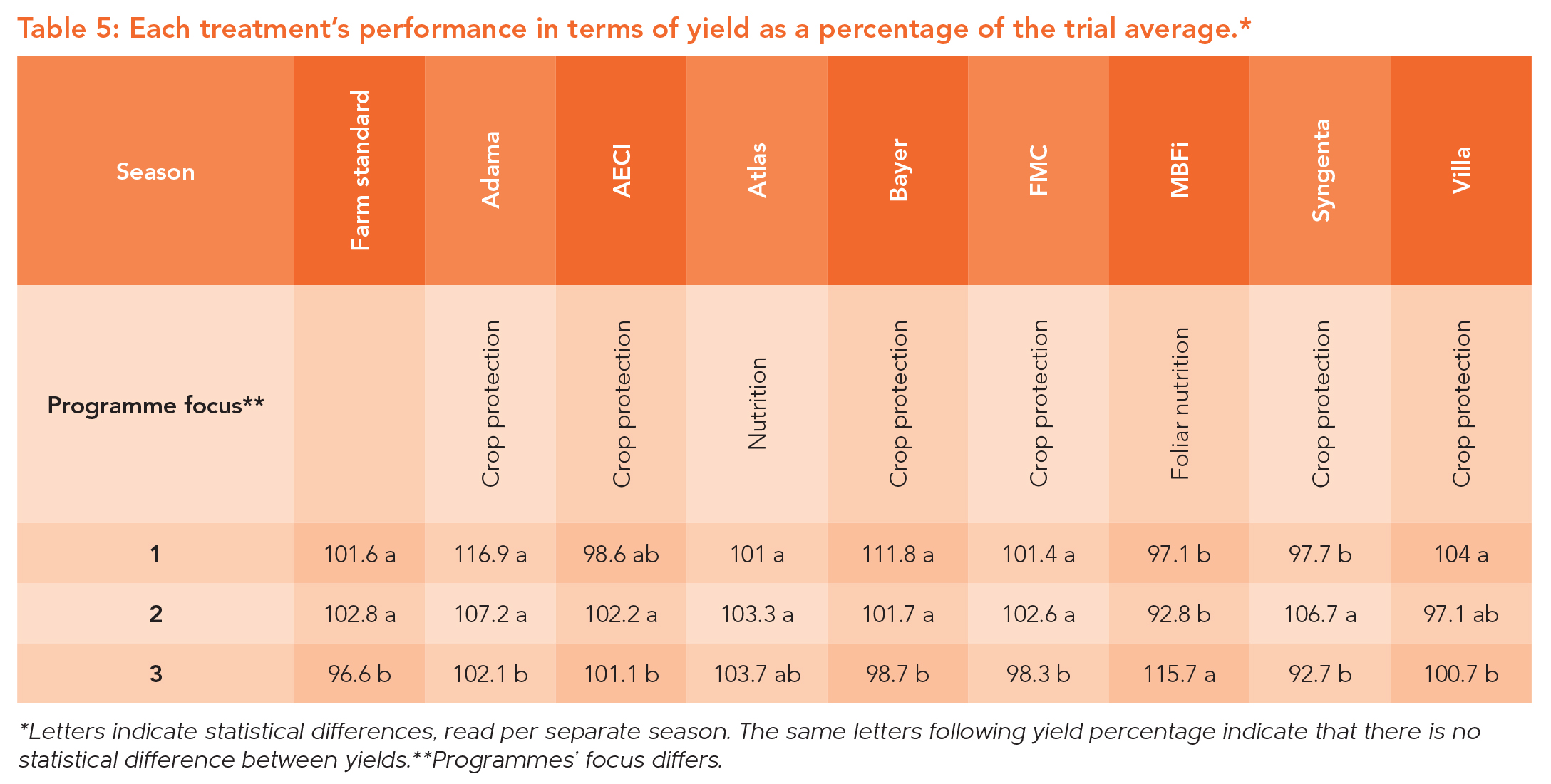
This creates a yield index, and each treatment’s performance in terms of yields is read as a percentage of the trial average (Table 5). A relevant programme is illustrated separately against the farm standard programme since the goal of the trial is not to measure programmes to one other. Each company’s programme is discussed briefly. For more detailed and complete programme details, scan the QR code at the end of this article.
Adama plant protection programme
Adama entered a rounded plant protection programme for the duration of these trials. Products applied included especially Nimitz®. The medium is effective for nematode control applied in-row. Fungicides and insecticides with different active ingredients are applied at applicable times during the duration of the growth period to ensure efficiency.
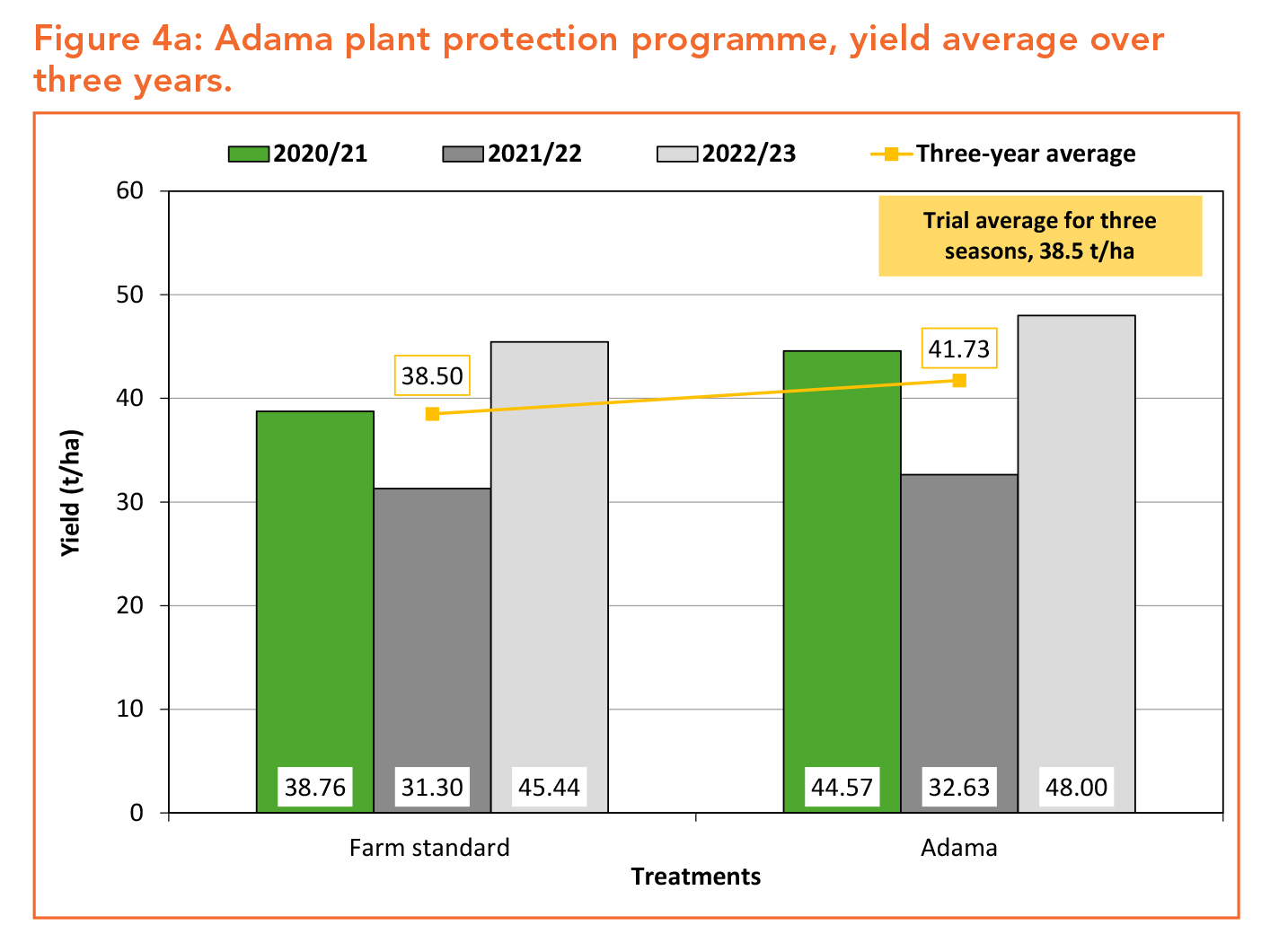
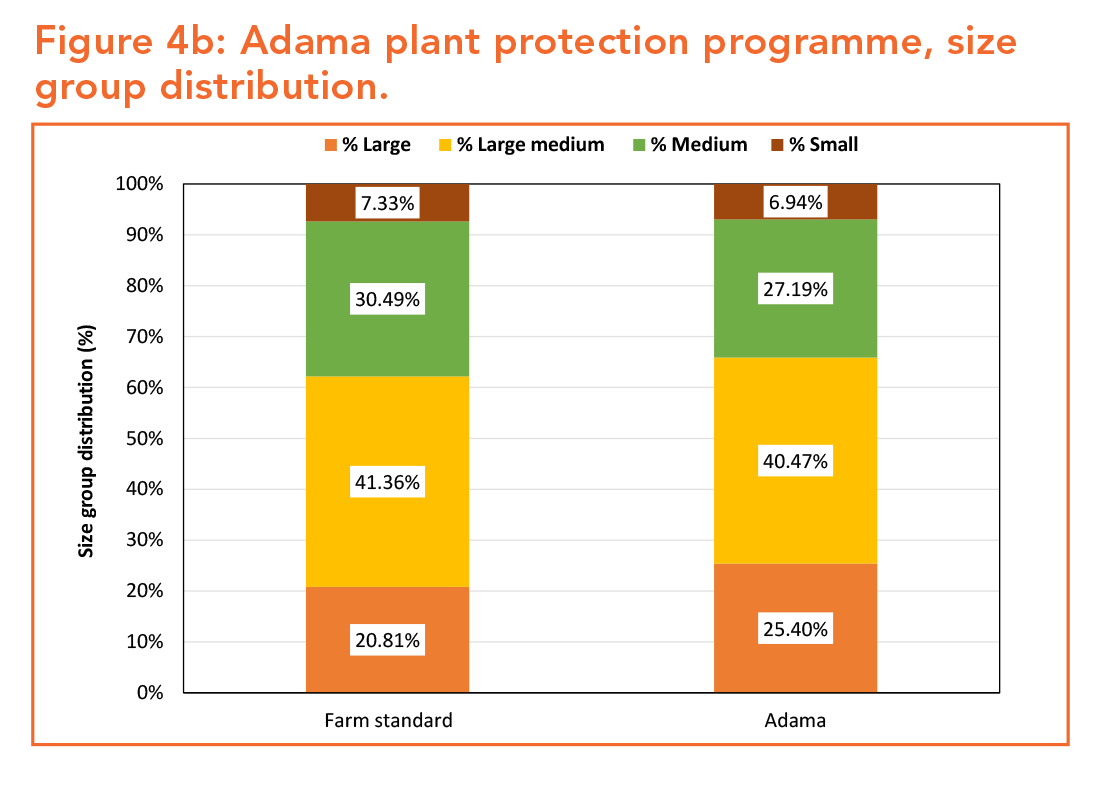
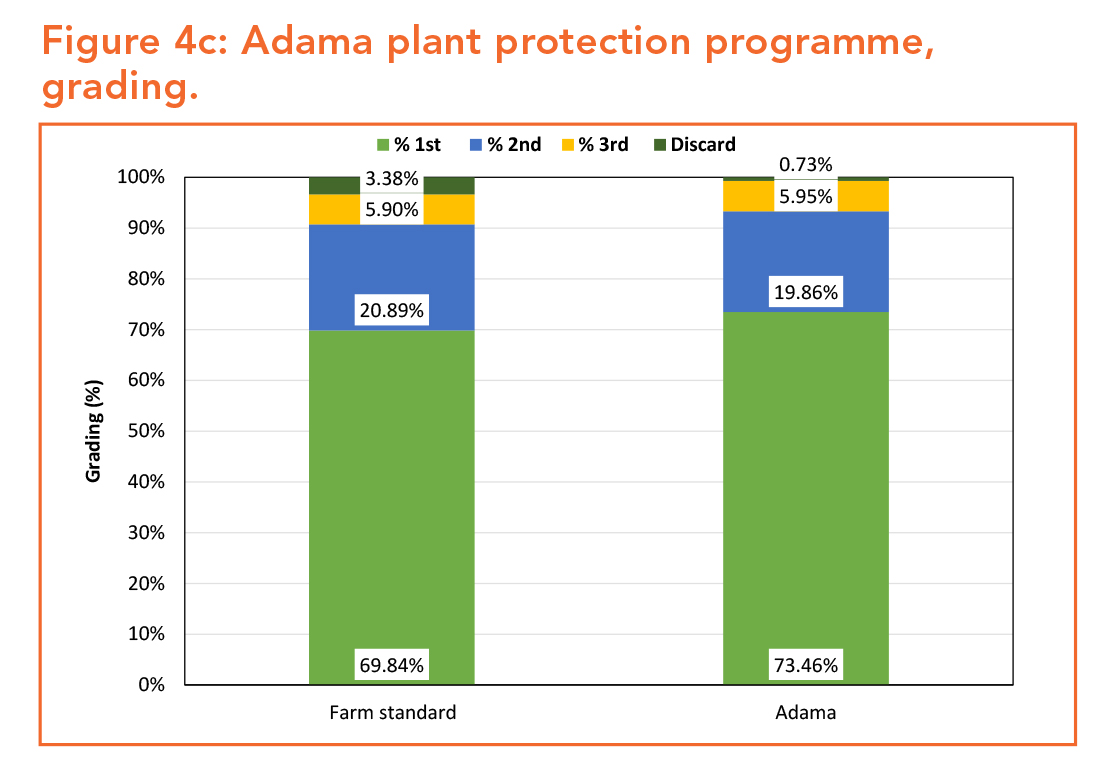
Adama’s programme performed very well by the end of the trial’s three-year period. A competitive average was observed in Class 1 potatoes over the three years. The Adama programme’s performance comparison with the farm standard is illustrated in Figures 4a, b and c.
AECI potato spray programme
The goal of the AECI potato spray programme (Figures 5a, b and c) is to offer a structured and seasonal series of chemical applications to protect potato crops cultivated under dryland conditions against major pests, diseases, and weeds. This programme contains specific products, active ingredients, application dosages and application periods – from pre-planting treatments to in-season spraying – to ensure optimal crop health, improved yield as well as quality.
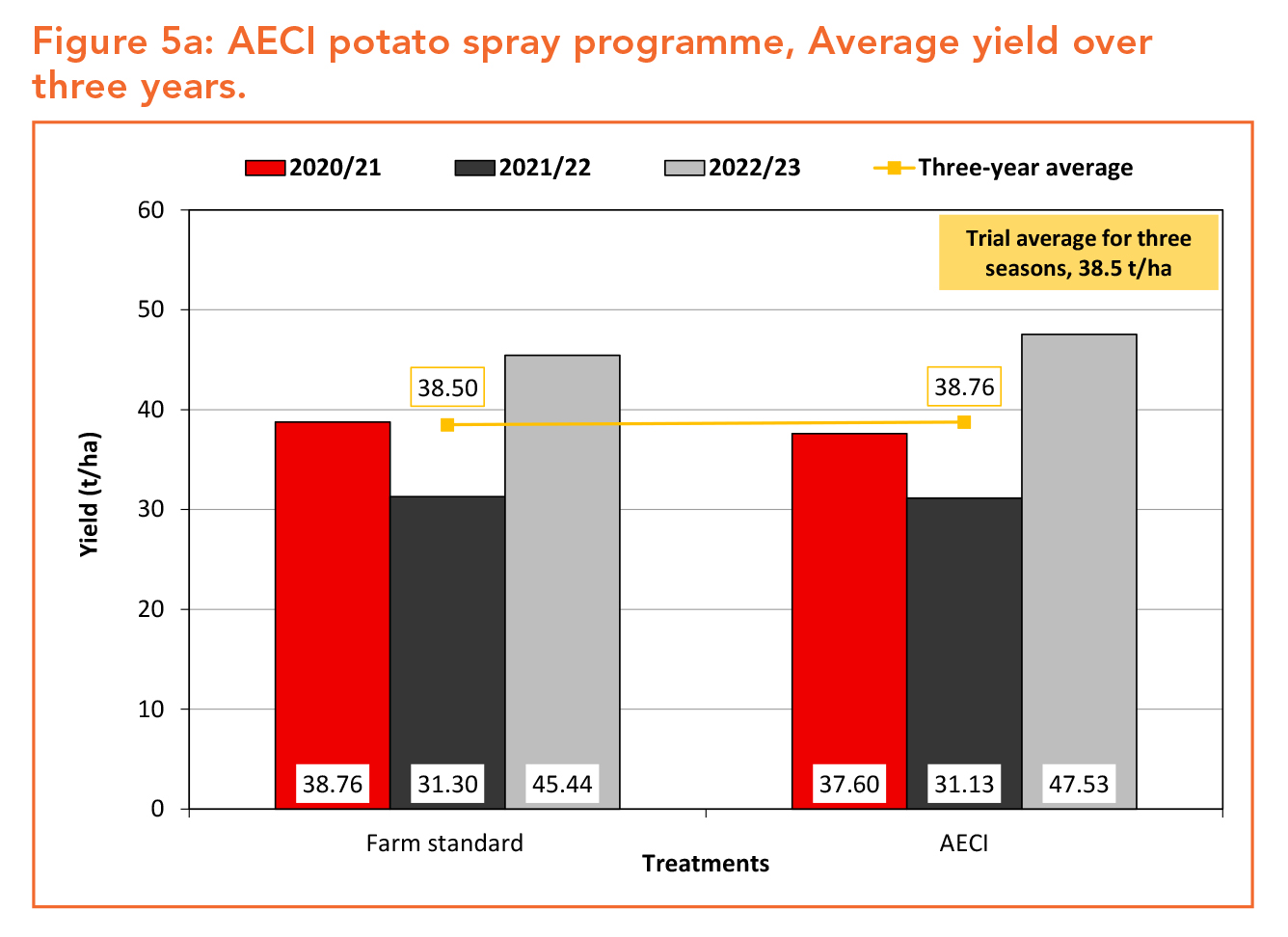
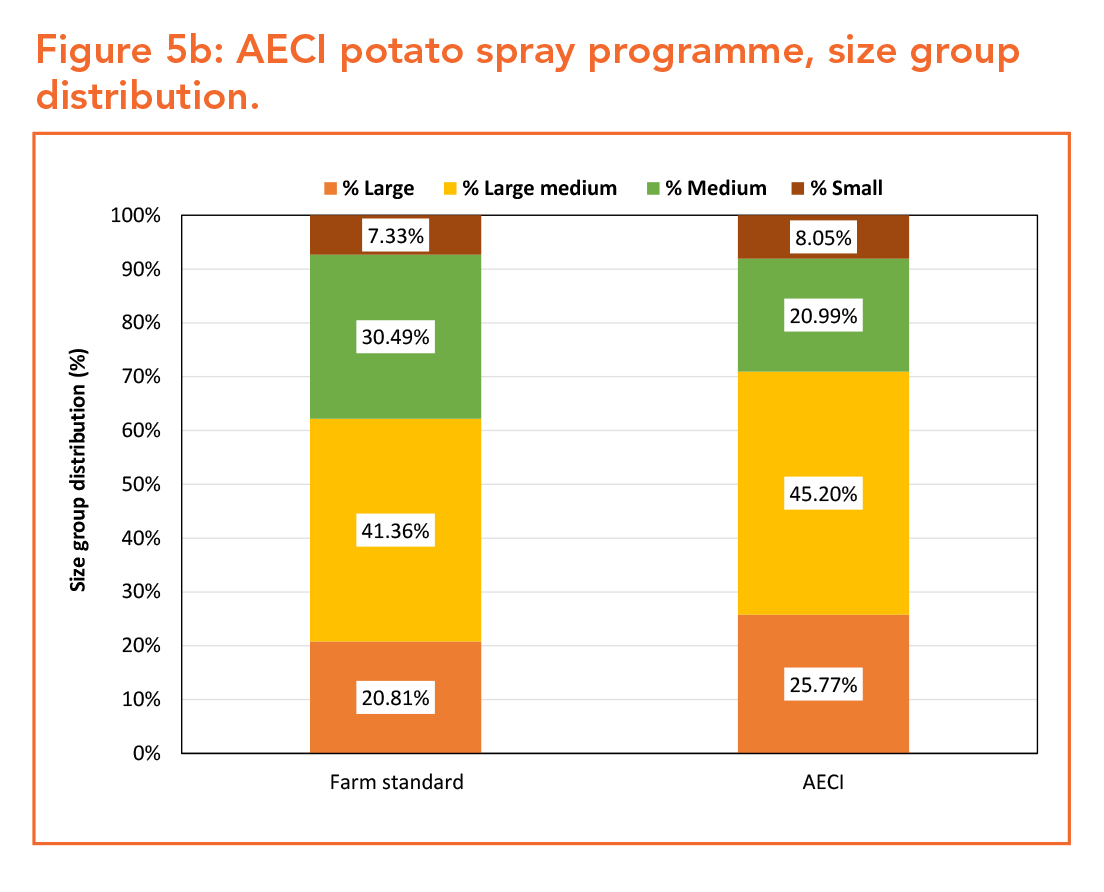
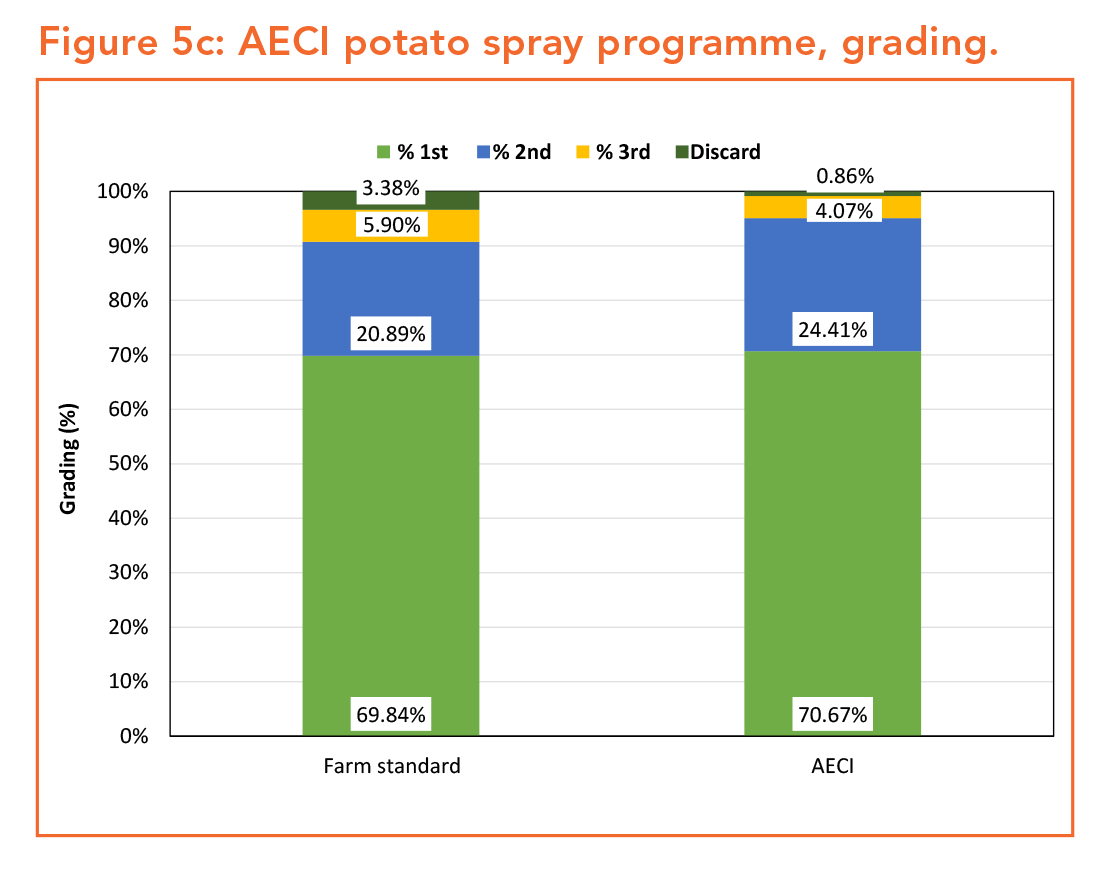
It integrates fungicides, insecticides, biostimulants and nutritional products for the management of threats such as early and late blight, weeds, and insects. AECI follows a strong principle-driven approach, NuWay, which focusses on soil health aimed at the decreased use of noxious pesticides.
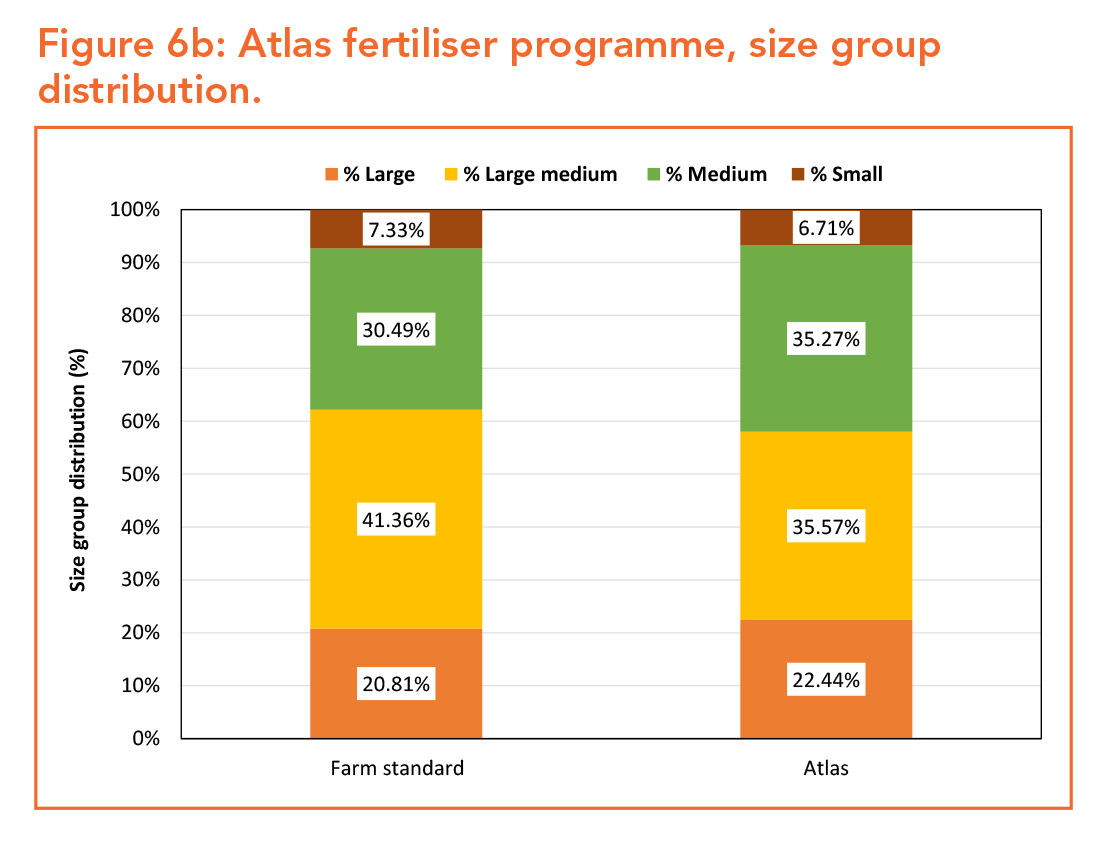
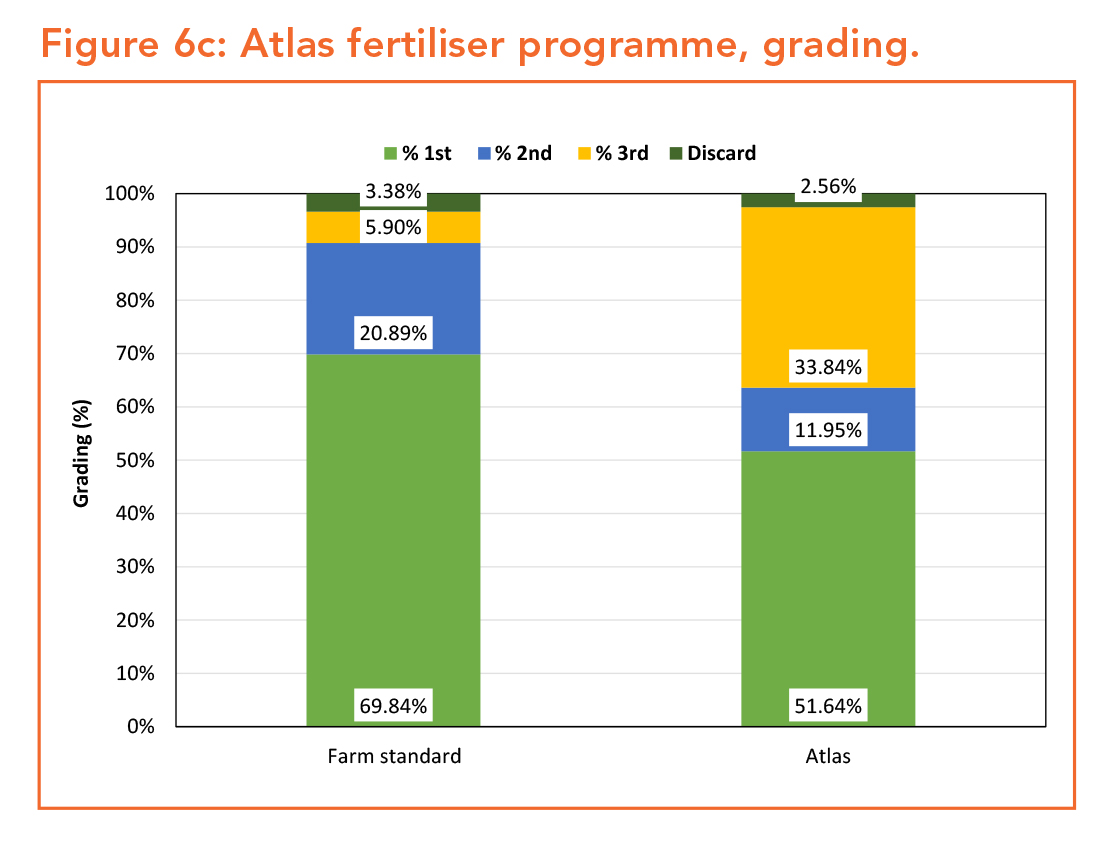
Atlas Organic Fertilizer
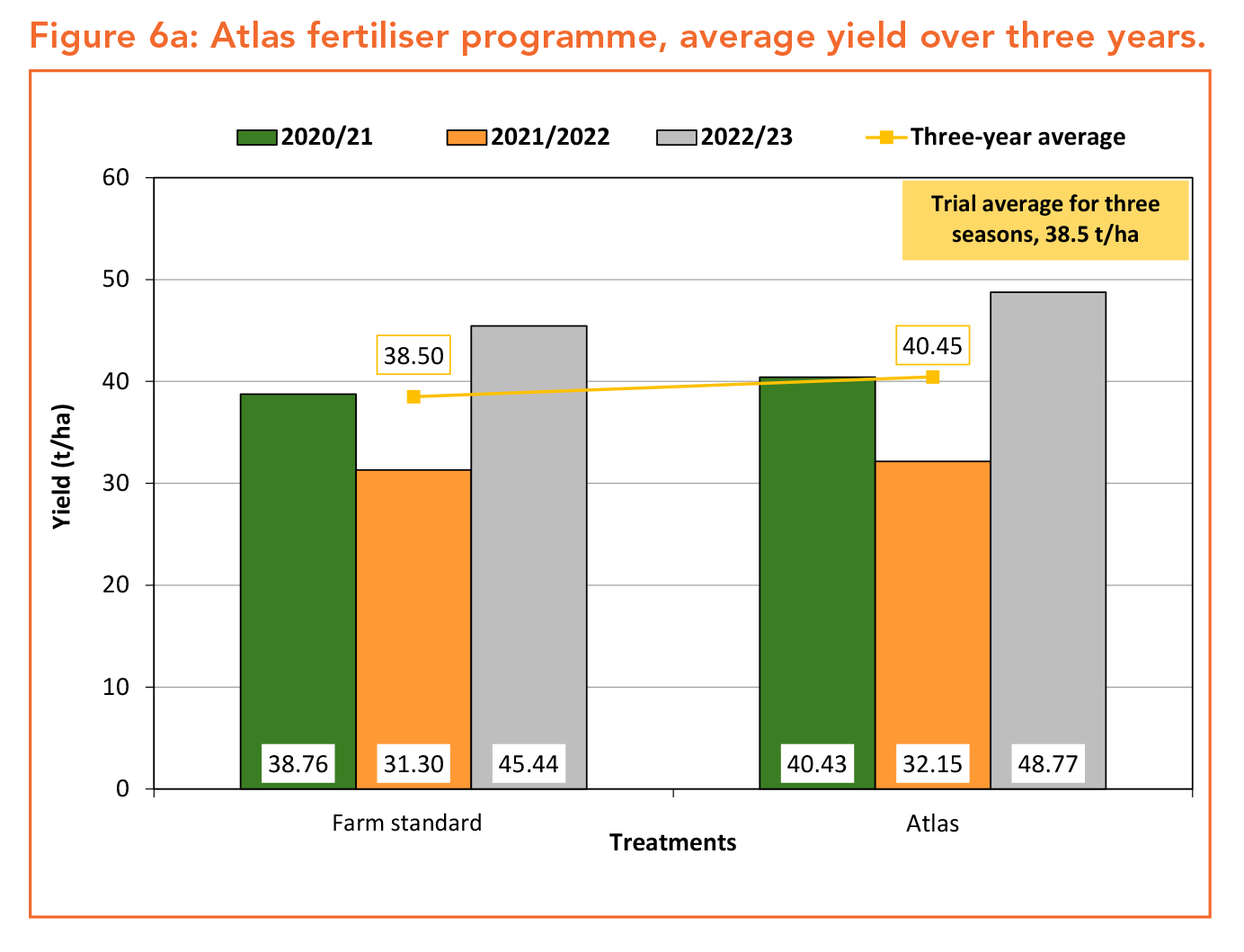
Atlas Organic Fertilizer is the only fertiliser company participating in Potatoes SA’s product trials at Asearch Agri-Tech in Bethlehem. The products in the Atlas programme entail more or less equal quantities of layer hen manure as the organic base combined and enriched with chemical fertiliser products.
The farm standard control fertiliser was simply replaced with the Atlas fertiliser. The farm standard’s quantities of NPK were used as the basis. Annual adjustments were made for phosphorus (P) and potassium (K) based on a soil analysis of the site or field which was planted, as well the need for a 30t/ha potato harvest. Therefore, fertiliser and pest control are the same as for the farm standard treatment.
Bayer treatment programme
From 2021 to 2023 the potato trials at Asearch Agri-Tech continuously demonstrated that Bayer’s treatments performed well compared to the standard farm practices, taking into account important measurements such as yield, disease resistance and marketing. During the 2020/22 season, Bayer’s treatments led to a clear decrease the degree and incidence of early blight – from 33.8% in the standard treatment to only 8.8% in the Bayer protocol. In the 2021/22 season no statistical differences were recorded in yield between treatments, but the Bayer treatments maintained a competitive yield as well as favourable gradings.
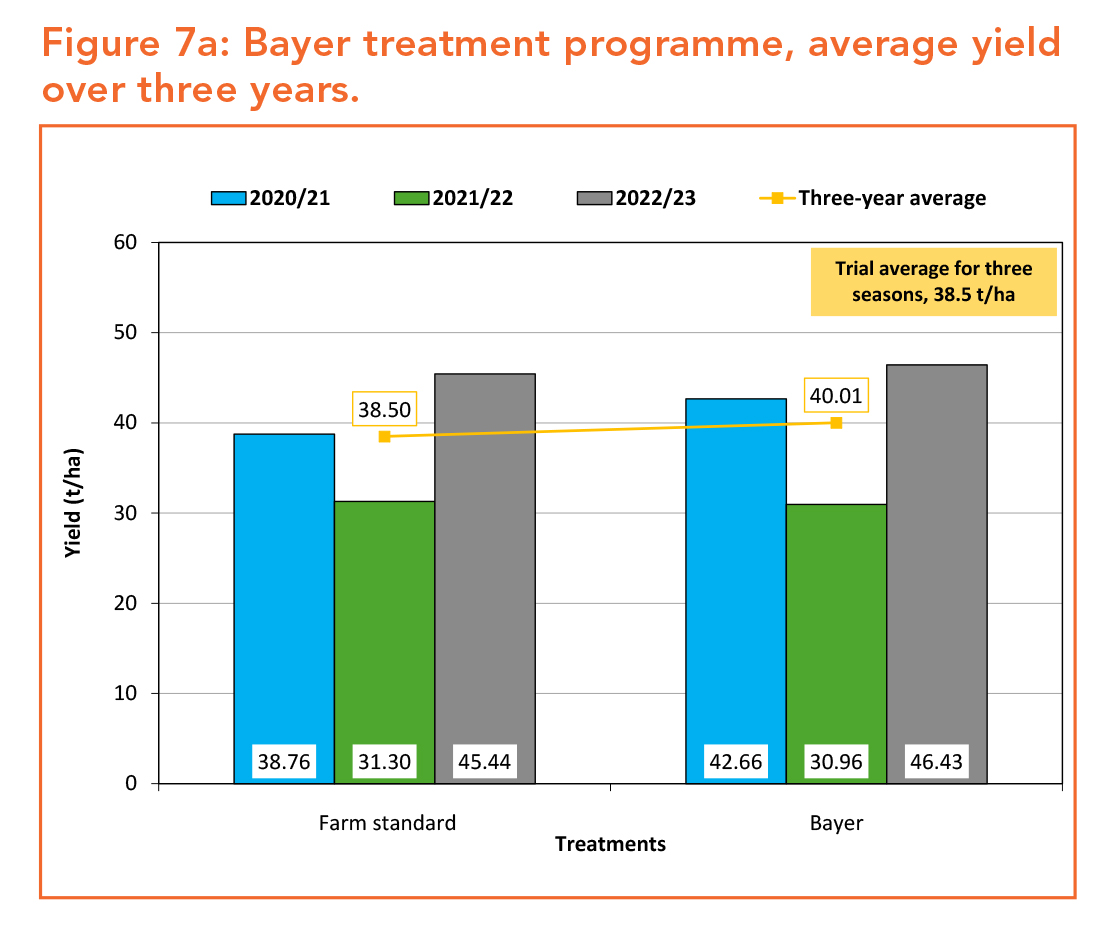
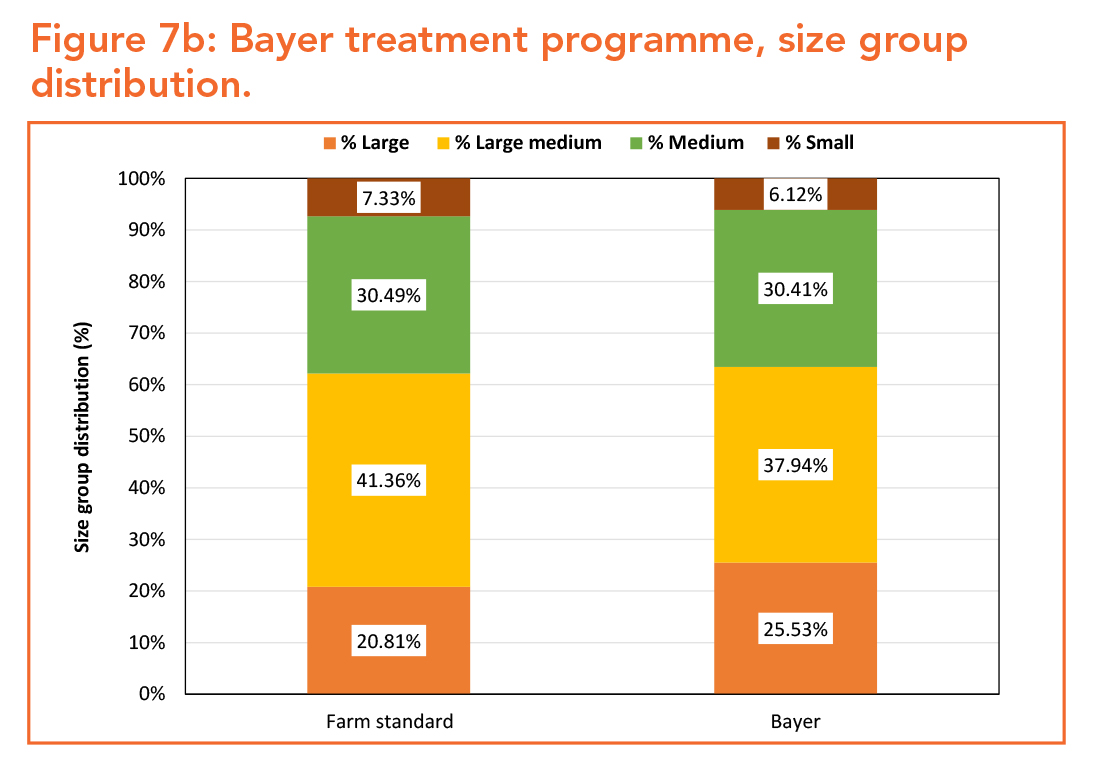
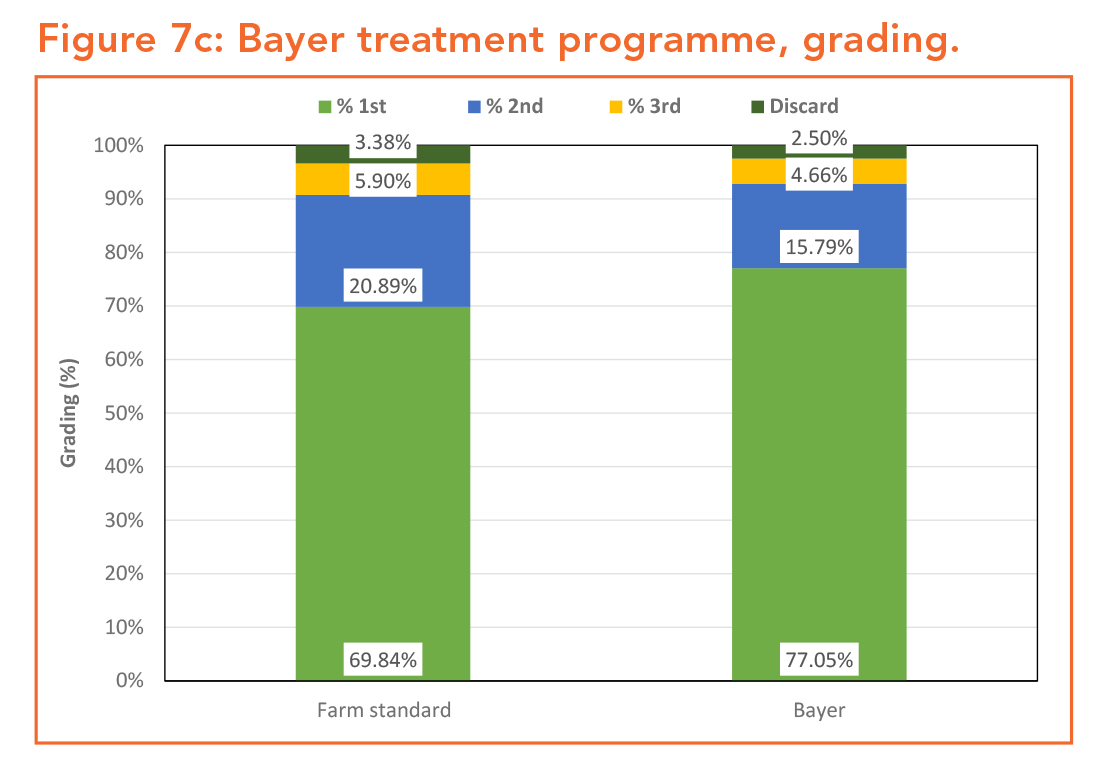
In the 2022/23 season the Bayer treatments performed well yet again, surpassing the farm standard programme’s yield and achieving 46.4 t/ha which far exceeded the farm standard programme’s yield. Bayer treatments continuously yielded higher proportions of the potato sizes preferred by the market, as well as good gradings.
FMC pest control programme
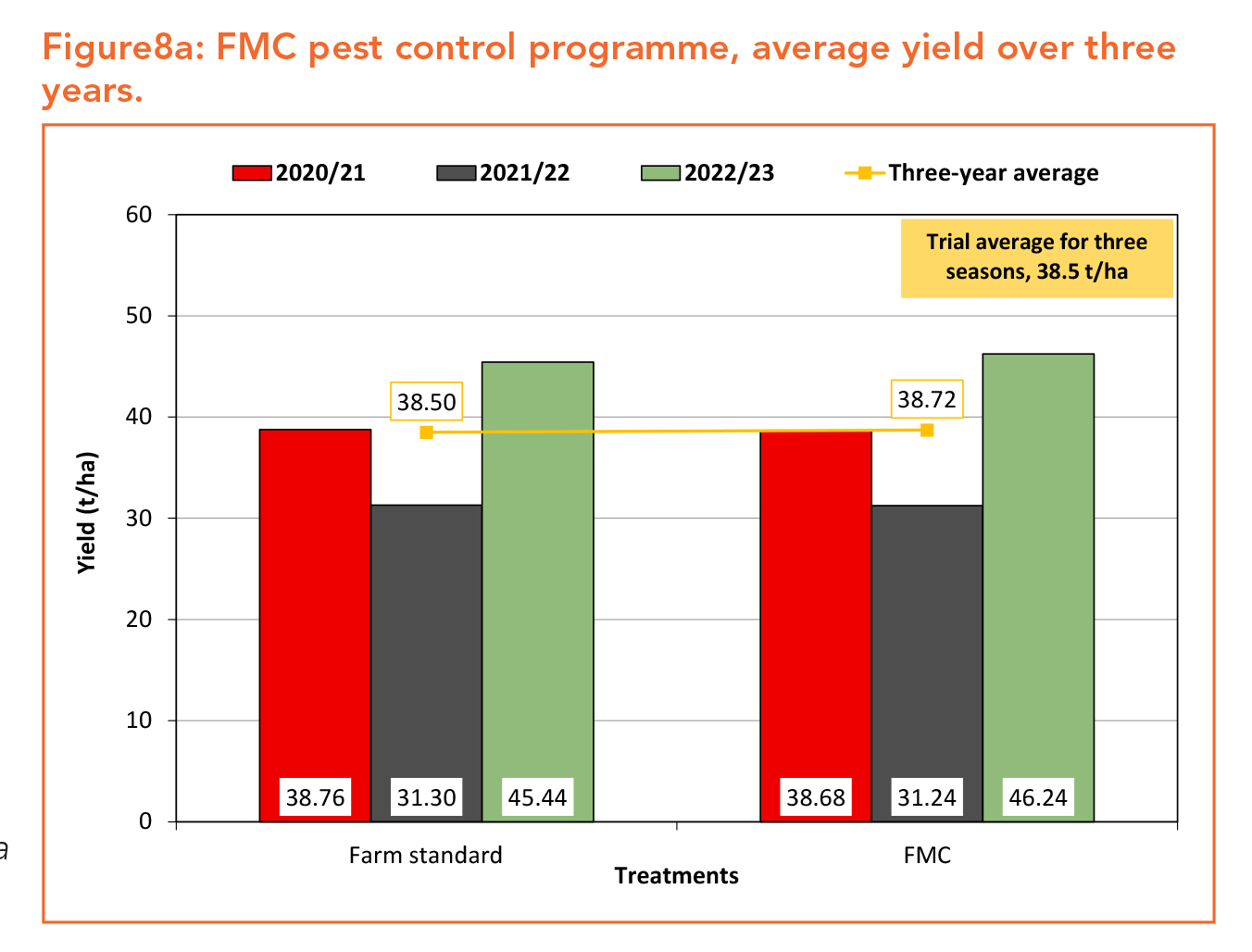
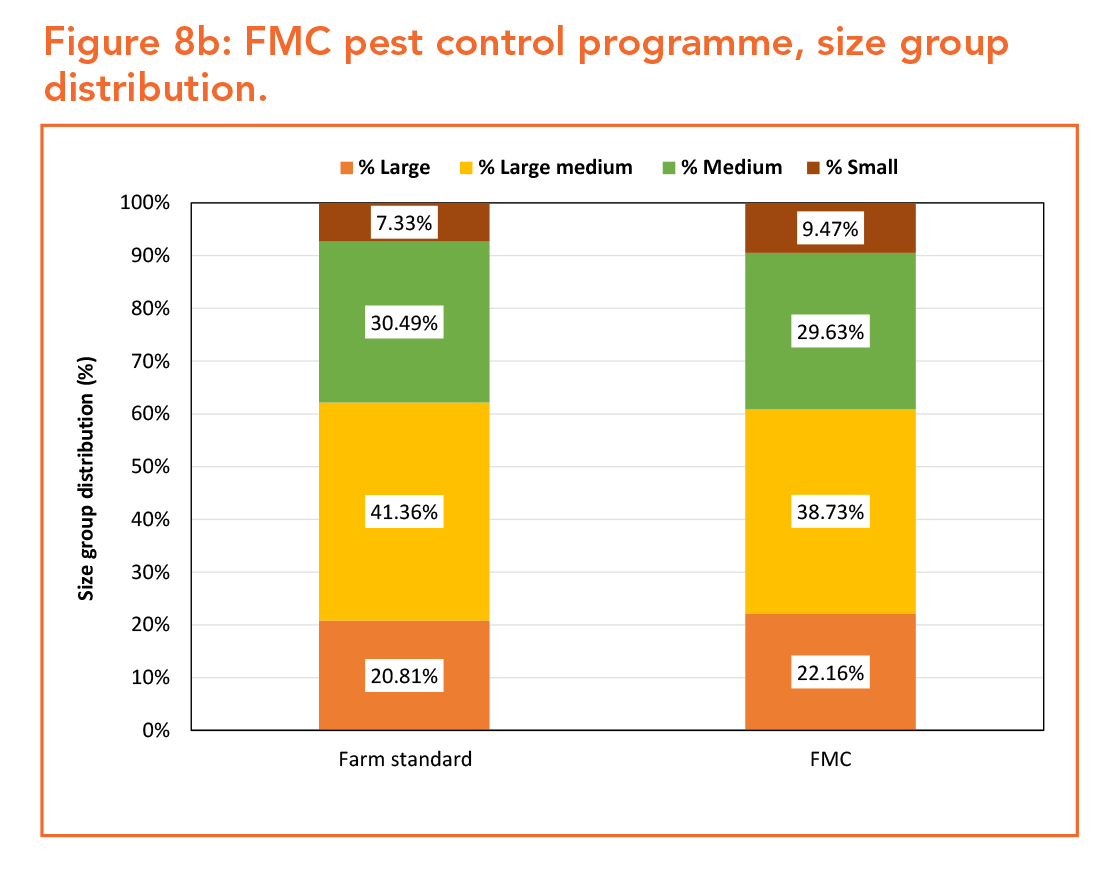
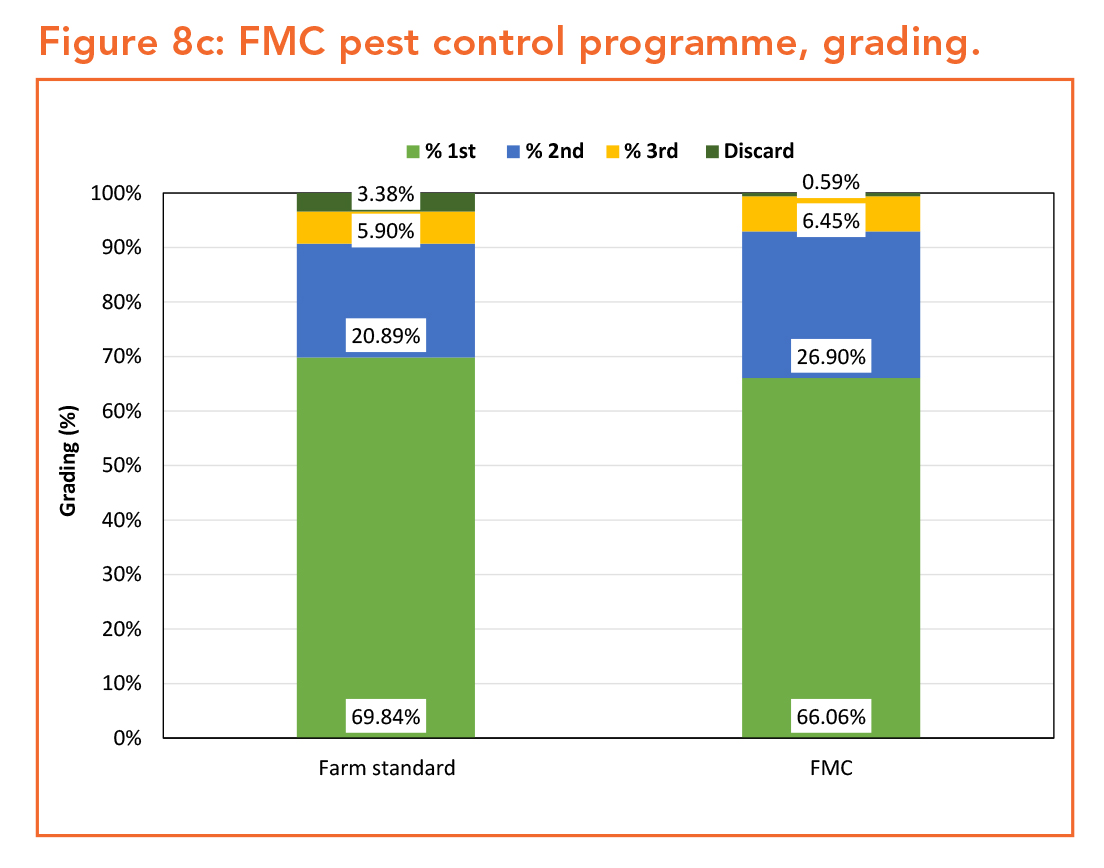
FMC offers an extensive portfolio of high-quality products that address potato production challenges. Some of these products include Coragen® (Rynaxypyr®) for insect control, an anthranilic diamide with a unique action targeting the insects’ ryanodine receptors. Coragen® controls pests such as potato tuber moth (Phthorimaea operculella), tomato leaf miner (Phthorimaea [Tuta] absoluta) and potato leaf miner larvae (Liriomyza huidobrensis).
Another anthranilic diamide, Benevia®, is used to control chewing and sucking insect pests such as potato moth and potato leaf miner. For the control of fungal diseases, Tizca® (Fluazinam) assists in protecting against potato blight and powdery scab (Spongospora subterranea).
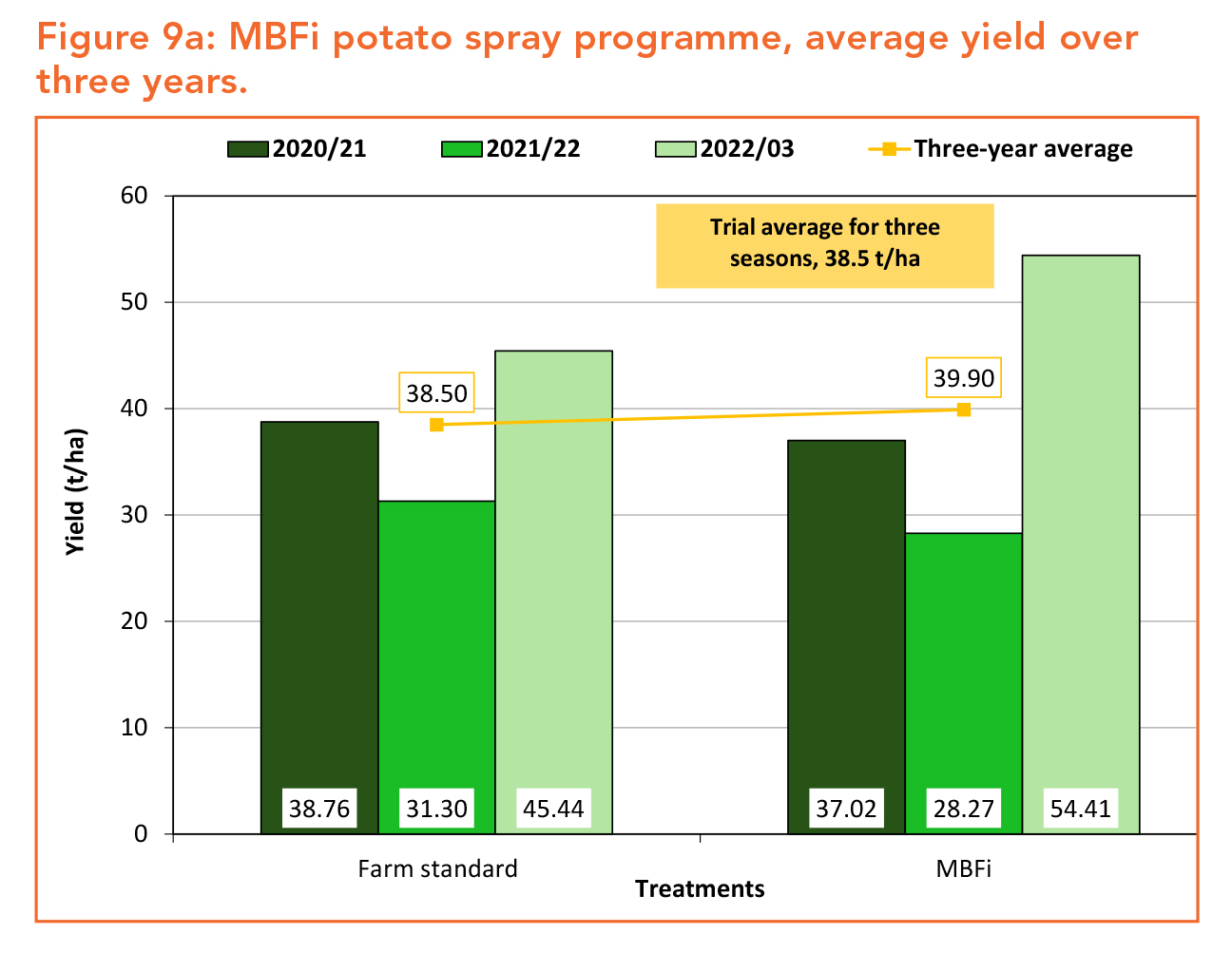
MBFi treatment
MBFi is an established manufacturer of foliar nutrition and biostimulant with various products that can integrate with most conventional, integrated pest control programmes. This includes seed treatments that combats soilborne diseases (Trillum DS Potato Premix – Trichoderma asperellium) as well as in-row products (Microphos Fruit & Veg) that contain bacteria which makes phosphorus available to the plant and ensures strong root development.
MBFi also supplies plant growth regulating products such as Instructor (a brassinolide biostimulant) that encourages tuber initiation.
Various foliar nutrition packages focus on biomass production and tuber fill. MBFi also offers a ‘green’ solution for integrated pest control in the form of biological fungicides such as Incite (Bacillus methylotrophicus), a biological fungicide that suppresses and corrects early blight and grey mould. Used in conjunction with Agricure SP (a water soluble contact fungus killer), the mixture becomes highly effective against early blight and grey mould.
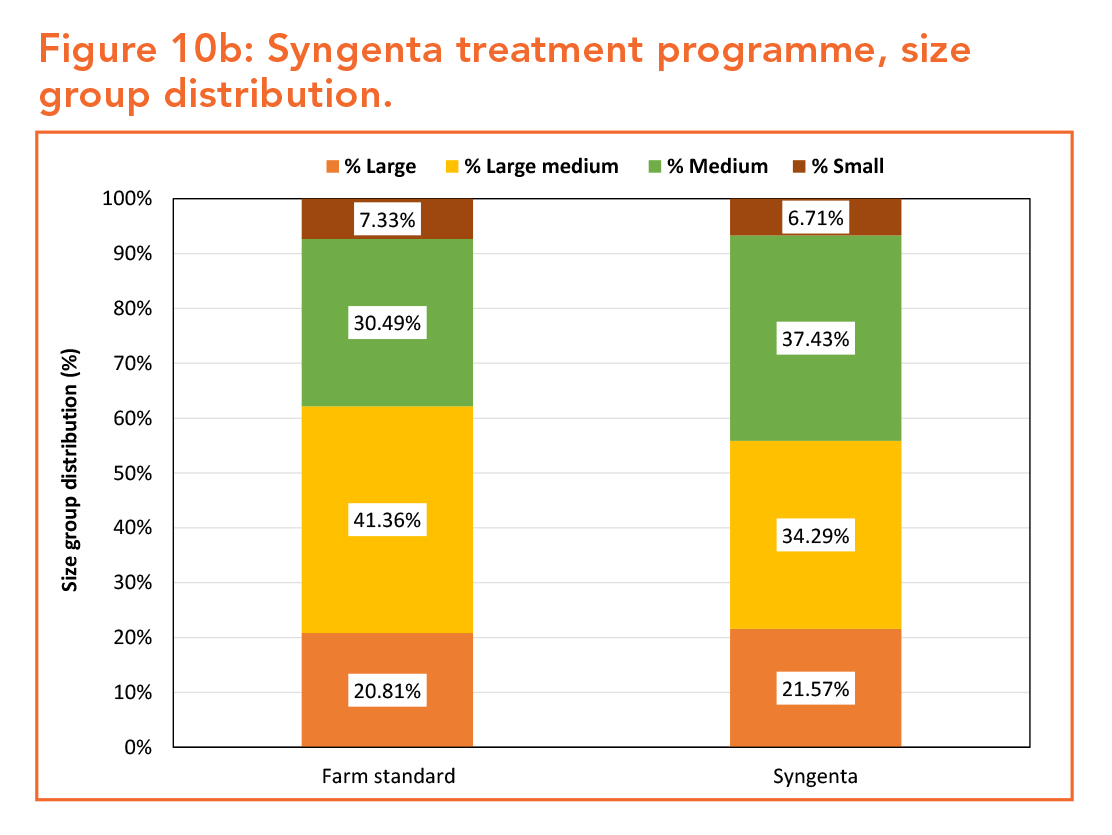
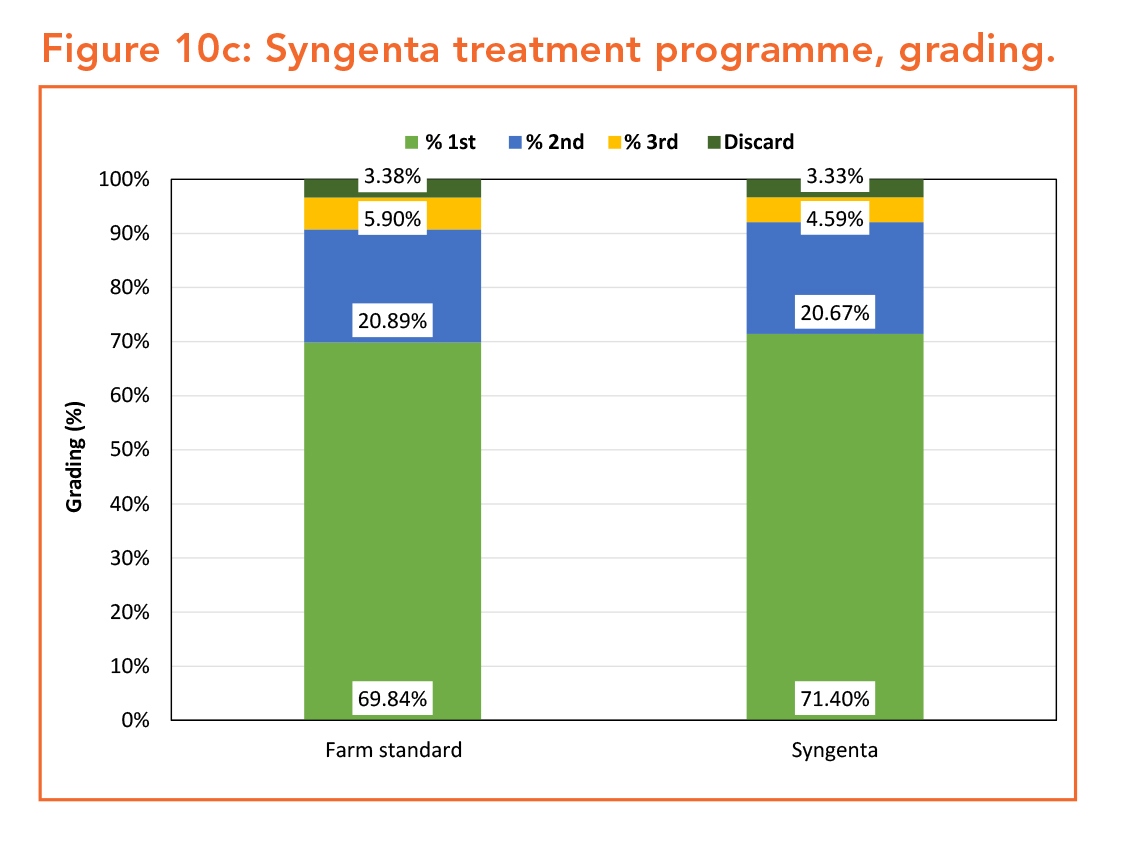
Syngenta treatment programme
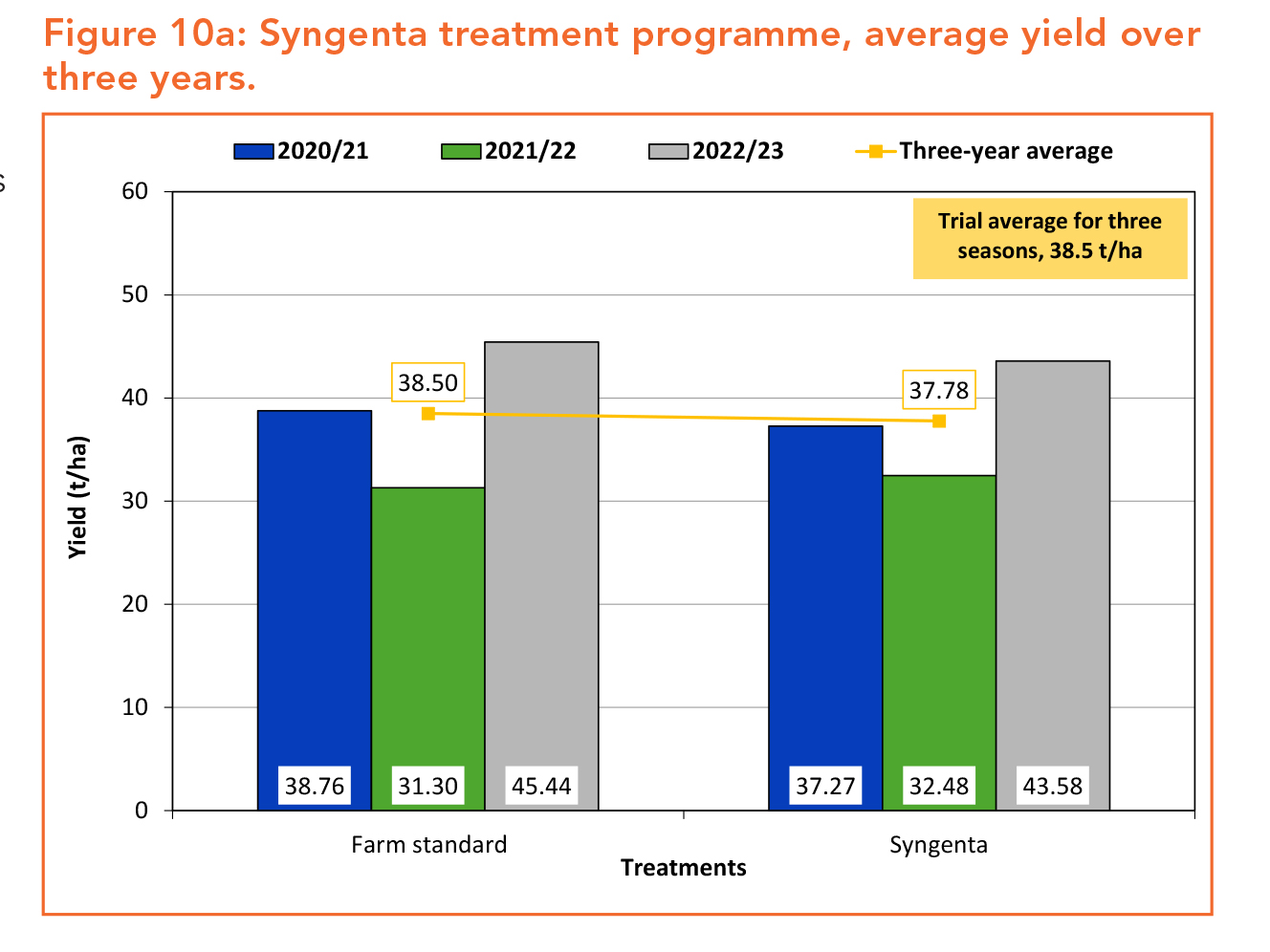
Syngenta’s approach to the trial is to generate sound long-term data in a typical farm standard programme. The focus is good farming practices along with a complete programme that offers producers the best probability of a good yield.
Attention is given to fungal diseases from planting onwards, with Syngenta’s AMISTAR® used in-row. Throughout the season early and late blight is combatted by alternating BRAVO®, MIRAVIS Duo®, AMISTAR Opti®, SCORE® and REVUS® and properly timing applications.
Regarding pests, Syngenta uses the correct groups of insecticides in accordance with Croplife SA’s Insecticide Resistance Action Committee (IRAC) guidelines. Several products are used timeously and on a need-to-use basis, including trademarks such as AMPLIGO®, SORBA®, AGRIMEC Gold® and PROCLAIM®.
Villa crop protection
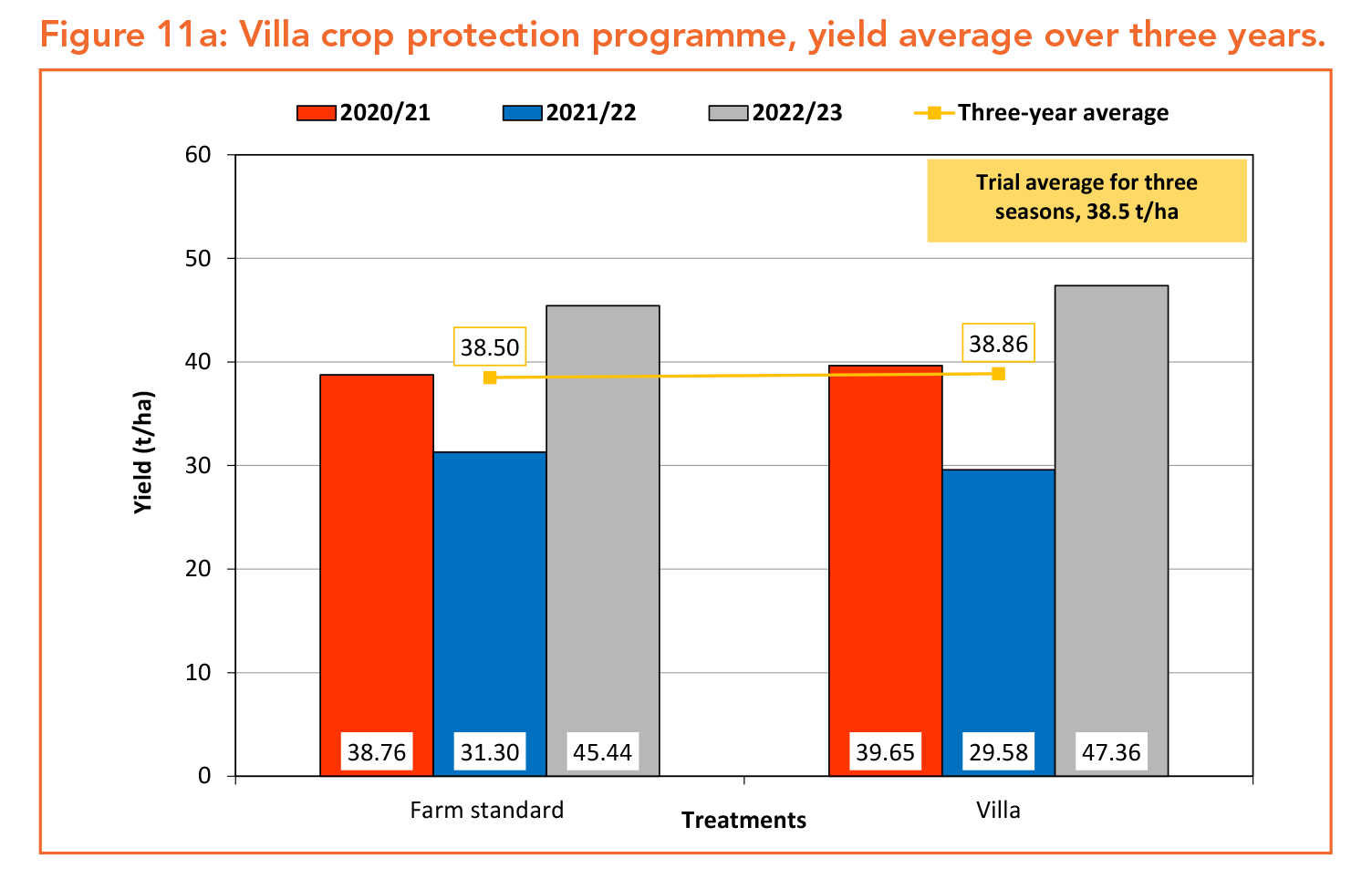
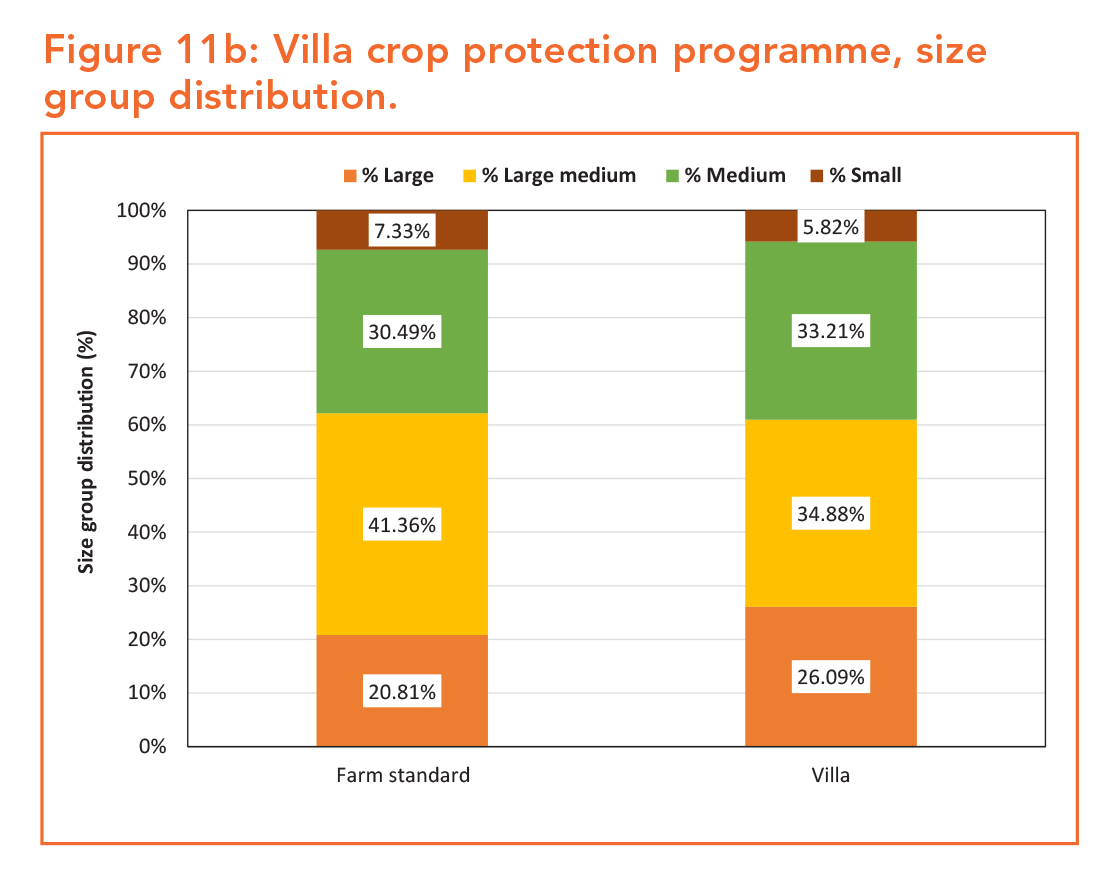
Villa’s potato portfolio offers a complete programme covering the entire seasonal potato crop protection spectrum. In the three trial periods Villa performed consistently and with a competitive yield against the farm standard programme.
For the last three years, Mancozeb has been omitted from the programme as the active ingredient will not be available in future. This is why Villa regularly introduces new chemical technology to its stable.
The company offers a strong moth and blight programme as well as a complete range of nematode products.
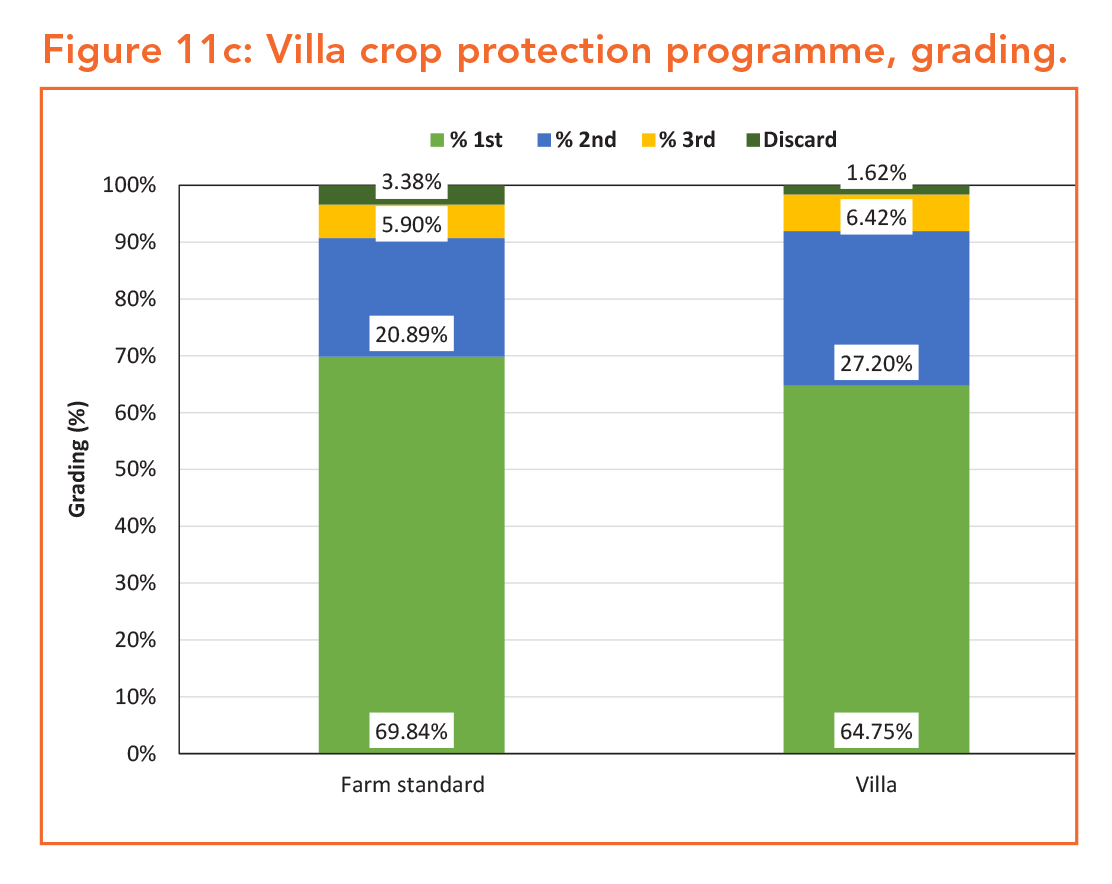
Average trial yield
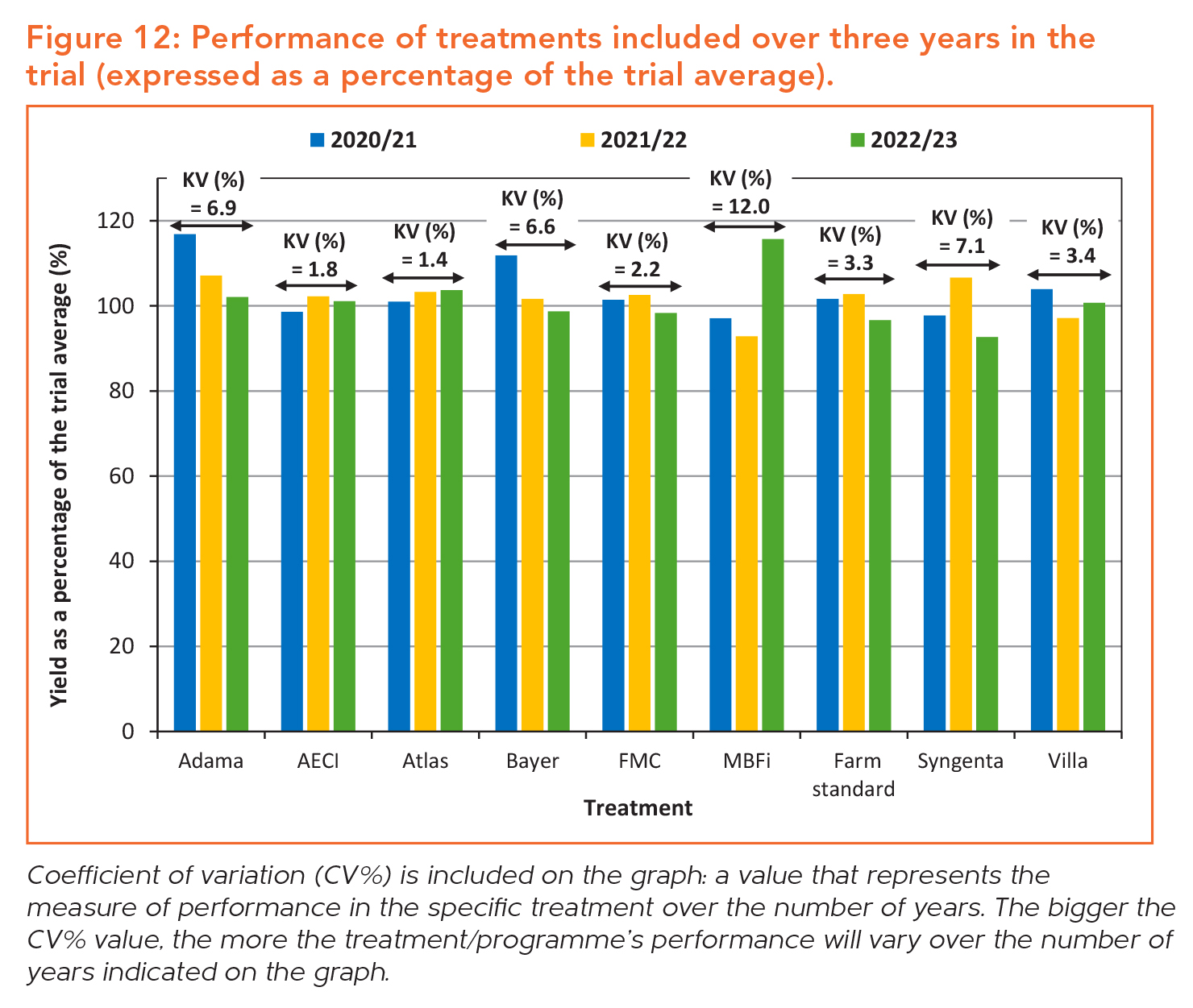
The average yield of the product trial over the three seasons were 38.14, 30.45 and 47.02 t/ha. Once again it is important to note that the treatments cannot necessarily be compared to one another since the outcomes and goals of the participating programmes are different and diverse.
Treatment performance varies from one season to the next, simply because climate conditions and seasons differ from one season to the next. Hence, it is important to consider the consistent performance of a programme over several seasons, rather than basing decisions on one season’s good performance. The Atlas fertiliser programme, and AECI and FMC’s crop protection programmes, have shown the least variation during this trial’s three seasons from 2021 and 2023 (Figure 12). – Enrike Verster, Potatoes SA, Asearch Agri-Tech and the Eastern Free State potato working group
Special thanks to each participant in this project as well as Asearch Agri-Tech’s Leanté de Jager, Dixon and Heinrich Odendaal, and staff. For more information, contact Enrike Verster of Potatoes SA at enrike@potatoes.co.za or Leanté de Jager on 079 597 6017 or leante@asearchagritech.co.za