
Estimated reading time: 4 minutes
For generations, farmers have cultivated the land with time-tested tools, relying on traditional methods that worked in sync with the environment. While these practices encouraged safe, chemical-free foods, they often fell short of meeting the food demand of a growing population.
Modern agriculture, assisted by mechanisation, synthetic fertilisers and chemical inputs, boosted crop production and yields. This approach, however, has consequences, including depleted soil biodiversity, declining crop resilience, growing concerns about food safety, soil and environmental health. Most people may be unaware that soil is one of the greatest reservoirs of biodiversity on earth, underestimated for its vital role in the ecosystem services on which we depend.
Microbiome management
According to the World Wildlife Fund’s Living Planet Report 2020, up to 90% of living organisms in terrestrial ecosystems, including some pollinators, spend part or all of their life cycle in soil habitats.
This is because the variety of soil components, filled with air and water, creates an incredible diversity of habitats, which in turn leads to an increase in soil organisms. The richer this diversity, the better the soil can function and deliver essential services, such as supporting plant growth, water retention, nutrient cycling, and improving nutrient use efficiency.
This remarkable biodiversity is a cornerstone of soil health – soil’s ability to function as an ecosystem that sustains plants, animals, and humans alike. Understanding and maintaining soil health are therefore essential for sustainable farming.
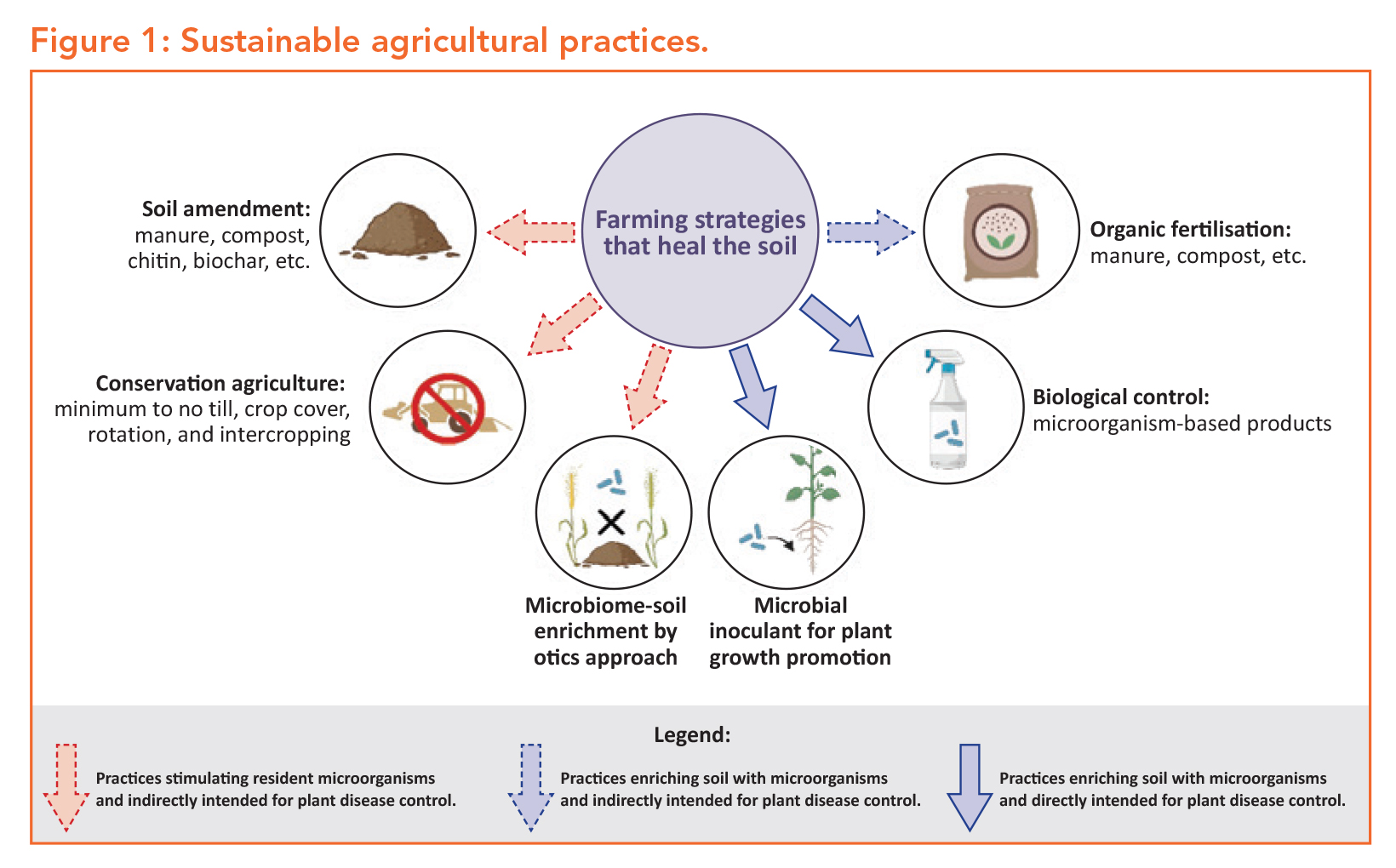
Beyond food production, soil biodiversity provides a vast range of ecosystem functions and services, including soil formation, the retention and purification of water, nutrient cycling, degradation of some soil contaminants and regulation of greenhouse gases, as well as sustaining plant, animal and human health. Figure 1 illustrates farming practices that can boost soil productivity through microbiome management.
Maintaining soil health
Healthy soil is home to billions of microorganisms that interact intricately to recycle nutrients, support plant growth by promoting plant resilience against pests and diseases, act as a natural filter, purify and store water as it infiltrates, while maintaining environmental balance.
In agriculture, healthy soil is more than just a growing medium; it is the structure that drives yield, quality, and sustainability. Healthy soil contains a balanced mix of minerals, organic matter, air, and thriving microbial communities. These components, together, create a self-sustaining environment where crops can develop strong root systems, access essential nutrients efficiently, and better withstand environmental stress. Maintaining soil health is therefore a strategic investment in long-term farming productivity.
A pathway to soil health
The act of building on traditional wisdom and modern science to restore soil fertility, strengthen crop resilience, and reduce reliance on chemical inputs is known as regenerative farming. Methods such as crop rotation, cover cropping, reduced tillage, and the use of organic amendments such as compost are important practices that replenish the soil. Also, root exudates from cover crops provide carbon, sugars, and amino acids for soil microorganisms, especially the beneficial ones.
These microorganisms break down organic material, recycle nutrients, improve soil structure, and enhance soil fertility.
Incorporating conservation practices such as minimal tillage and cover cropping into regenerative farming enhances long-term soil fertility. It improves soil structure and water retention, reducing soil erosion and nutrient runoff. This way, precious biodiversity within the topsoil and water quality in nearby rivers and streams are protected.
By improving soil health, we can mitigate climate impact through natural carbon sequestration, keeping in mind that soils and tree roots store organic carbon. This approach is central to ecological restoration with sustainable agriculture to regenerate the ecosystem.
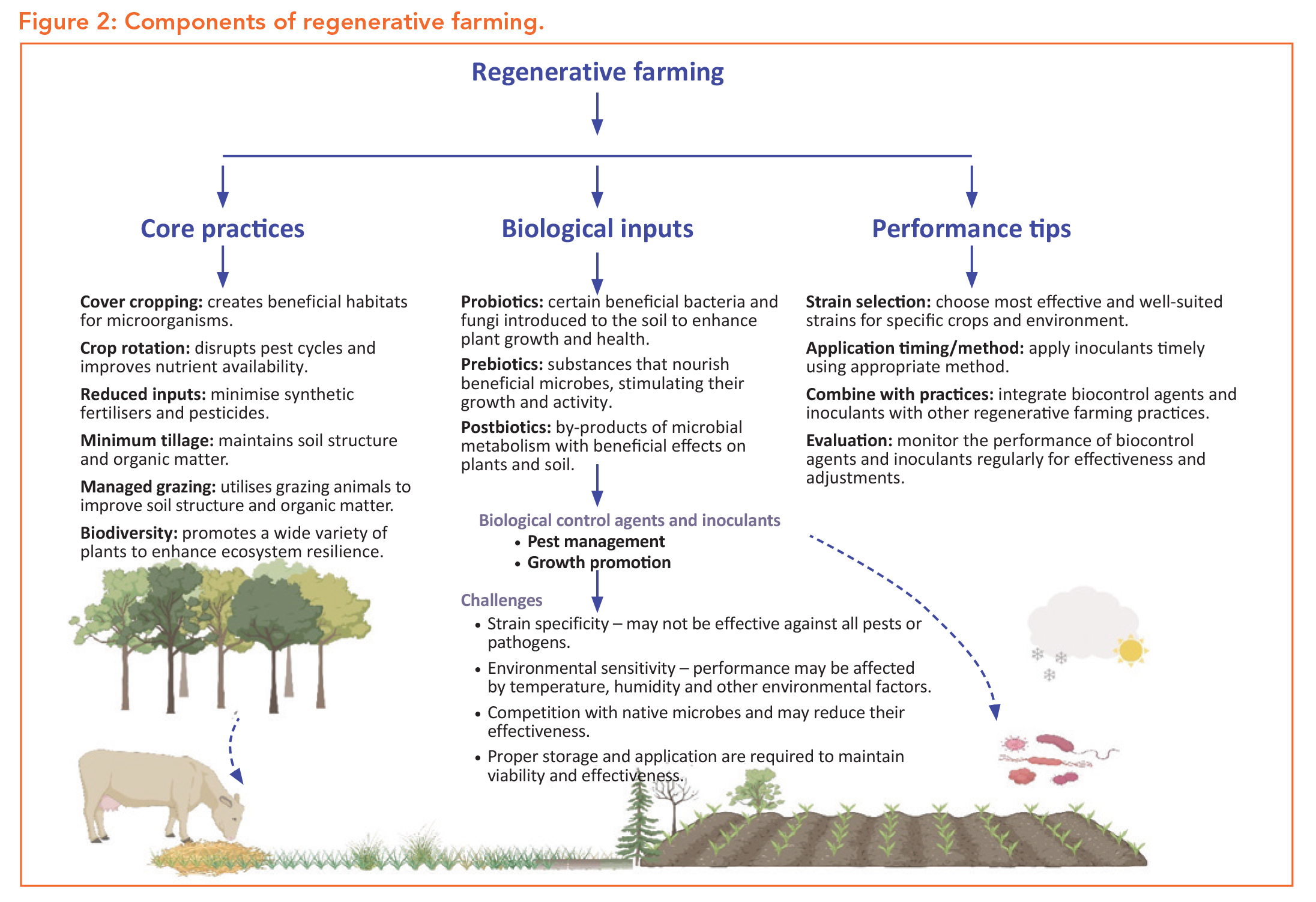
Producers are increasingly embracing the biologically friendly ‘otics’ approach using probiotics, prebiotics, and postbiotics alongside microbial inoculants and natural disease suppressors to enrich soil microbial communities. Integrating these practical yet innovative techniques, producers can boost crop health and productivity while ensuring farming remains sustainable for future generations. Figure 2 summarises practicable core farming practices that farmers can adopt to achieve in achieving the goal of sustainable farming and soil health.
Conclusion
Adopting regenerative farming practices such as cover cropping, reduced tillage, crop rotation, organic amendments, and integrated pest management, farmers can rebuild soil structure, enhance biodiversity, and improve water and nutrient cycling. These practices will not only mitigate the impact of climate change but also increase farm resilience, productivity and profitability over time. – Prof Lucy Moleleki, University of Pretoria
For more information and references, send an email to Prof Moleleki at lucy.moleleki@up.ac.za