
Estimated reading time: 8 minutes
The Loskop Valley is a potato-producing region where about 3.3% of the country’s commercial potatoes, mainly for processing purposes, are produced by 18 producers on approximately 1 715 ha. The most prominent cultivars grown in the area for processing purposes are FL2108, Hertha, Markies, and Innovator.
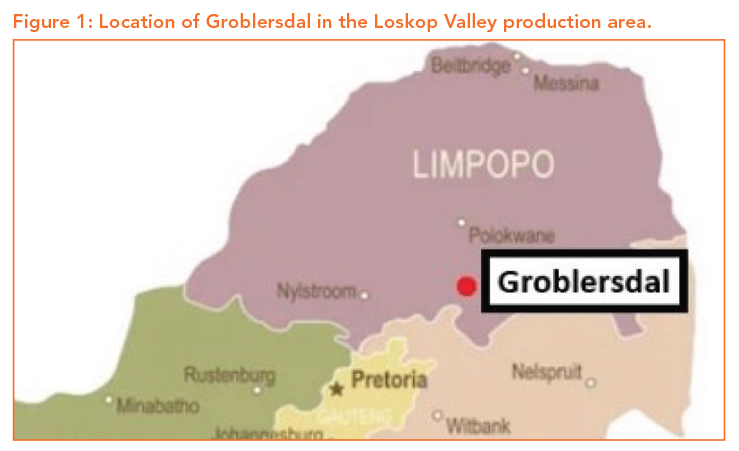
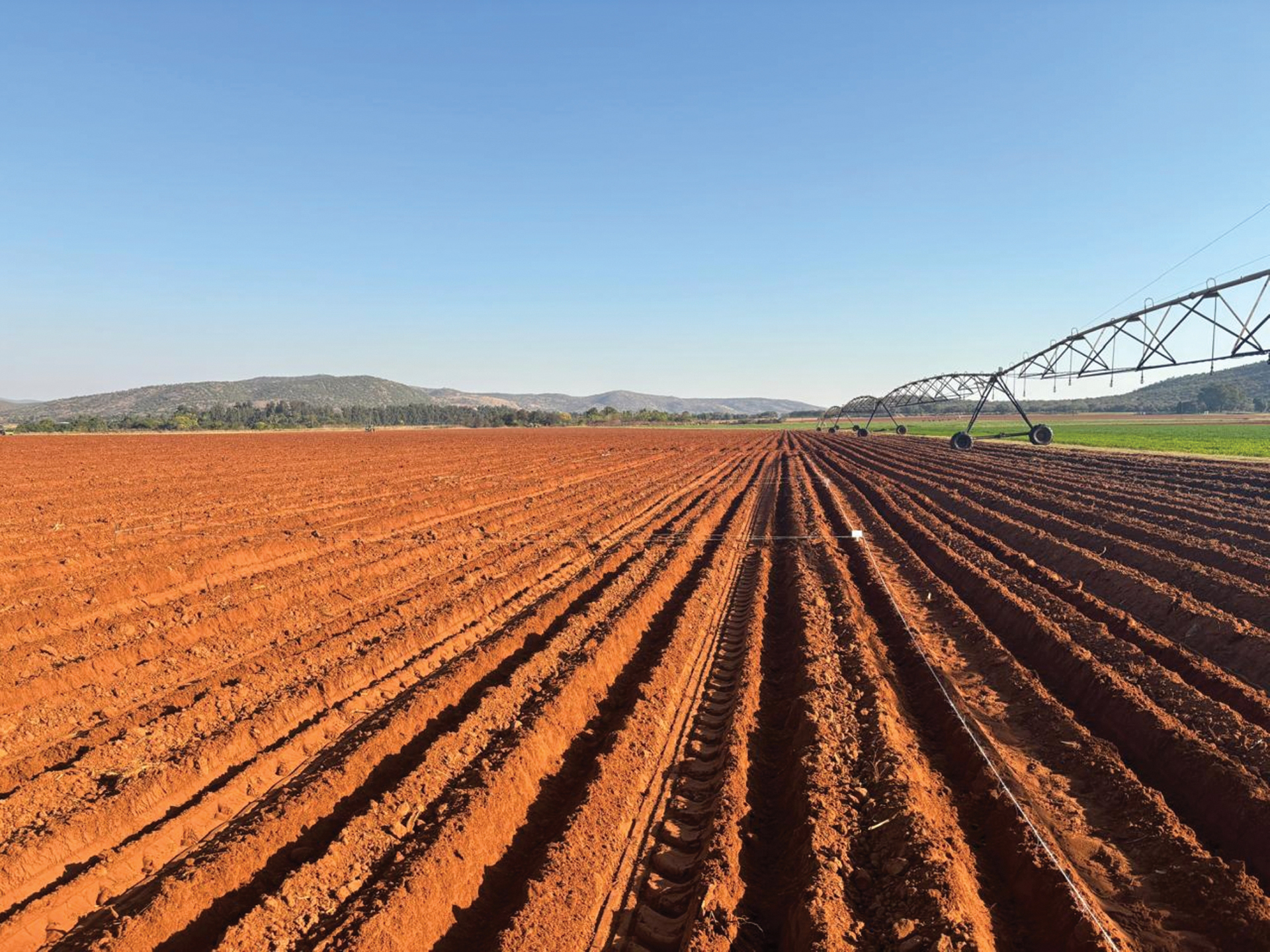
The trial was conducted between Marble Hall and Groblersdal. The area is located in South Africa’s temperate summer rainfall region and has recorded an average annual rainfall of 517.9 mm over the past 24 years. The region is characterised by very hot summers and winters, with the possibility of frost from July to August.
Trial design and details
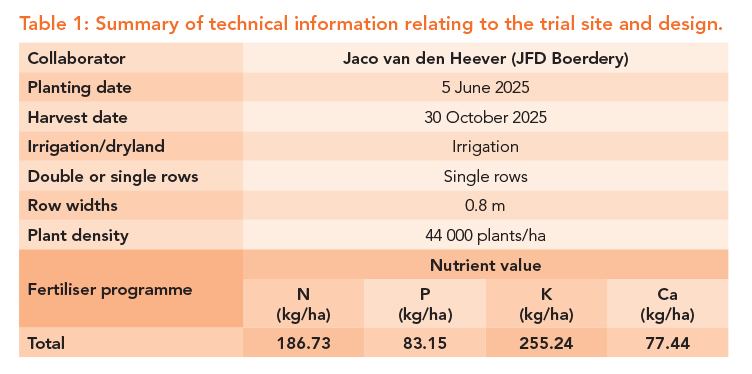
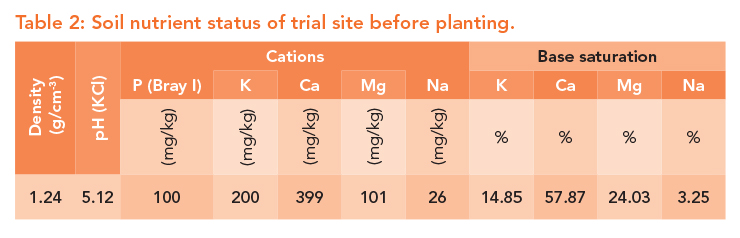
The cultivar trial is laid out in a random block design with three replications per cultivar. Table 1 contains technical information relating to the trial, and soil analysis results are set out in Table 2.
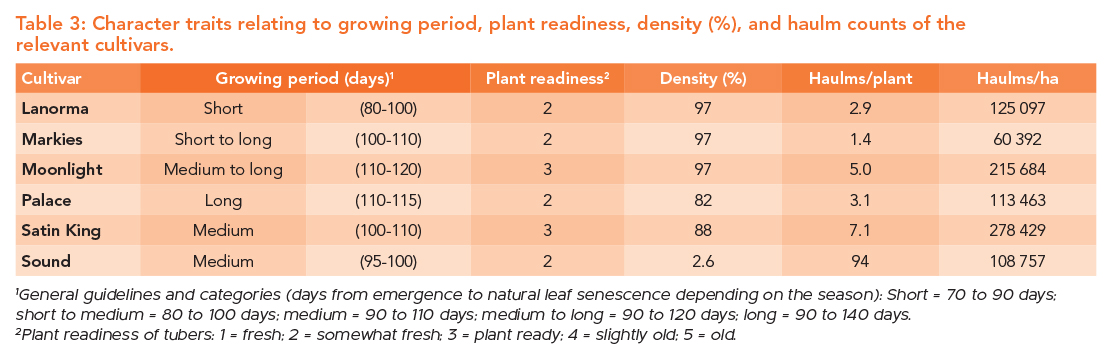
The cultivar trial includes cultivars with short and long growing periods, which can influence the final yield of certain cultivars. The length of growing periods is subject to the nature of the seasons but is generally regarded as the time that passes from emergence to natural leaf senescence. Table 3 sets out how these growing periods differ among cultivars.
The density and haulm count of each tuber influence its size and yield. The number of axillary buds per tuber is cultivar-dependent and determines the number of sprouts a tuber can yield. In this regard, the plant readiness of tubers is very important, since ideal plant readiness usually results in better sprouting and more stems per sprout. The plant readiness of tubers at the time of planting, as well as the density percentage and haulm count observed later in the growing season, are presented in Table 3.
Marketing-related results
The evaluation of cultivars, as in the Loskop Valley cultivar trial, provides results relating to yield and marketing index. The potatoes were sorted into size categories on a table intended for processing markets. Sizes were defined as large (70 mm), large-medium (65 mm), medium (55 mm), small (50 mm), and extra-small (45 mm).
The quality of the potatoes was very good, and no noteworthy reasons for downgrading were observed or recorded. Price comparisons were made with average market prices at the time of harvest. However, the performance of cultivars cannot be based solely on the results of a single specific season, as climate differs from one year to the next. Therefore, cultivars are preferably evaluated across several seasons.
Climate and weather conditions
As with any crop, factors such as temperature and water availability (whether through good irrigation scheduling or rainfall) significantly influence the potato plant’s growing period. These factors are considered when evaluating cultivar performance.
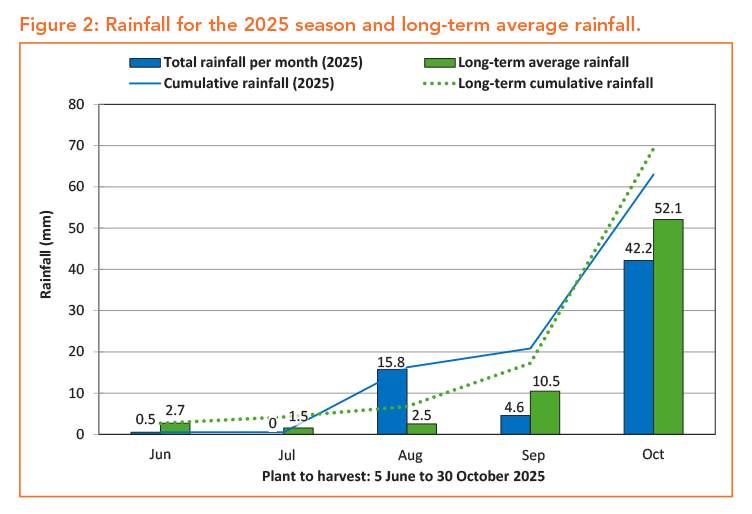
Applicable daily and long-term weather data are obtained from an Agricultural Research Council (ARC) weather station located as close as possible to the trial site.
The cumulative rainfall trend for the 2025 season (Figure 2) shows the same amount of rainfall as the long-term average. Irrigation scheduling was managed well during the growing period, which falls mainly in the winter months. Higher rainfall was recorded during the late stages and at leaf senescence (September and October).
Minimum and maximum temperatures are illustrated in Figure 3. A total of 57 days with maximum temperatures above 30°C and ten days above 35°C were recorded during the season. Since August, maximum temperatures exceeded 30°C and even 35°C towards the end of the season.
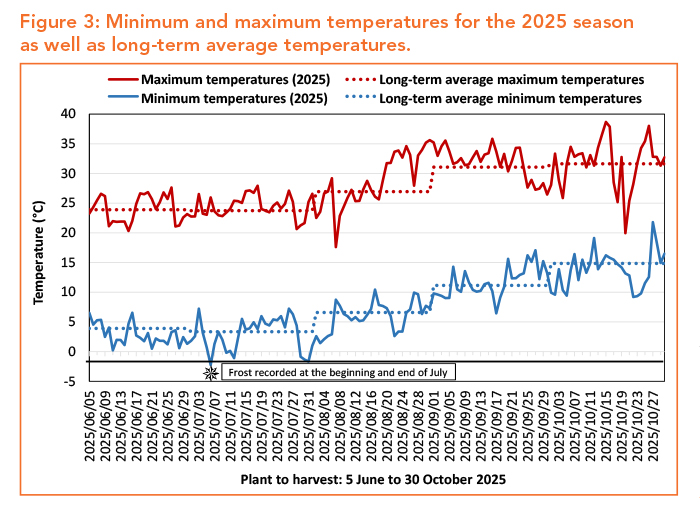
A dramatic fluctuation in maximum and minimum temperatures at critical growing stages can have a negative impact on tuber initiation and development. Frost was recorded at the beginning and end of July, which affected the final yield.
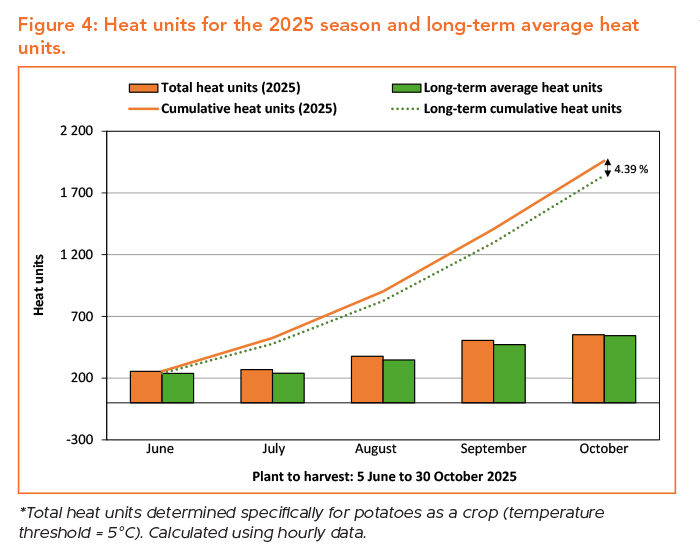
The collection of heat units during a growing period is an important factor in understanding crop growth and development. The trend of heat units available for this cultivar trial appears to be somewhat higher than the long-term data trend (Figure 4), with August and September showing high maximum temperatures.
Yield and cultivar effect
Yield data recorded during harvesting were processed statistically using the GenStat® program. The Tukey test of least significant differences (LSD) was used to separate the mean. The cultivar effect during this trial (Figure 5) was statistically significant (p<0.05), and the coefficient of variation (CV) was within limits (16.1%). These factors indicate that the trial was well executed, and the results are therefore reliable.
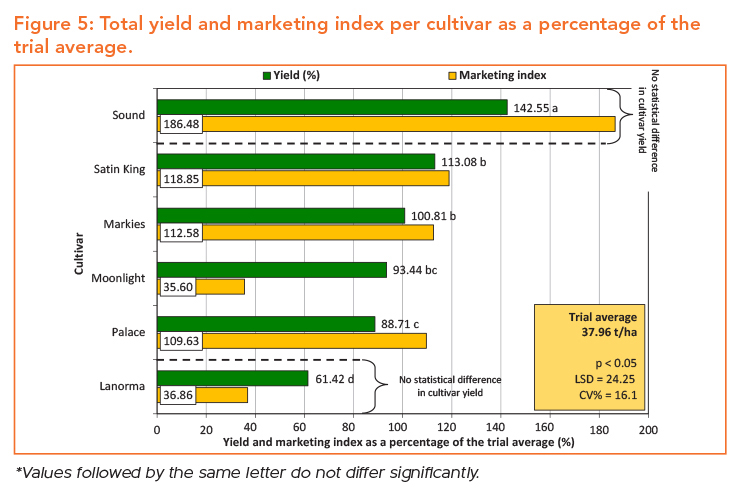
The yield of each cultivar is divided by the trial average, with the average across all cultivars set to 100%. This is used to determine a yield index, with each cultivar’s yield performance expressed as a percentage of the trial average.
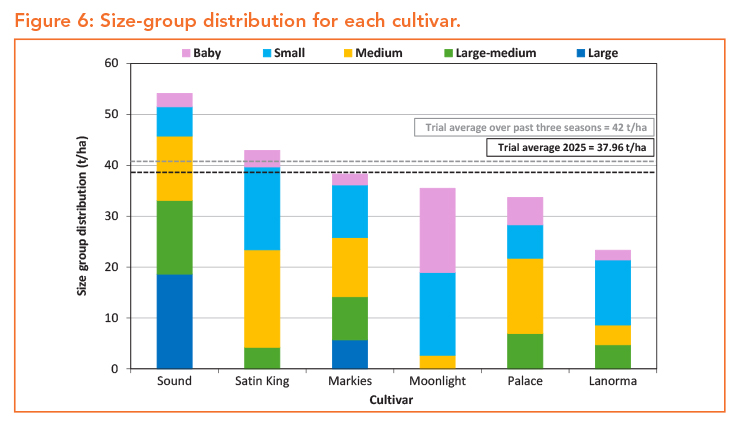
The average yield of the trial for the 2025 season is 37.96 t/ha, a few t/ha lower than that of the previous three seasons (42 t/ha). Sound statistically produced the highest yield and achieved the best marketing index. Size group distribution is an important factor in evaluating a cultivar’s marketability, particularly in the processing industry (Figure 6). Processors regard aspects such as size, quality, tuber shape, and specific gravity (SG) as significant.
Cultivar performance
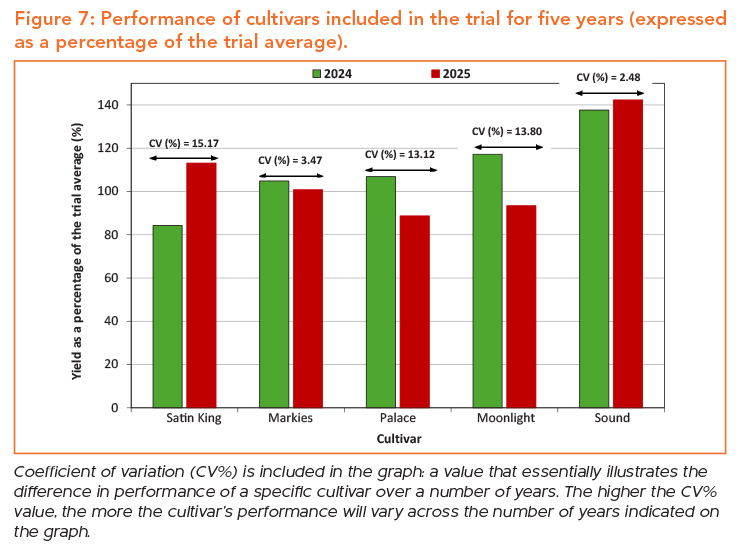
Given the nature of the seasons, cultivar performance varies from one season to the next simply because the climate is never the same. Thus, it is important to consider cultivar performance across multiple seasons. The variation in participating cultivars over the past five seasons is shown in Figure 7.
Lastly, processing characteristics can also be evaluated in relation to the internal quality of potatoes, especially for processing. To adhere to processing requirements, cultivars must meet a chip colour standard of >50 and an SG of ≥1.075 (Table 4). Flesh colour and tuber shape were also evaluated. Almost all cultivars met the prescribed chip colour, but no cultivar achieved the required SG.
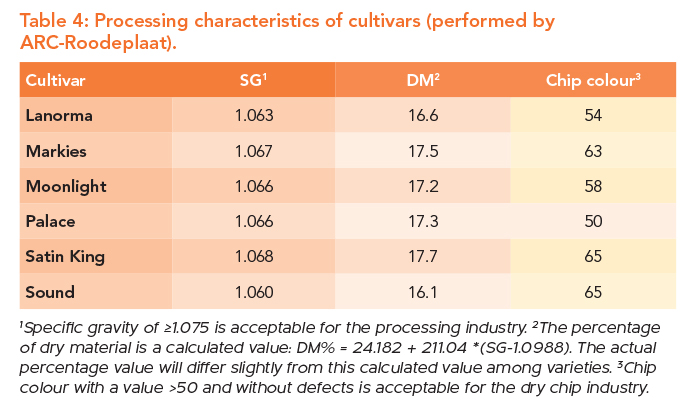
Factors such as extreme heat, water stress, the duration of the growing season, and excessive nitrogen or salt in the soil can adversely affect the SG. Internal quality was good, and no significant issues such as brown spot or hollow heart were observed.
A special word of thanks to the producer Jaco van den Heever, participants FPD, GWK and Provision Agri, as well as Damien Da Cal and other Potatoes SA staff. – Enrike Verster, Potatoes SA