
Estimated reading time: 9 minutes
The Southwestern Free State potato production area produces approximately 1.9% of South Africa’s commercial potatoes on 954 ha (2024 harvest year). The main cultivars produced for commercial consumption (table and processing) are Sifra (89%), Mondial (5%), Innovator (3%), and Panamera (3%).
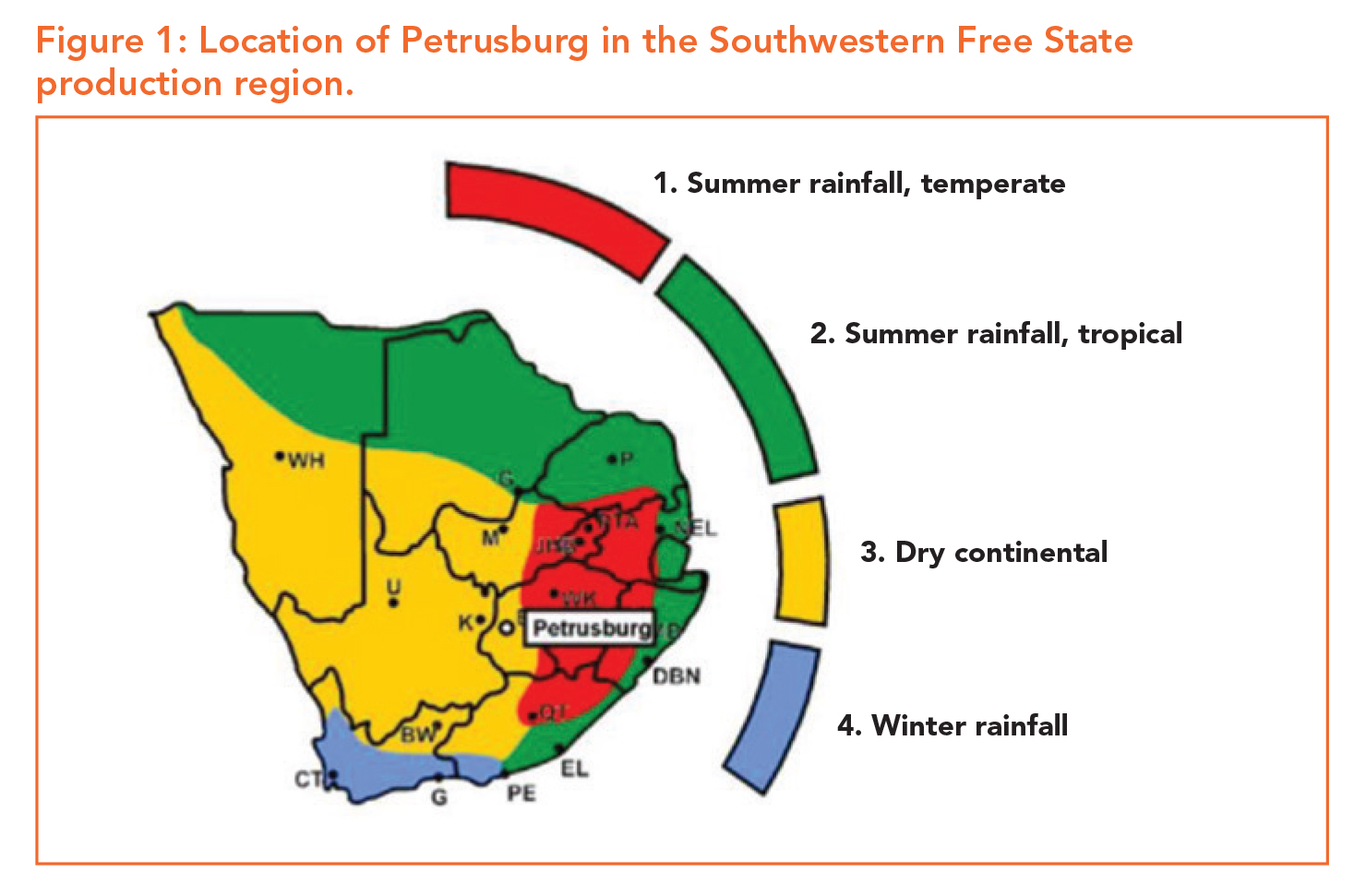
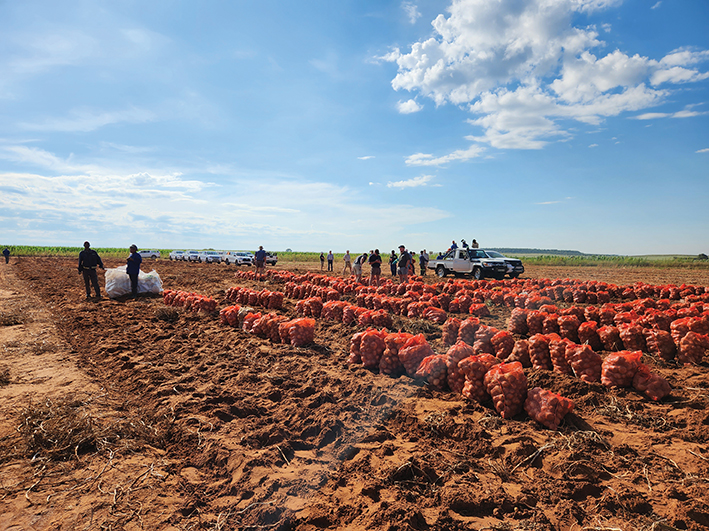
Petrusburg is located in South Africa’s dry continental area (Figure 1) and the farm on which the trial was planted, received an average annual rainfall of 554 mm over the past 22 years. This region is characterised by warm summers and cold winters, with frost occurring from June to August, and even up until November in 2017.
Trial design
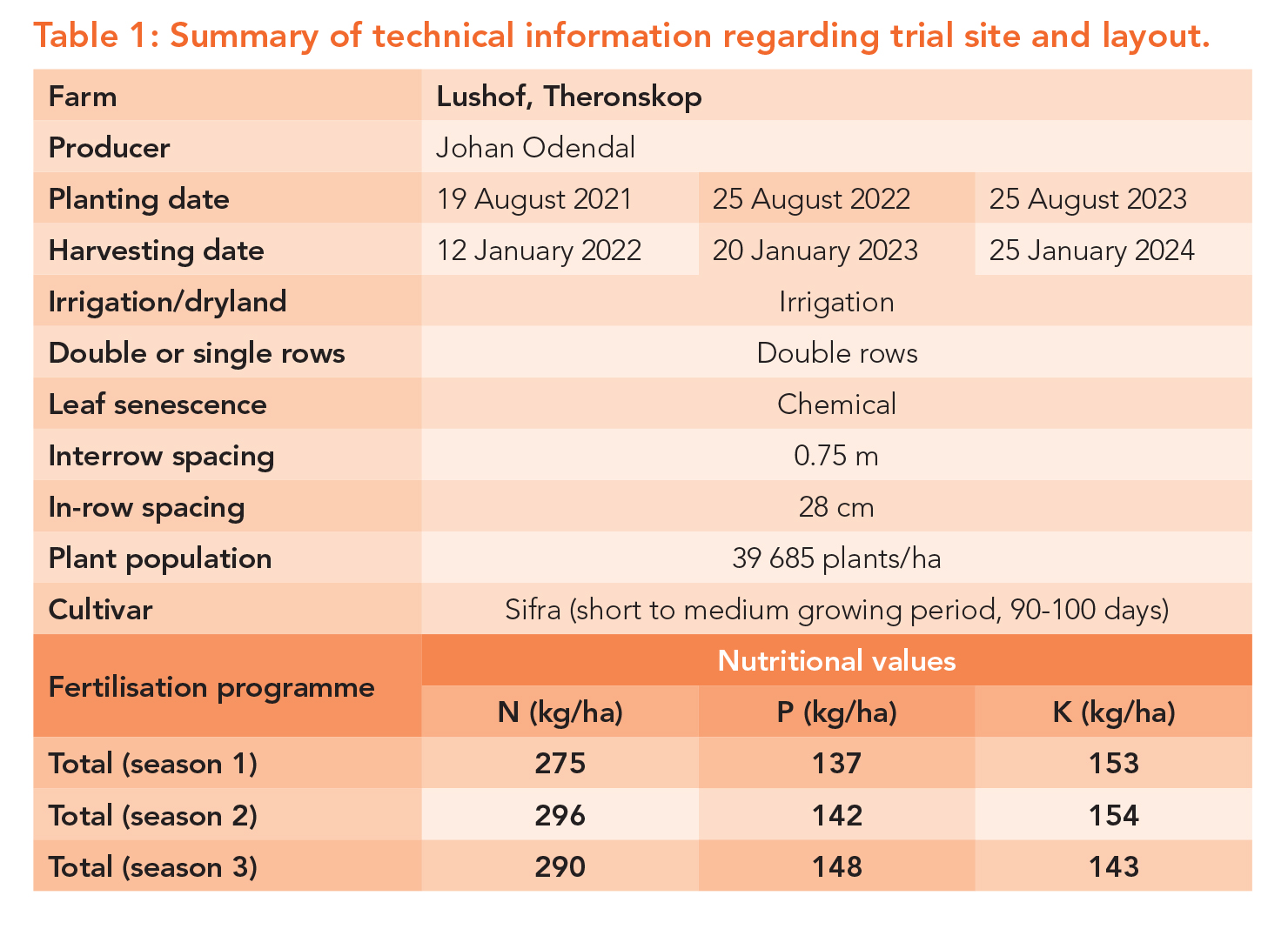
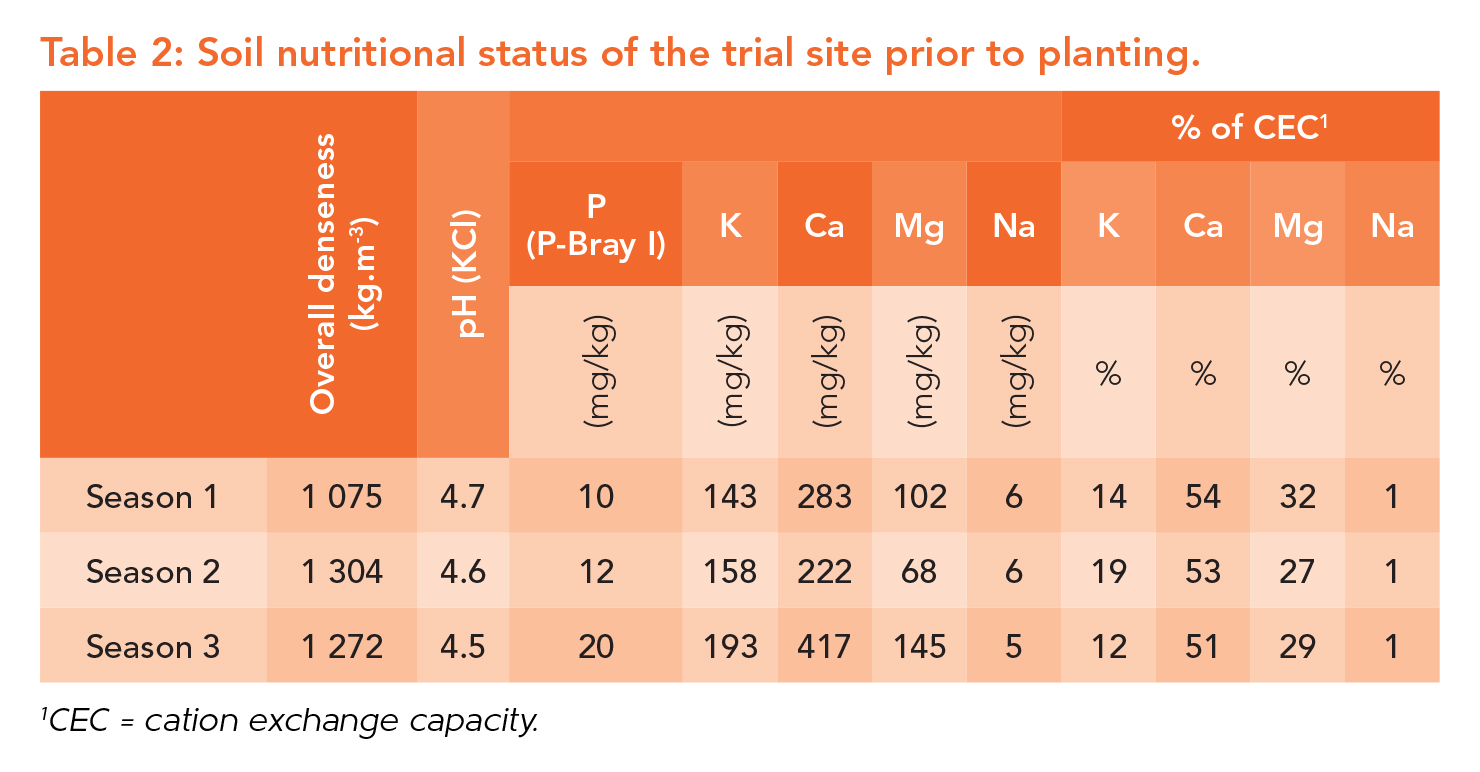
The cultivar trial at Petrusburg was laid out in a random block design with three repetitions per cultivar. Table 1 contains relevant technical information relating to the trial. Soil samples were taken before cultivation to determine the nutritional status of the soil on the trial premises (Table 2).
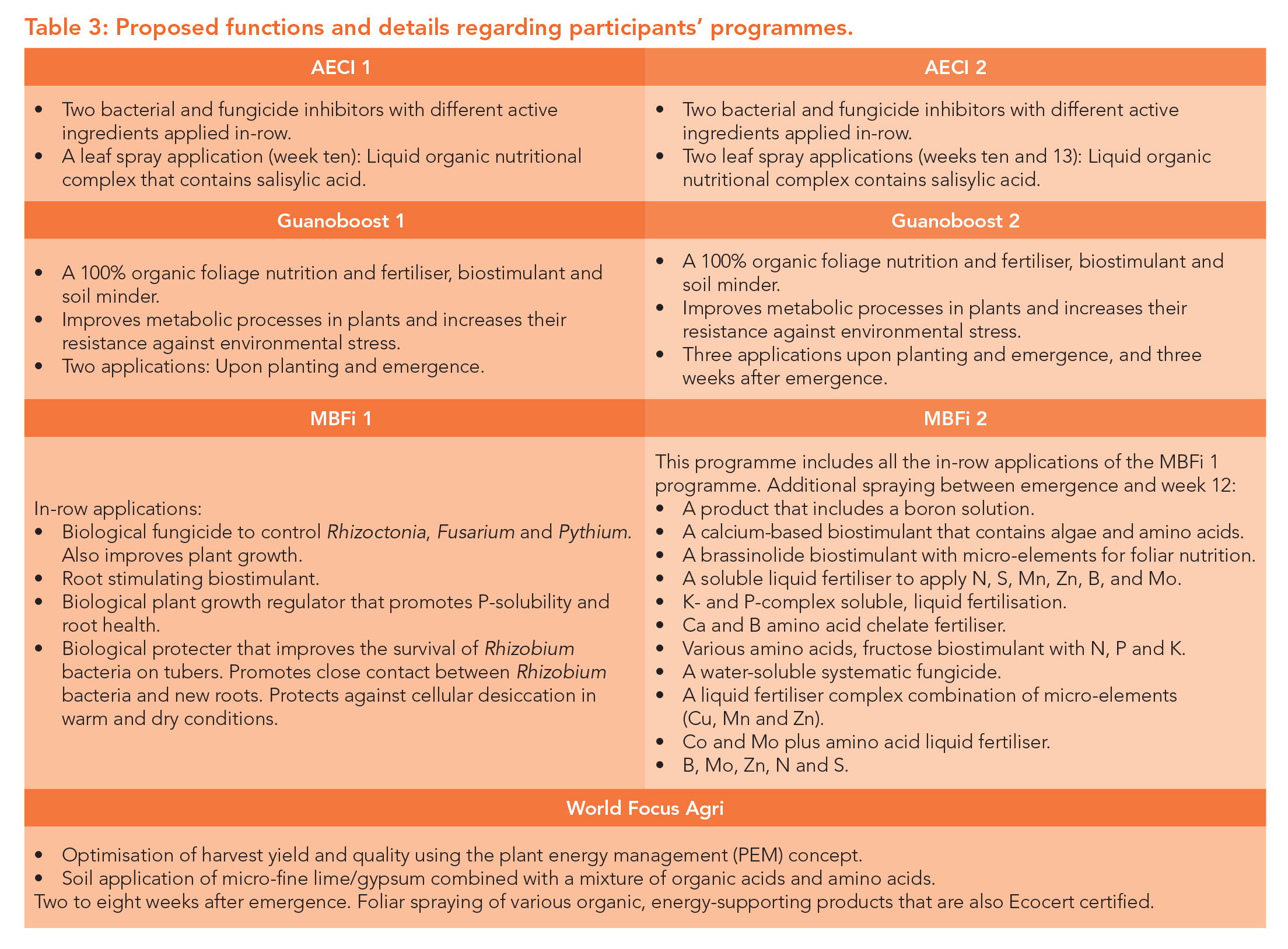
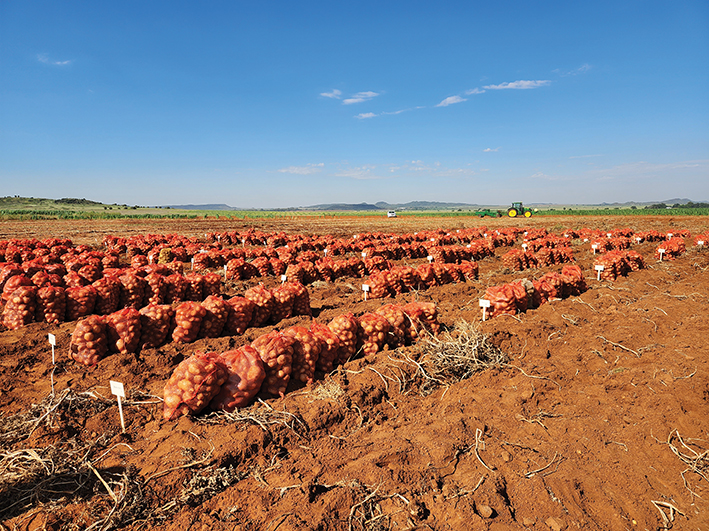
The product trial includes a variety of companies with diverse programmes. In accordance with policy, this article refers to only seven programmes (treatments) tested in the trial for three years. In all three trial seasons the relevant programmes were tested in addition to the farm standard programme (control), on the cultivar Sifra.
As in the case of the Petrusburg product trial, the evaluation of treatments provides, among others, results relating to yield and marketing indexes. The goal of the trial is to determine how the programmes in question perform within the region. Hence, it is very important to note that the programmes cannot necessarily be measured against each other, but rather against the control or farm standard programme. Various programmes deliver different outcomes, and the finer details of each programme can be discussed with the relevant representative.
The standard spraying and fertilisation programmes employed on the farm served as the control treatment in the trial. Therefore, this article includes the control treatments as well as the programmes specified in Table 3.
Treatment performance
The marketing index of the treatments are calculated by classing and sorting each treatment according to quality and size groups (such as Class 1 Large or Class 2 Large-medium). All three replications from this trial were combined, washed, and then classed and sorted by the packhouse. Prices were then compared to market prices at the time of harvesting.
The performance of the treatments cannot simply be based on the results of only one specific season, since climate and tuber quality can differ from one year to the next, which is why programmes are preferably tested over at least three seasons.
As with any crop, important factors such as temperature, water availability (good irrigation schedules or rainfall) as well as heat units have a significant influence on the potato plant’s growing period. These aspects are therefore taken into account when evaluating a trial.
Seasonal aspects
Relevant weather data of the relevant seasons was obtained from a nearby Agricultural Research Council (ARC) weather station. The weather station is located 9 km from the Petrusburg trial site.
Figure 2 illustrates the rainfall trend of the past three seasons. Season 1 was characterised as a reasonably wet season, especially in the last two months. Considerably more than above-average rainfall and wet conditions led to a high occurrence of late blight. As a result, the planting died off a week or two earlier than spraying for leaf senescence would normally occur.
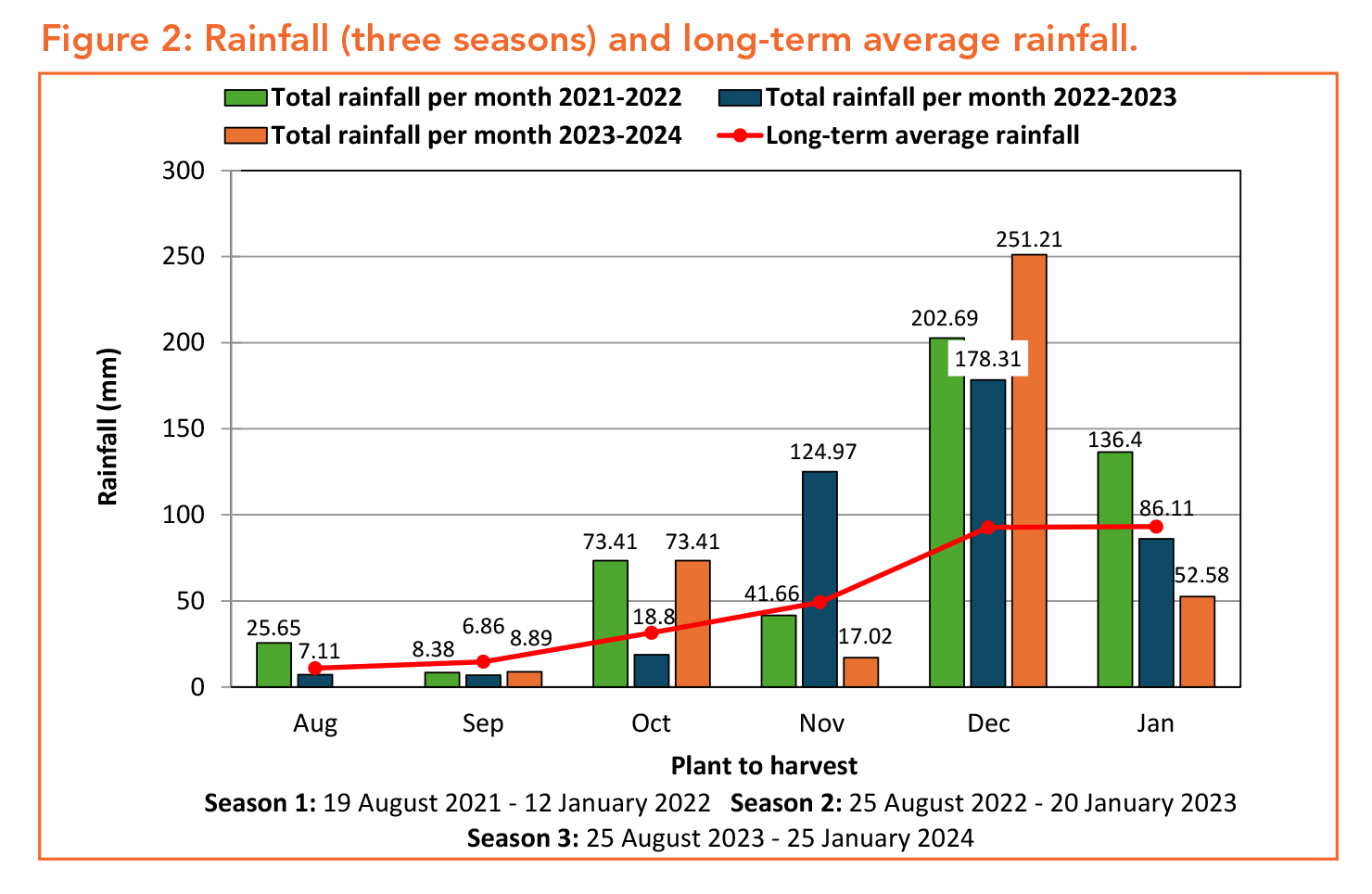
The last half of season two was characterised by above-average rainfall, especially during tuber filling, which probably led to quality problems and a greater number of discarded potatoes. Season 3 received above-average rainfall during tuber fill, which caused the same problems as in season 2.
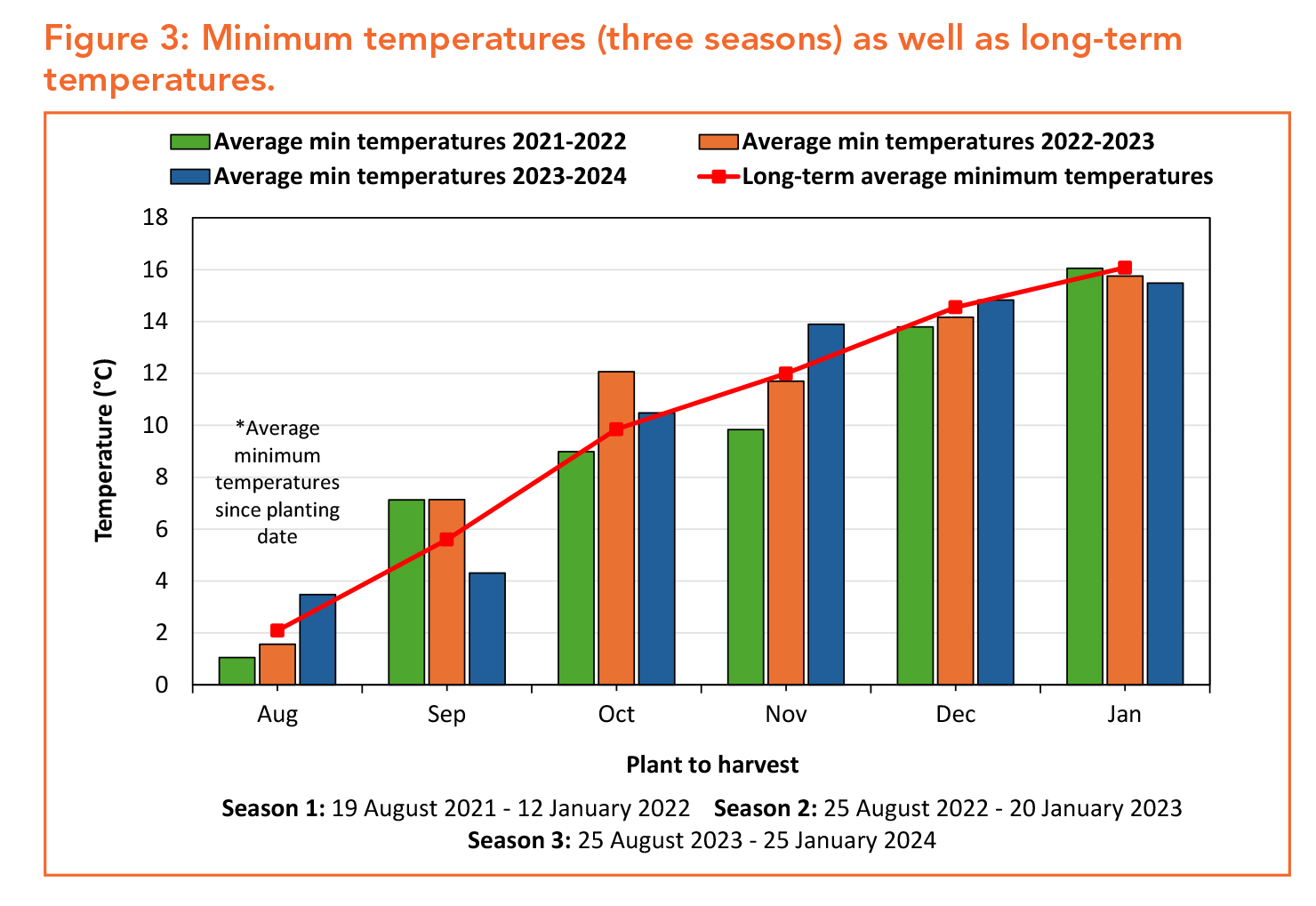
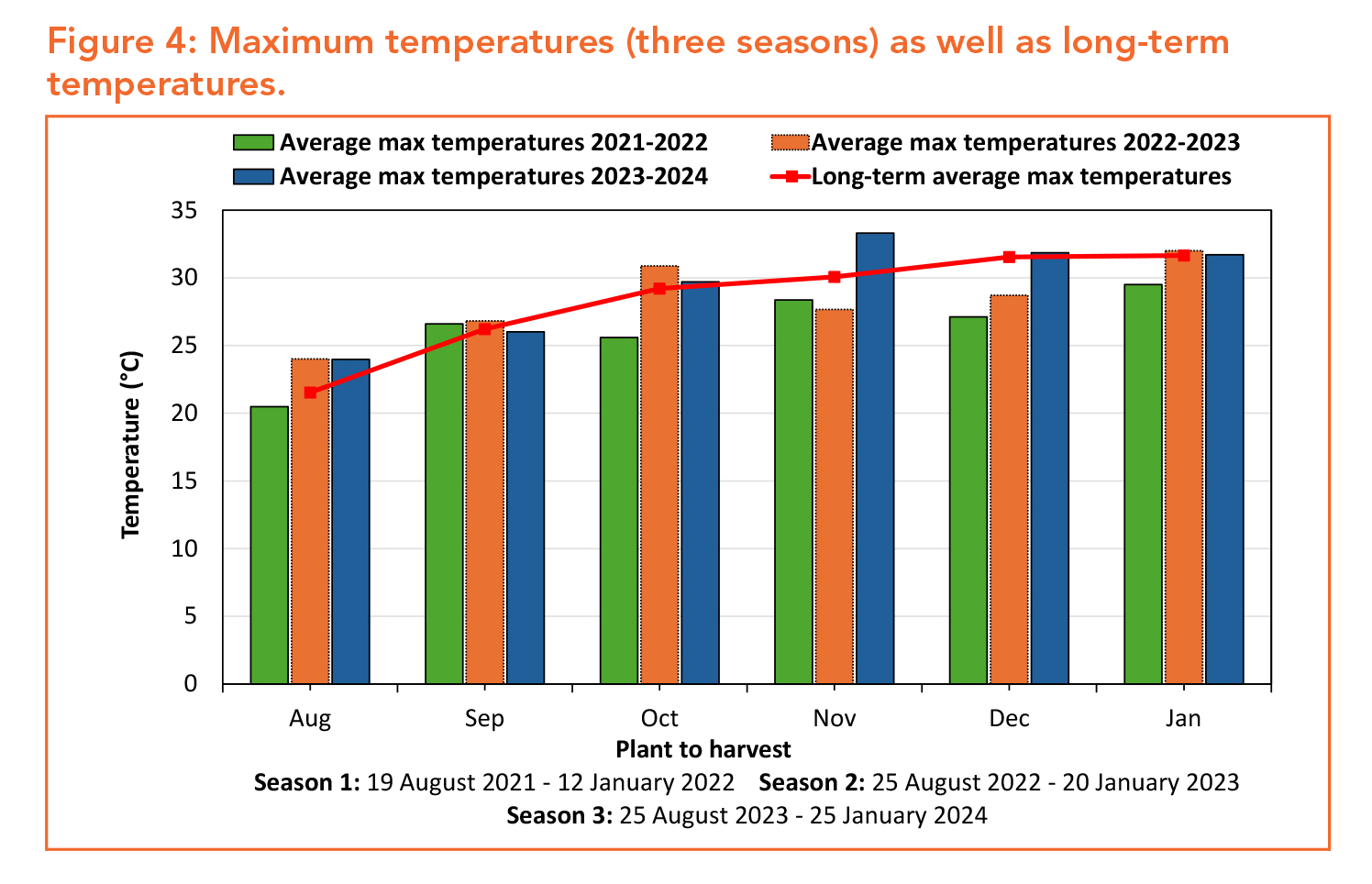
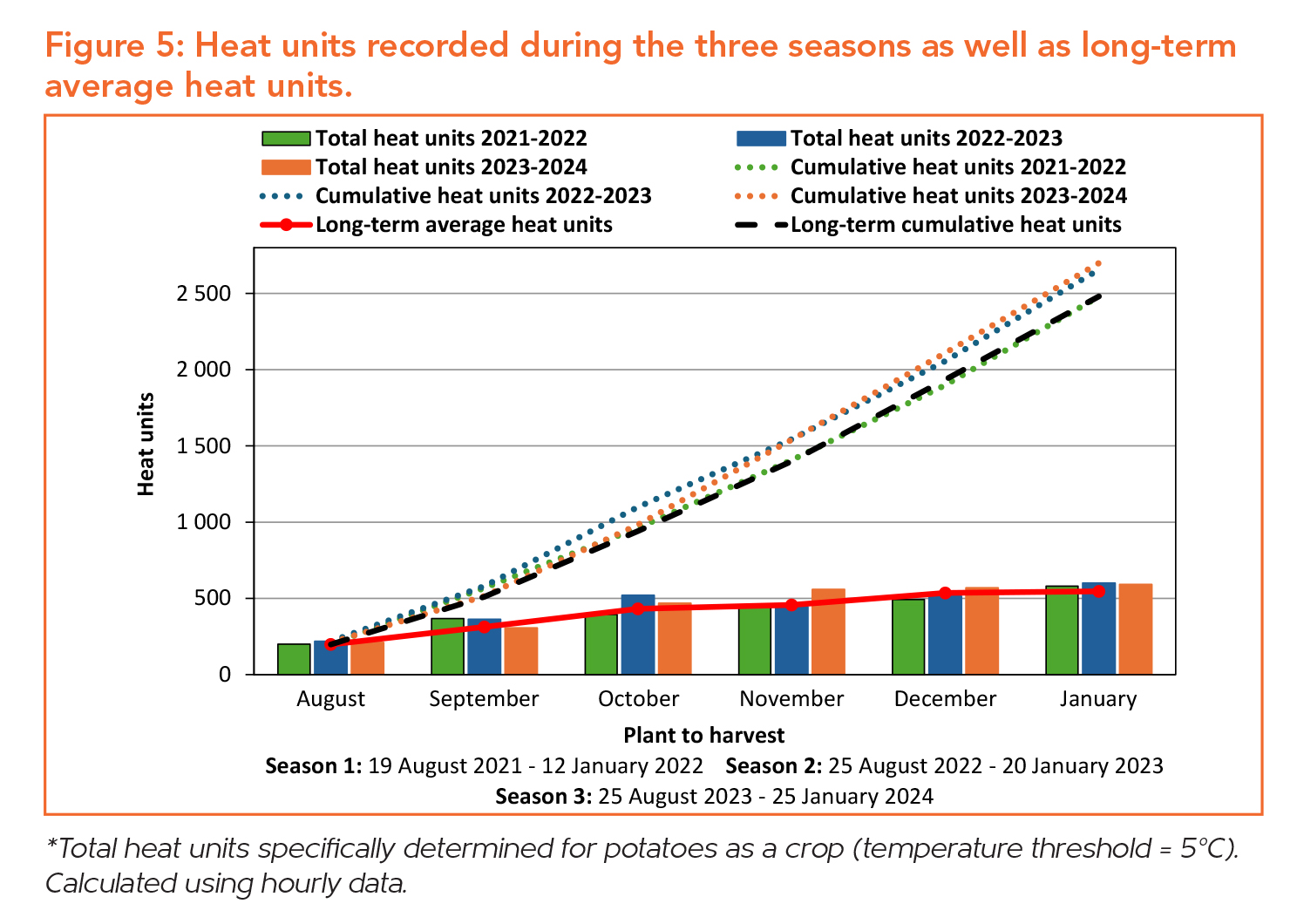
Figures 3 and 4 illustrate minimum and maximum temperatures. The collection of heat units during a growing period is an important factor in the development of the plant. The trend of heat units available for the past three seasons indicated that in seasons 2 and 3, more than the average long-term number of heat units accumulated whereas less was recorded for season 1. This can be attributed to the season’s above-average rainfall which meant numerous overcast and cooler days.
Reliability of trial
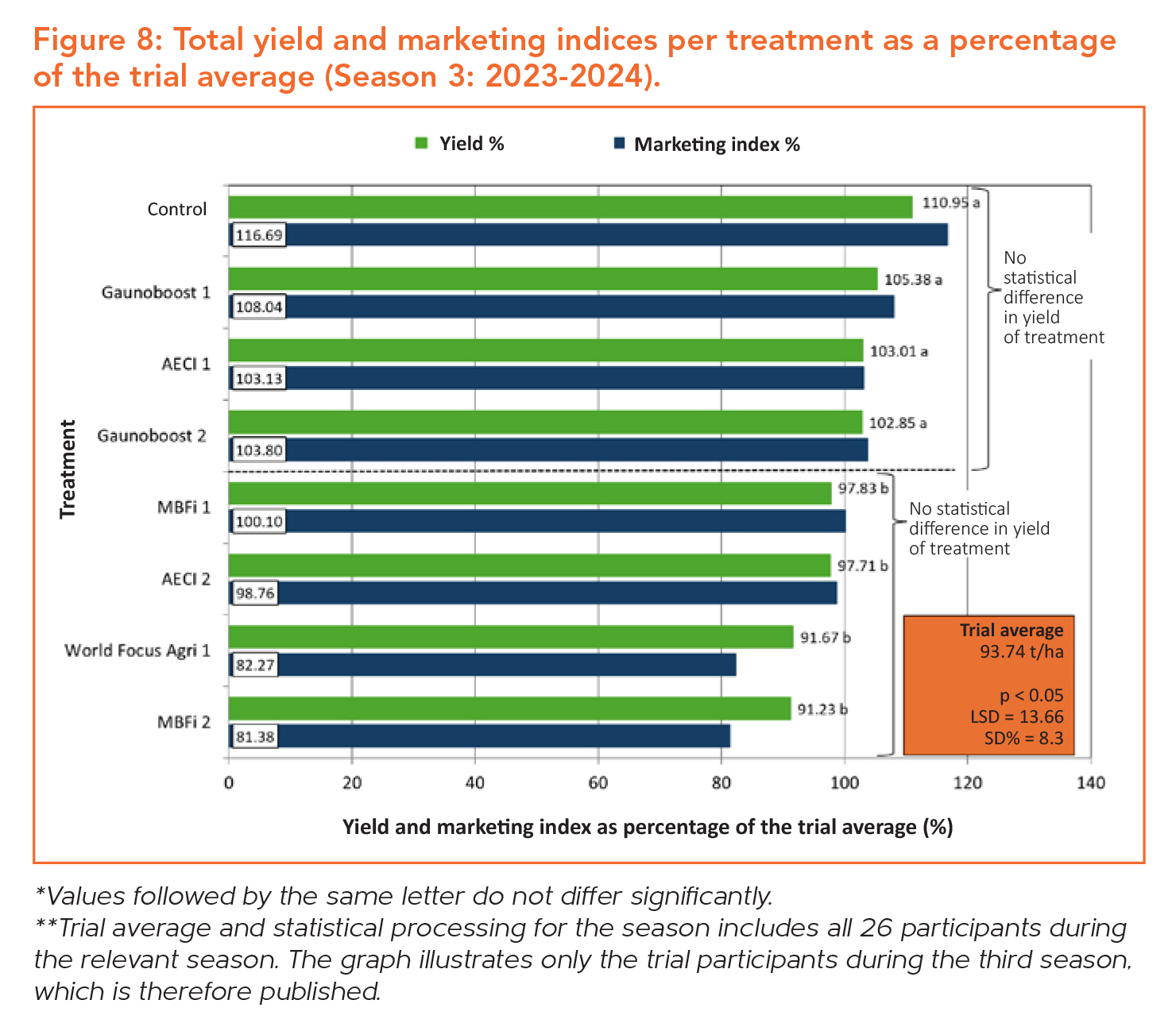
Yield data collected during harvest day is subjected to statistical processing using the GenStat® program. The mean was separated using the Tukey test of least significant differences (LSD). The treatment effect during this trial (Figure 5) was statistically significant (p<0.05) while the coefficient of variation was consistently low (6.6, 6.3 and 8.3%). These factors indicate that the trial was well executed and the results are therefore reliable.
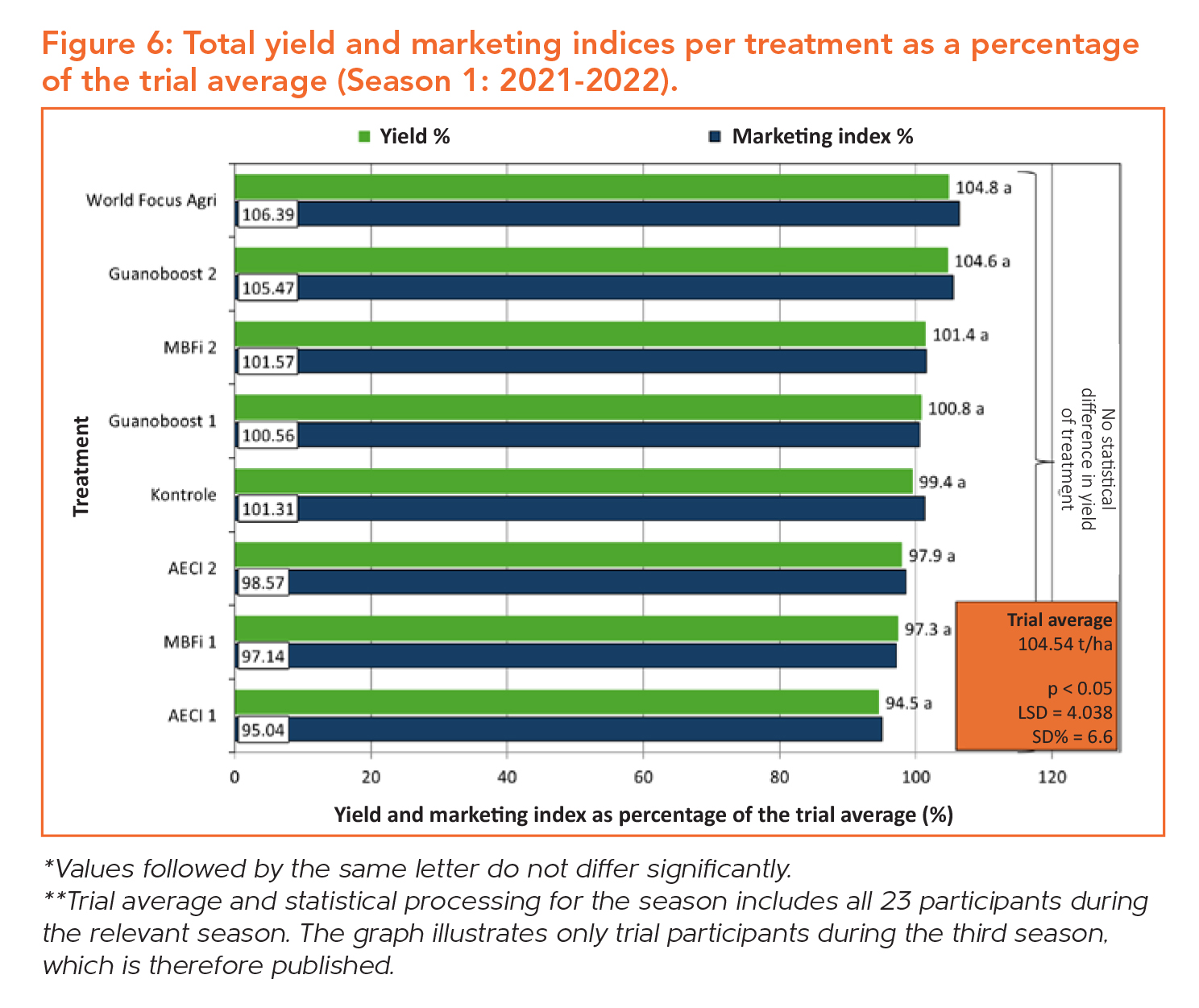
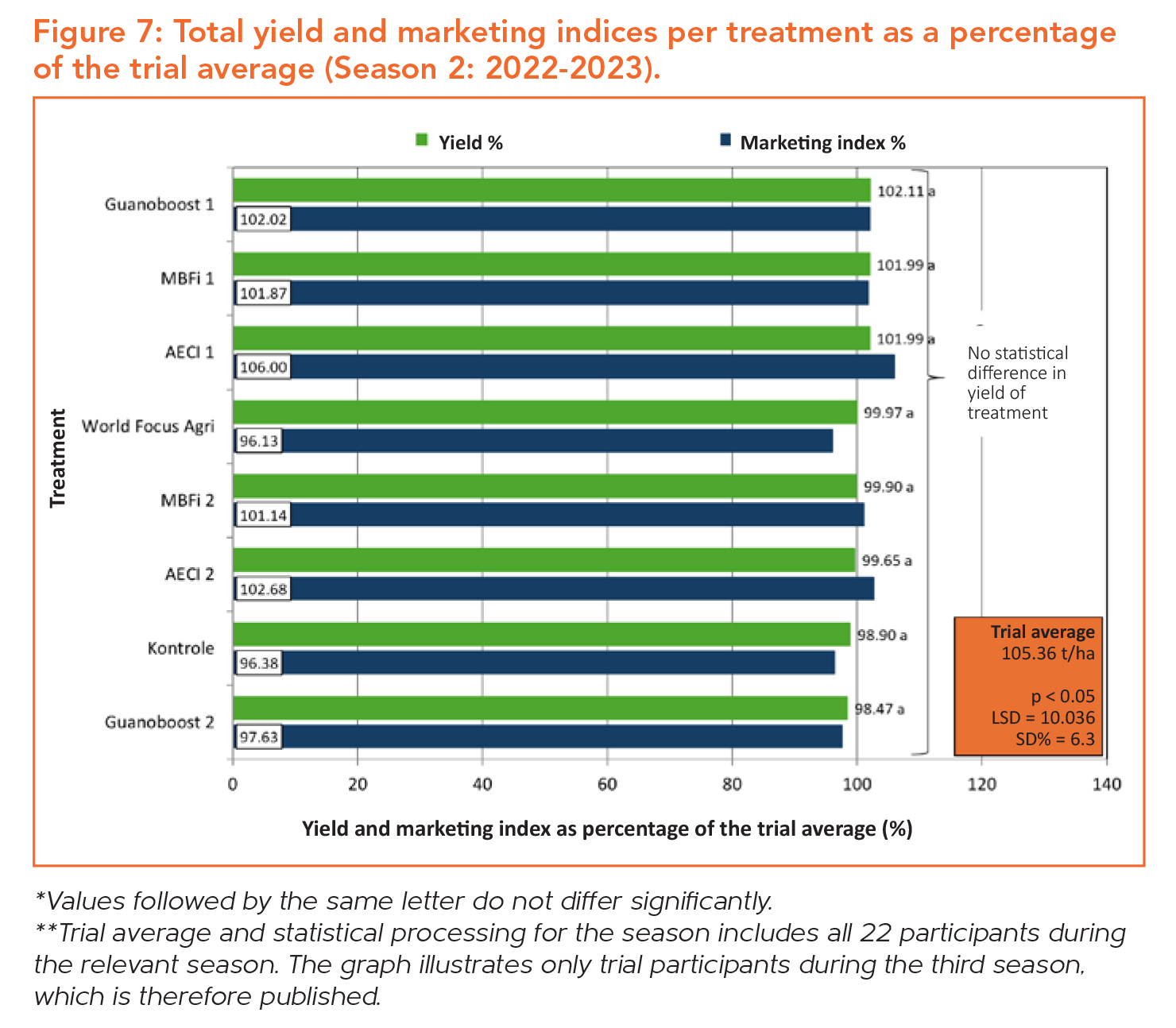
The yield of each treatment is divided by the trial average (the trial average of all the treatments is accepted as 100%). This creates a yield index and each treatment’s performance in terms of yield is read as a percentage of the trial average.
Yield and floods
The average yield of the treatment trial for the three seasons was 104.54, 105.36 and 93.74 t/ha. The above-average performance of some seasons can be attributed to three factors. Firstly, the trials could not be conducted on soil with no history of potato production. Secondly, the trials were planted at a slightly higher plant population than previously. Thirdly, and probably the greatest contributing factor, was good quality irrigation water with a much lower sodium content.
None of the treatments in seasons 1 and 2 showed significant statistical differences in terms of yield. Significant differences in yield were however recorded in season 3 (Figure 8). It is once again important to note that, given the varying and different outcomes of the programme, the treatments cannot necessarily be compared to one another.
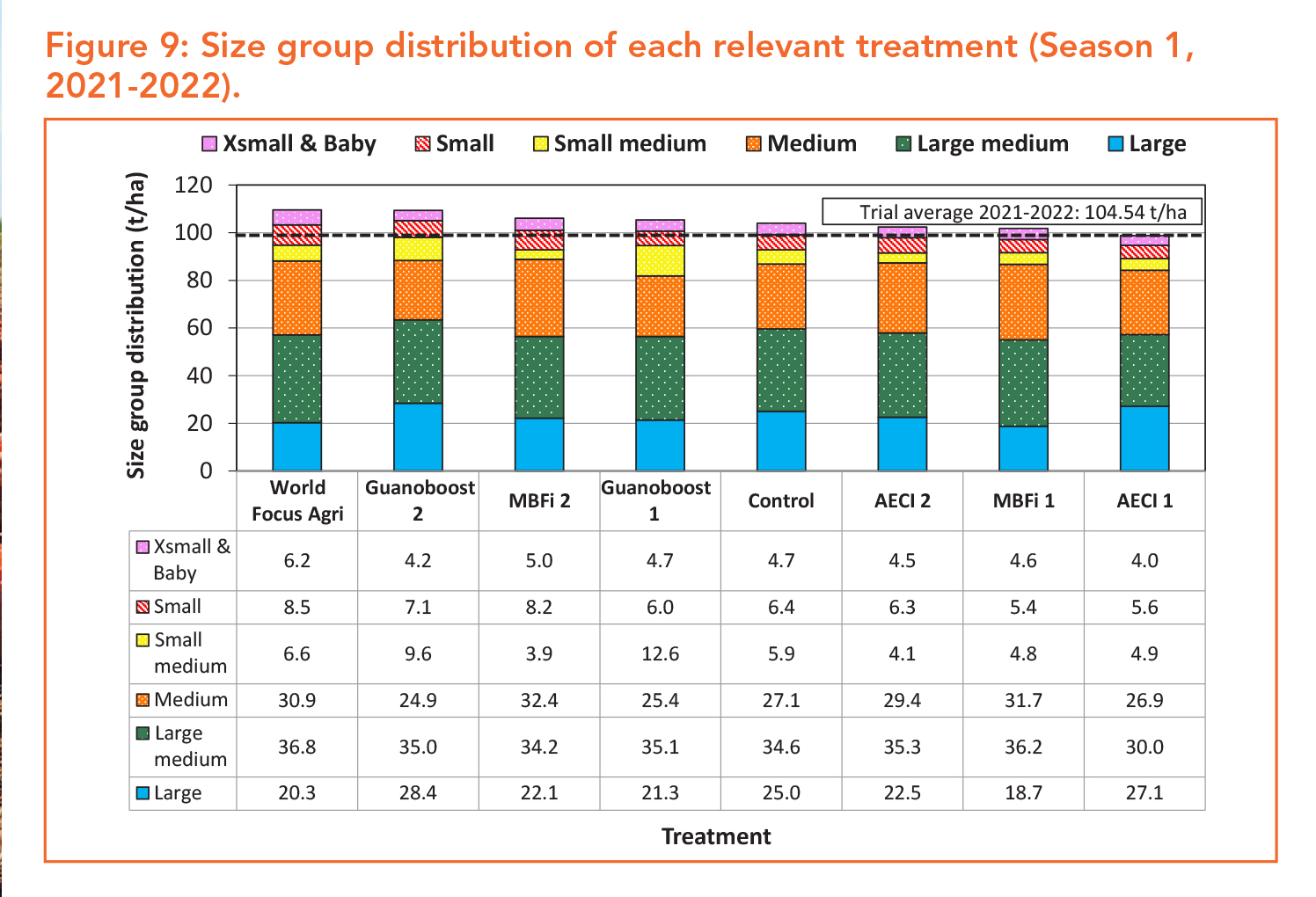
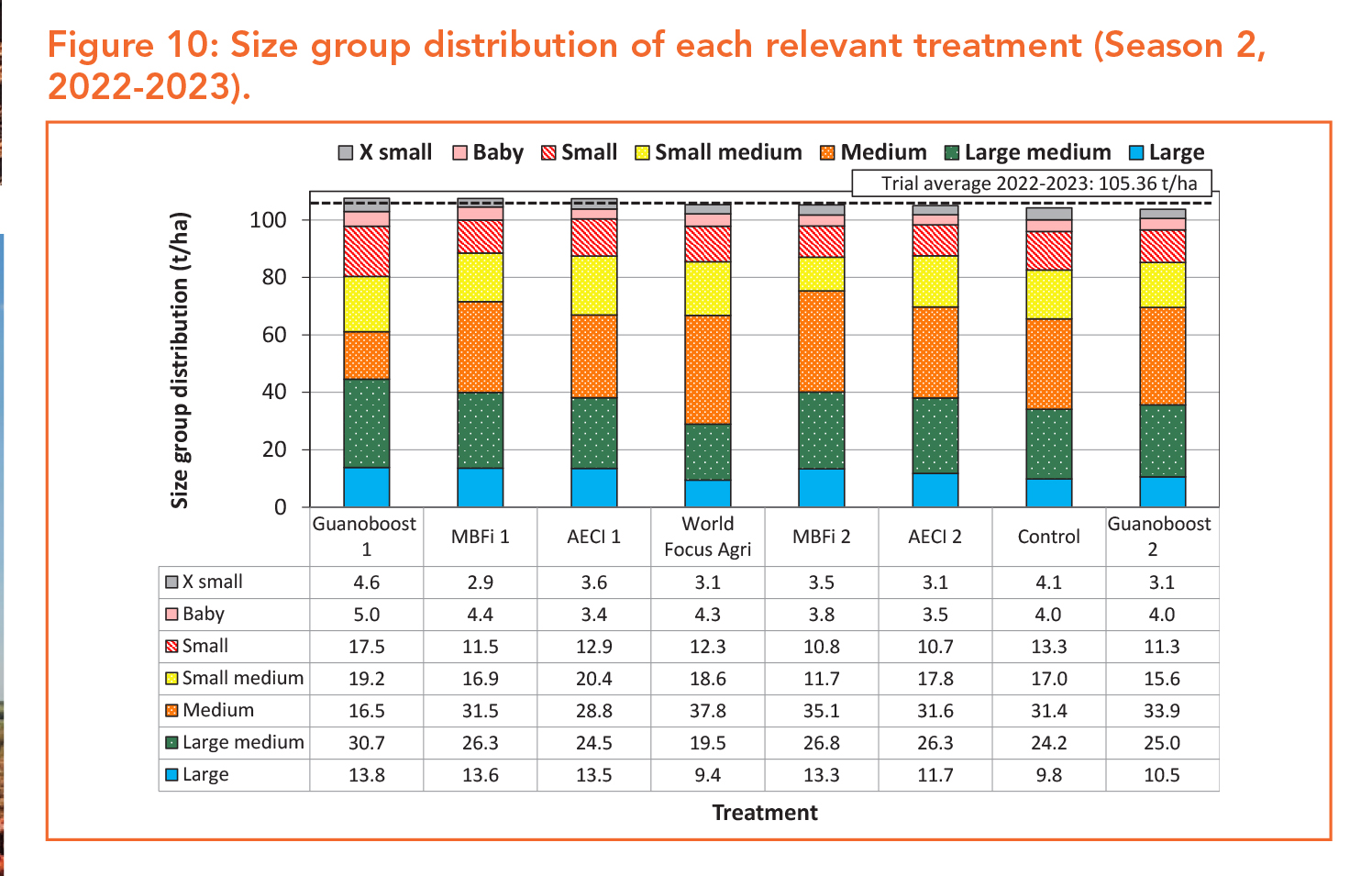
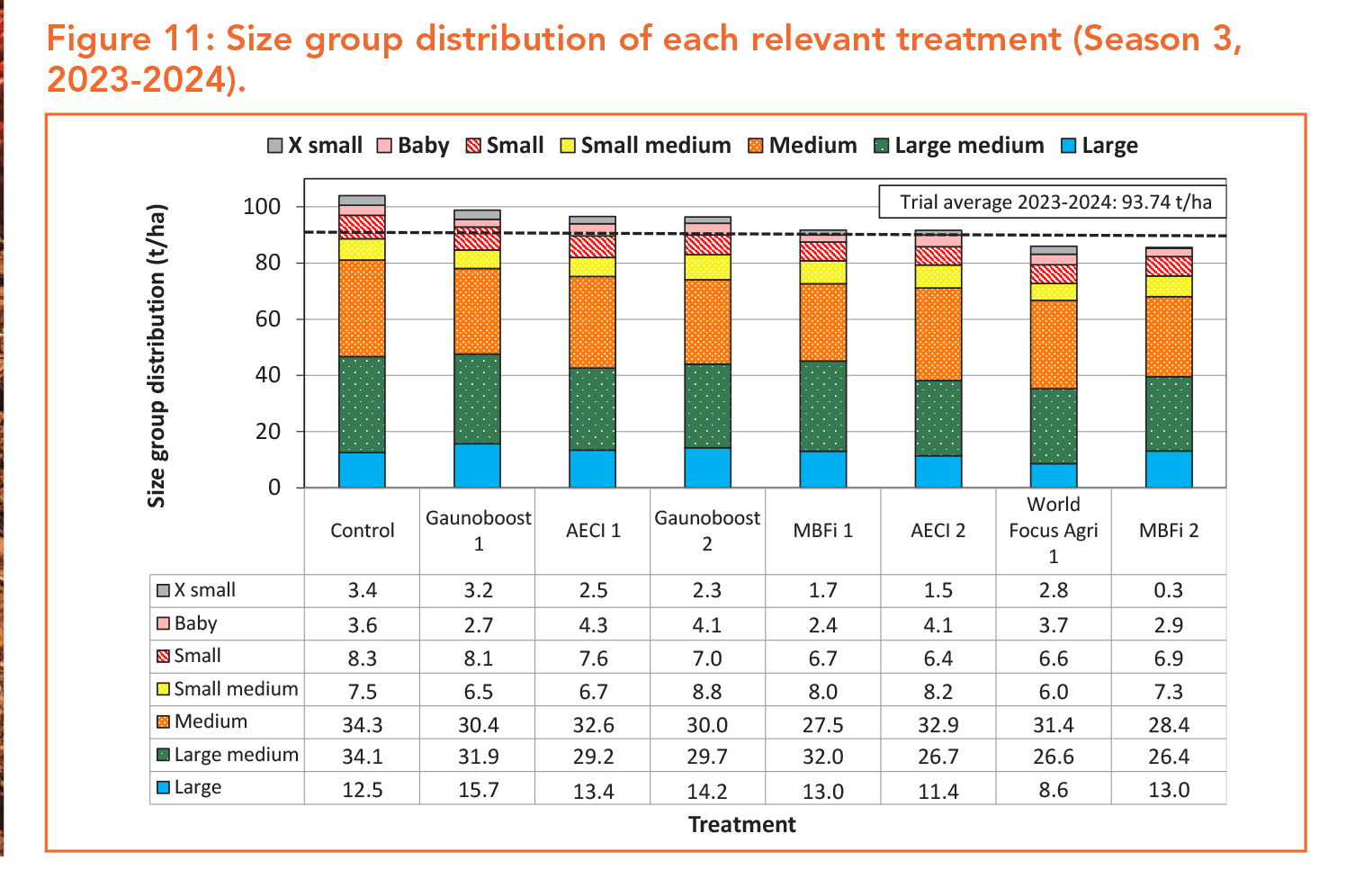
The size distribution of the treatments is compared in Figures 9 to 11.
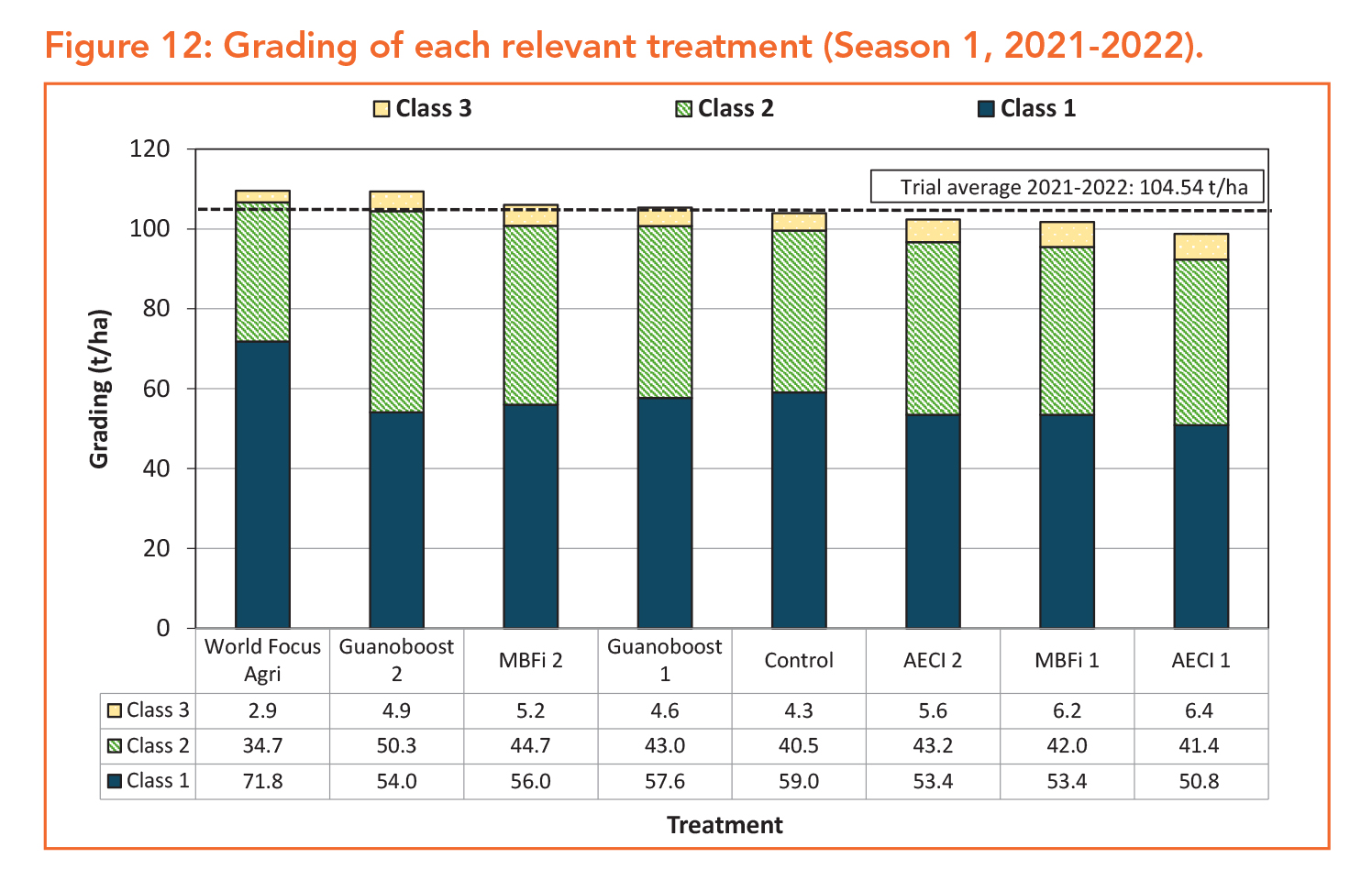
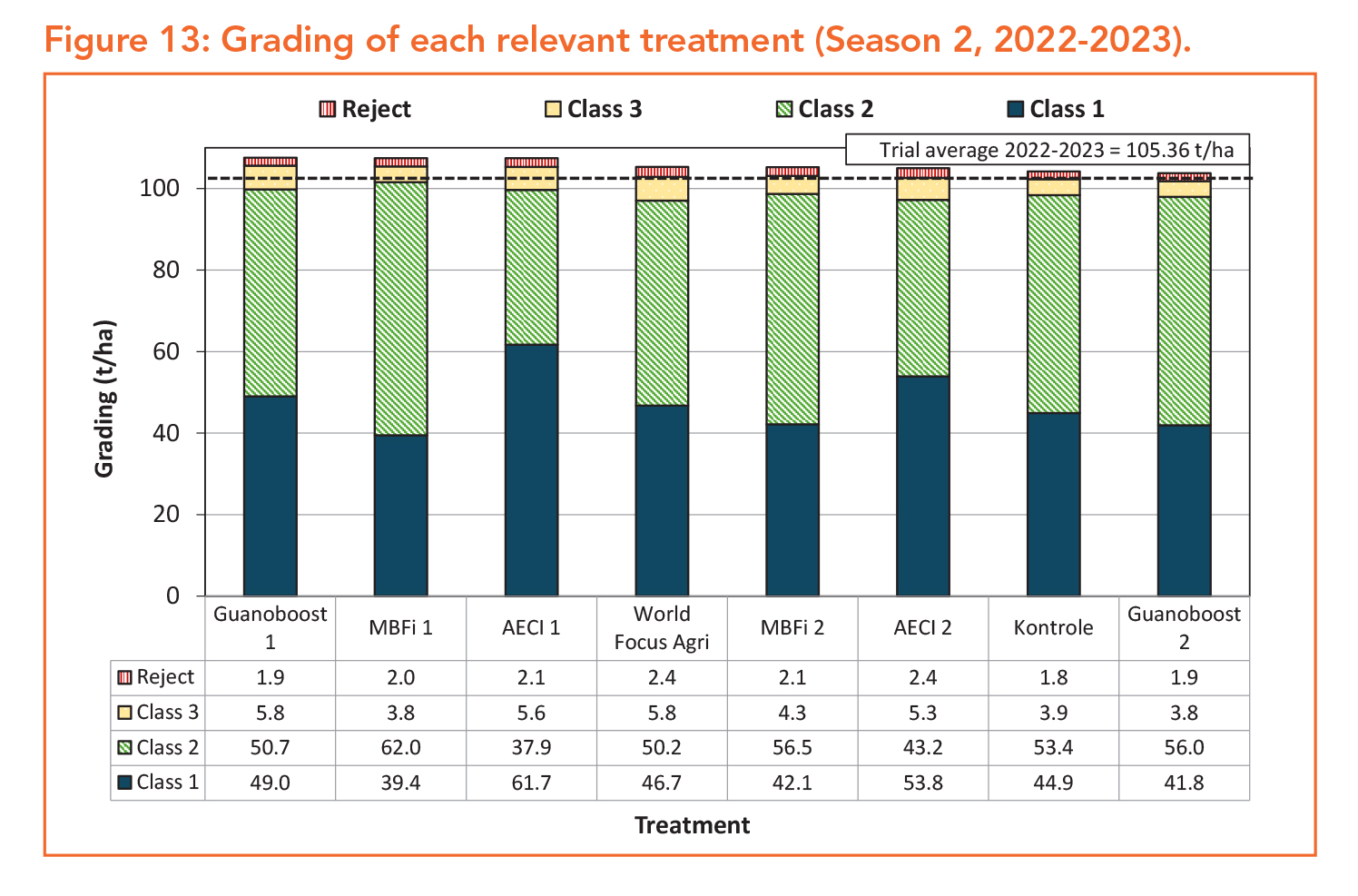
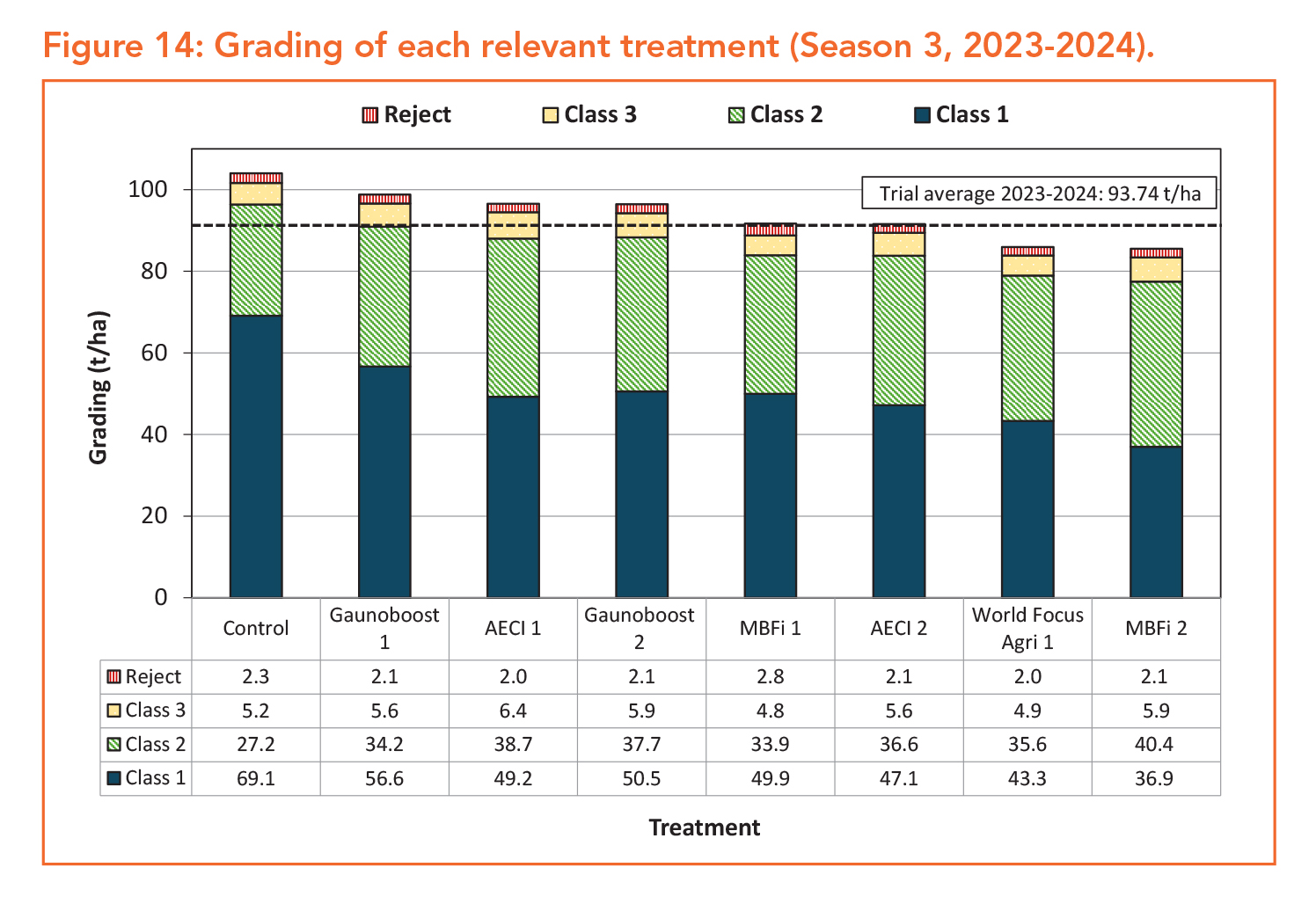
World Focus Agri’s programme delivered the most Class 1 potatoes by far, but in season 2, top class potatoes were delivered in both the AECI programmes, with the control programme yielding the most Class 1 potatoes in season 3 (Figures 12 to 14). Generally, more discarded potatoes were recorded in seasons 2 and 3 than in the previous season, which can be attributed to wet conditions and/or blight affecting quality.
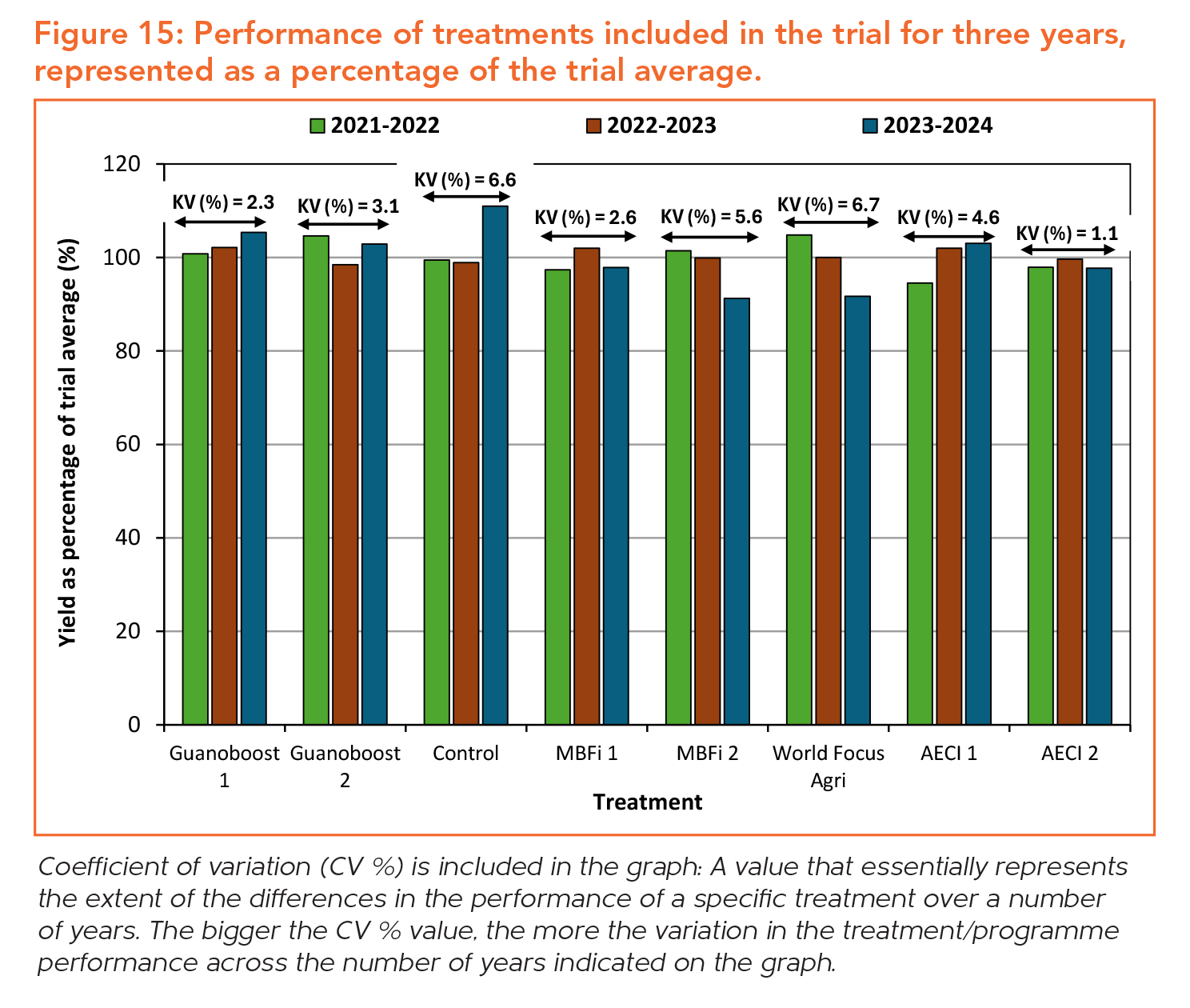
As already stated, seasonal performance will differ from one season to the next, as the climate will differ from one season to the next. Thus, it is important to consider the consistent performance of a programme across seasons instead of making decisions based on only one season’s performance. AECI 2, Guanoboost 1 and MBFi 1 exhibited the least variation during the last three seasons in the Petrusburg trial (Figure 15). – Enrike Verster, Potatoes SA, and Johan Odendal, producer
For more information, send an email to enrike@potatoes.co.za or laryssa@potatoes.co.za.