
Estimated reading time: 9 minutes
Stories of determination and growth were central to Potatoes SA’s eighth Transformation Symposium, aptly themed “Old Roots, New Shoots: Revitalising and fostering new partnerships”. The event took place at the stylish Ranch Resort on the outskirts of Polokwane during the last week of October 2025.
South Africa’s new-era potato producers are steadily making their mark, transforming small plots into thriving enterprises. Slowly but surely, they are reshaping the agricultural landscape, demonstrating that innovation, perseverance, and vision lie at the heart of this new chapter in farming.
Farm visits
The symposium kicked off with a day of visits to four new-era potato producers aiming to inspire others.
One of the farms was Nkukeng Farming (Pty) Ltd, owned and managed by Vincent Rapeta. His potato farming journey began in 2021 with a modest 1 ha potato trial in Manthata near Blouberg, west of Polokwane. Within a few years, Rapeta’s farm expanded to 15 ha of potatoes, half of which is supported by Potatoes SA through its Enterprise Development Programme (EDP).
Meanwhile, at Marinaspruit in Vivo, Masilo Solomon Ratjomane has been cultivating a lifetime of agricultural expertise at Solly’s Boerdery. Since its founding in 1986, Ratjomane has led the farm with passion and dedication, managing large-scale potato production despite having only completed formal education up to Grade 8. In 2025, Solly’s Boerdery planted 160 ha to potatoes, with an additional 20 ha dedicated to seed production.
Symposium attendees also visited Andries Masoga’s Mazeli Farming in Avon Village. From humble beginnings comprising a 0.2 ha trial in 2021, Mazeli Farming cultivated 26.5 ha under potatoes in 2025, with 10 ha contracted to PepsiCo and the remainder supplying the open market, particularly Mozambique.
The farm employs six permanent staff and up to 90 seasonal workers during peak times, while also cultivating 18 ha of peppadew for Peppadew International, alongside other crops destined for local markets and school feeding schemes. His farm is supported by credit from the Kgodiso Fund and VKB, as well as grants for irrigation and storage. Masoga hopes to expand to 36.5 ha in 2026, thereby creating jobs and enhancing regional food security.
Growth all the way
Another farm visited was Tshianeo Mathidi’s Mamusha Boerdery, a potato enterprise with roots dating back to 2003. The farm has benefited from a partnership between Potatoes SA and the Department of Agriculture (NDA), receiving machinery, inputs, and working capital through the Land Development Support (LDS) programme. In 2025, Mathidi cultivated 10 ha of Mondial potatoes using WesGrow’s seed, employing eight permanent staff, and more than 50 seasonal workers during harvest time. Plans are underway to expand to 34 ha.
Phophi Raletjena’s farm, Raletjena Farming CC, trading as Torofina Trading Post, made a good impression on all present. The business exemplifies diversification and scale. Founded in 2005, the farm initially focussed on vegetable production but has since expanded to 144 ha, 129 ha of which are under potatoes sourced from Pidelta, WesGrow, and The Clarence.

With support from Potatoes SA’s EDP and infrastructure assistance from the NDA and the Limpopo Department of Agriculture and Rural Development (LDARD), the farm has built a packhouse, cold room, and washing and drying facilities. The enterprise provides employment for 12 permanent and over 200 seasonal workers annually, while also cultivating peppadews and other crops.
These producers demonstrated how ambition, mentorship, and strategic investment can transform small trials into thriving agricultural enterprises, creating jobs, food security, and opportunities for rural communities.
Transformational finance
On the second day of the symposium, various producers, government and industry officials, as well as business executives made their voices heard on the issues facing producers in this new era of farming.
Sakhumzi May, chief agricultural economist at Land Bank, delivered the keynote address, praising the humble potato for its ability to provide both food security and opportunity. While significant progress has been made in transforming the industry, at least an additional R11 billion will be needed for the country’s potato industry to truly meet the country’s food security and transformation needs.
This investment cannot come from government alone and hence it is critical to bring the right private sector stakeholders on board, especially as funding alone will not drive transformation. “We also need the necessary skills, such as marketing, which are crucial for success.” Other government entities, including the Department of Water and Sanitation, are also of importance as potatoes cannot be produced without water, May added.
Elder Mtshiza, chief director of the Comprehensive Agricultural Support Programme (Casp), spoke about the NDA’s producer support development strategy 2030. She referred to the government’s national policy on comprehensive producer development support, signed in March 2024. “One of the main objectives of the policy is to ensure that everyone is speaking the same language.”
Some of the biggest transformation challenges that must still be addressed are unequal access to land ownership, high levels of climate vulnerability, low productivity among black producers, and uncoordinated producer support. “We need a shared vision to move the needle in this sector,” Mtshiza said.
Market access
The second session was characterised by a lively discussion regarding market access and trade equity in Africa. Mzimasi Jalisa, a commercial producer and board member of Potatoes SA, was upfront about the challenges his farm faces in getting potatoes to market. His farming operation, Jay Jay Farming, is situated in the Eastern Cape and quite a distance from any fresh produce market (FPM). The only viable options are the Gqeberha and Durban municipal markets.
He stated that, over the past season, a single interlink truck cost him between R17 000 and R20 000 to get the potatoes to the markets. “Potato production is already very costly,” Jalisa said, adding that like many other new-era producers, he did not have access to commercial-scale washing machines – transporting unwashed potatoes adds to the costs.
Kodani Madula, operational manager of the Agricultural Produce Agents Council (Apac), said while the council does not interact directly with producers, it is responsible for safeguarding producers’ interests and ensuring a level playing field at market level.
Apac currently holds millions of rand in unclaimed funds owed to producers. Madula encouraged producers to contact the council if they were still owed money by a market agent. “If market agents cannot locate the producer of the sold produce, they must hand the money over to Apac after 200 days, and it then becomes Apac’s responsibility to find the owner.”
Hilton Zunckel, trade law specialist at Hilton Lambert, emphasised that while the local market remains crucial for the potato industry, there is significant international trade potential that could be tapped. This is particularly true for Limpopo, South Africa’s largest potato-producing province, which could easily export to Mozambique.
“They are very keen to obtain potatoes from us,” Zunckel said. He cautioned that, while this would be very beneficial, it is important not to rush the matter. The legal trade agreement needs to be in place first. With the African Free Trade Agreement coming into effect, new opportunities are emerging that producers could capitalise on.
Zunckel also pointed out that there is greater scope for government support to producers. “Under World Trade Organisation rules, the South African government is allowed to provide market support of up to R2 billion.” Additionally, export subsidies are also permitted, but this is something that government is not capitalising on now.


Government commitment
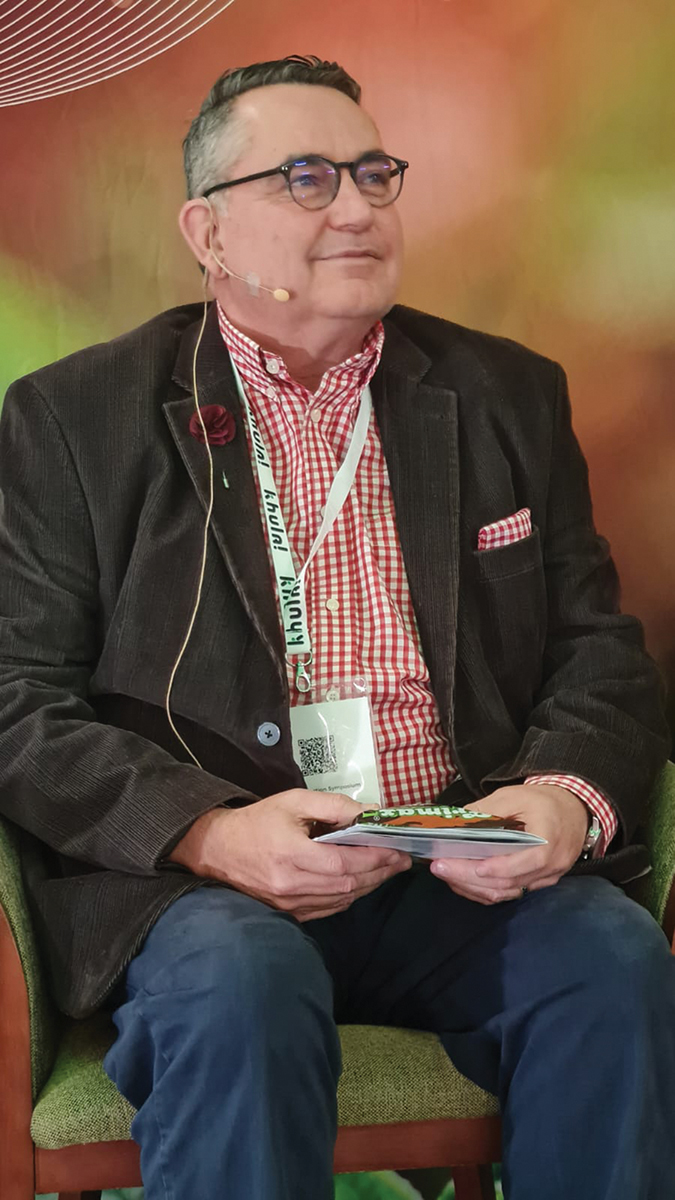
Mpho Mashamba, head of the LDARD, also shared insights from her department. The similarity between the goals of the industry organisation and the department did not evade Mashamba. “We are both working towards a united, prosperous, and productive agricultural economy for our rural communities.”
She said the department aims to remain rooted in its traditions, while branching out to embrace new technologies. They intend to achieve this through the revitalisation of agroprocessing and research in the province. These projects should benefit both commercial and subsistence producers, Mashamba emphasised. “The empowerment of producers should stand central.”
Potatoes is a special crop in Mashamba’s eyes. She said potatoes are undervalued in the province, despite its great economic potential and its role in supporting household food security.
Top new-era producer honoured
During the gala evening, Eastern Cape producer Vumile Mzinzi was named Potatoes SA’s Enterprise Development producer of the year.
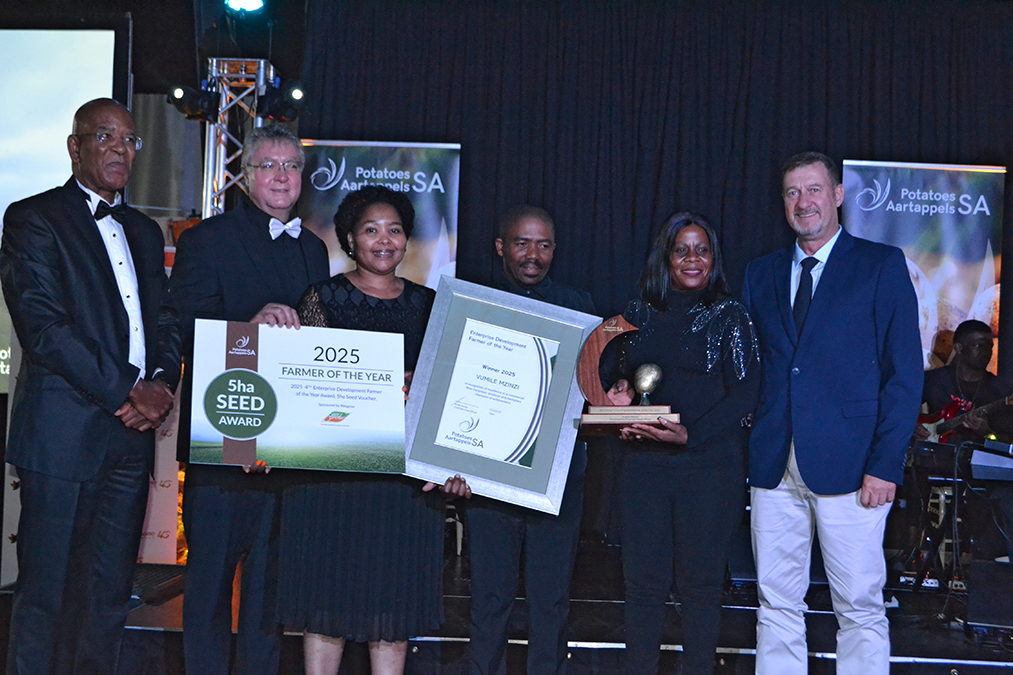
The award recognises producers participating in the organisation’s EDP who have made meaningful progress towards commercial production and full industry integration.
Mzinzi, a second-generation producer from Ugie in the Eastern Cape, farms potatoes on a commercial scale. Despite farming in what can be a challenging environment for emerging producers, he has achieved an annual yield of over 40 t/ha, setting a strong benchmark. He supplies major FPMs across the country, demonstrating not only production capability, but also market access and business viability.
He is also a former winner of the Toyota SA/Agri SA young producer of the year and New Harvest producer of the year competitions, underscoring his trajectory of excellence in farming.
By awarding him this title, Potatoes SA acknowledges a growing group of producers who are moving beyond subsistence or small-scale operations into full commercial participation in the potato industry. At the same time, the symposium highlighted that transformation is about more than funding; it is about mentorship, trust, and market integration.
Potatoes SA’s transformation strategy provides capacity building, technical support, networking, mentoring, and industry exposure for emerging black producers. The organisation consistently emphasises sustainability over quantity, rather using its limited resources to help a smaller number of producers truly master the art of potato production, than give thousands of producers limited help that only sets them up for failure.
The Eastern Cape is not historically the heartland of large-scale potato production in South Africa; regions such as Limpopo typically dominate. For a producer from Ugie to achieve strong per-hectare yields, supply national markets, and enter the EDP is truly significant. – Susan Marais, Plaas Media
For more information, send an email to Rotondwa Raligidima at rotondwa@potatoes.co.za