
The A to Z of micronutrients: Aluminium
Estimated reading time: 3 minutes
Discussions regarding plant nutrition often centre on the major nutrients: nitrogen, phosphorus, and potassium. These macronutrients are required in large quantities and are well-known drivers of crop growth and yield. However, hidden behind these nutritional giants lies a group of elements required in much smaller amounts, yet equally essential for successful crop production: micronutrients.
Micronutrients such as zinc, boron, manganese, copper, iron, molybdenum, and chlorine are essential for plant metabolism, enzyme activity, photosynthesis, root development, and tuber quality. Although potatoes require only small quantities of these nutrients, deficiencies may have significant consequences, including reduced growth, lower yields, poor tuber quality, and increased susceptibility to environmental stress.
Demands of modern production
Higher yield targets, intensive cropping practices, changing climatic conditions, and increasing pressure on soil health all influence the availability of micronutrients in the soil. Micronutrient deficiencies often go unnoticed because symptoms may be subtle or mistaken for other production constraints. By the time visual symptoms appear, yield potential may already have been compromised. Understanding micronutrient dynamics has therefore become an important component of precision nutrient management.
In this series of articles, we will explore essential micronutrients relevant to potato production, their functions within the plant, factors affecting their availability in the soil, deficiency symptoms, diagnostic approaches, and practical management strategies. A better understanding of these nutrients will allow producers to make more informed decisions supporting both productivity and long-term soil health. In fact, it is often the smallest ingredients that make the biggest difference.
Aluminium: Friend or foe?
Aluminium (Al) is one of the most abundant metals in the Earth’s crust, but its availability depends on soil pH. A decrease in soil pH below 5 increases the solubility and availability of the element. Researchers have found that the severity of Al toxicity in plant roots depends on the relationship between Al quality and the availability of bases (particularly calcium and magnesium), rather than on the level of Al alone.
Al is not considered an essential element and has no specific known biological function. In plants, Al can have a beneficial or toxic effect, depending on factors such as metal concentration, the chemical form of Al, growth conditions, and plant species. Al is the secret behind the vibrant blue colour of hydrangea flowers. In plant pathological studies, Al has been seen to enhance resistance to the potato late blight pathogen, Phytophthora infestans, by restricting mycelial and sporangial germination.
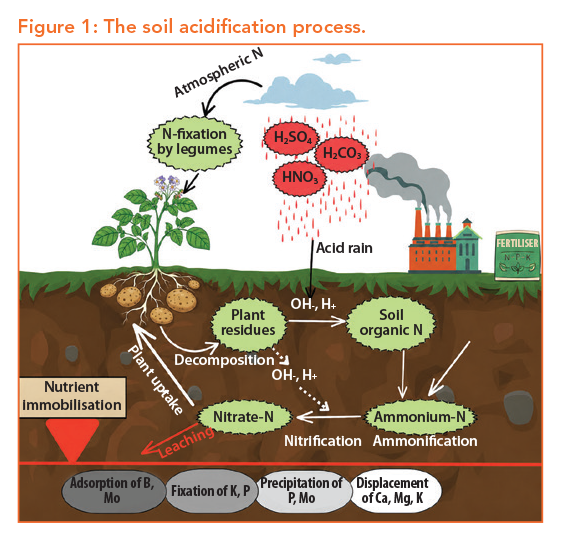
While soil acidification is a natural process, it can be amplified by long-term and indiscriminate fertiliser use, the decomposition of organic matter, imbalances in the soil nutrient cycle, and the leaching of cations. In acid soils, the availability of Al, manganese, and iron is high; thus, plants growing in these soils can exhibit toxicity from these metals. Al toxicity to plants is one of the major threats to crop productivity under acidic soils. The main effects of Al toxicity are the inhibition of root growth, water and nutrient uptake, and cell division. Typically, roots become thick and stubby, with reduced fine-root development (Figure 1).
Several agricultural strategies have been used to alleviate Al toxicity and enhance plant tolerance, including liming, mineral nutrition, biostimulants, and genetic engineering of Al-tolerant genes. Al tolerance in several plants is regulated by multiple genes across diverse signalling pathways, making it difficult to improve Al tolerance through transgenic approaches. Liming remains the most cost-effective strategy to alleviate soil acidity. – Annemarie van der Merwe, Potatoes SA
Send an email to annemarie@potatoes.co.za for more information.