
The detective work behind indentifying PepRSV in South Africa
Estimated reading time: 2 minutes
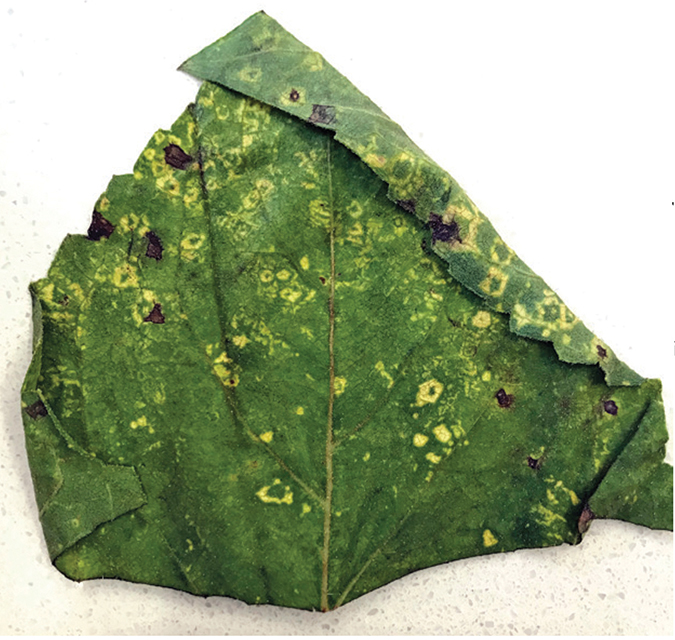
Identifying the causes of defects or disease symptoms in plants is not always straightforward. This also applied to the challenge of identifying pepper ringspot virus (PepRSV). In March 2019, a commercial grower submitted a diagnostic sample exhibiting signs of spraing, which is typically associated with tobacco rattle virus (TRV) or potato mop-top virus (PMTV), although these viruses had not yet been reported in South Africa at the time.
The sample tested negative at Plantovita for tomato spotted wilt virus (TSWV), potato virus Y (PVY) and potato leafroll virus (PLRV) – the viruses available in our testing arsenal, which can cause necrotic symptoms in potato tubers. The Agricultural Research Council conducted enzyme-linked immunosorbent assay (Elisa) tests for TRV and PMTV, but all results were negative.
Electron microscopy (EM) images taken by staff at the University of Pretoria (UP), however, confirmed the presence of virus particles. The particles occurred in two lengths, similar to those of TRV.
New samples, new challenges
In May and June 2020, more samples from the Eastern and Western Free State showing signs of spraing were submitted to Plantovita. By this time, Plantovita had developed a polymerase chain reaction (PCR) test method to detect the viruses that cause corky ringspot, as well as TSWV, PVY, PLRV, PMTV and TRV. However, all test results remained negative.
EM images from UP once again revealed the presence of rod-shaped virus particles, after which Path Solutions in Stellenbosch was approached to analyse the samples using next-generation sequencing (NGS). This technique led to the identification of the genome sequences of PepRSV and PLRV. The Plantovita PCR method subsequently confirmed the presence of PepRSV in both samples, and the findings were communicated to the National Department of Agriculture.
– Anel Espach, Plantovita
Send an email to anel@plantovita.co.za for more information.