
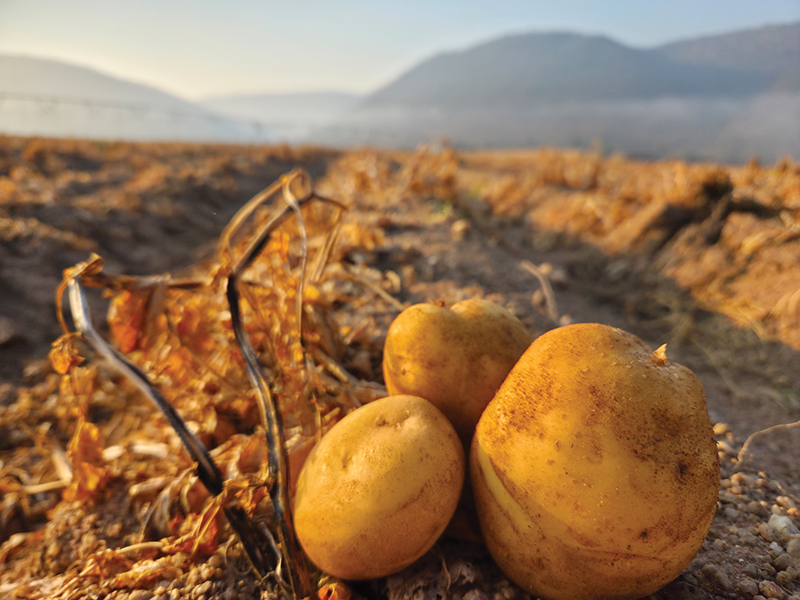
The potato: A tale of psychology, disease, and certification
The world celebrated International Day of the Potato on 29 May this year. The potato (Solanum tuberosum) is one of the oldest and best-known foods in agricultural history. People discovered the crop in the Andes of Peru and Bolivia thousands of years ago. Indigenous cultures, most notably the Incas, selected from it, developed a wide variety of cultivars, and cultivated it as a staple food.
Spanish explorers brought the crop to Europe in the late 1500s, where it was initially met with suspicion before gradually gaining acceptance. The earliest documented record of the potato in Europe dates back to 1537. Although we have known the potato for about 500 years, its unwritten history suggests humanity has been using it for nearly 8 000 years.
Clever potato psychology
The French initially deeply mistrusted potatoes. Many associated the strange, soilborne tuber with poverty, animal feed, and even diseases such as leprosy, rather than something suited to a grand French dining table. In an era when bread and grain formed the mainstay of the diet, people regarded the potato as suspicious and inferior.
However, French pharmacist and agronomist Antoine-Augustin Parmentier recognised the nutritional value of potatoes after being taken prisoner in Prussia during the Seven Years’ War and surviving on them. He realised that this simple tuber could serve as a highly reliable, nutritious, and productive food source. Using scientific arguments, culinary demonstrations and clever publicity, he set out to demonstrate its value, attempting to win the support of influential figures by framing the potato as something far greater than mere poor man’s food.
One story claims he had guards patrol the potato fields by day to create the impression that the crop was exceptionally valuable. When night fell, the guards deliberately stood down so intrigued onlookers could ‘steal’ the crop. While the truth of every detail cannot be verified, the story beautifully captures the spirit of Parmentier’s marketing strategy. Truth be told, it was a masterpiece in human psychology: Tell people something is good, and they doubt it; place it behind a fence under guard, and everyone wants it. Parmentier did not simply promote the potato – he made it desirable.
Abundance to malnourishment
By the 17th and 18th centuries, the potato had evolved into a staple in Europe’s food supply due to its high yields, adaptability, and nutritional value – even contributing to population growth. However, this heavy reliance on a limited number of varieties left the market vulnerable.
During the Irish Potato Famine, late blight (Phytophthora infestans) led to catastrophic crop failures, widespread starvation, and massive migration. Yet, despite the disaster, the potato has spread globally and remains crucial for global food security and cropping systems.
Its history highlights both the power of high-yielding crops and the risk of genetic uniformity at the expense of resilience – an issue that is highly relevant in modern agriculture.
The humble potato
Potatoes offer so much more than chips and mashed potato; they are the foundation of countless traditional farmhouse recipes. Behind the humble tuber lies an entire value chain of fresh produce, processed goods, animal feed, starch, industrial raw materials, energy opportunities, and even cosmetic and pharmaceutical applications.
Potato starch is used in paper, textiles, adhesives, biodegradable packaging, bioplastics, tablets and cosmetic ingredients, while potato proteins are valued as a plant-based protein source. The potato can even be fermented to produce alcohol, completing the journey from farm to glass as vodka. The potato is certainly not just a vegetable, but a multifunctional resource for diverse human needs – all packed into a single seed potato.
In Afrikaans, the word moer in a potato context refers to a seed tuber, derived from the older Dutch word muoder (mother), with no connection to a profane term or a hard-hitting punch. Dutch literature explains that moer is simply a shortened form of moeder with the middle d dropped. In potato terminology, it literally refers to the mother tuber, or the original potato from which the new plant grows.
Plant diseases and the SA link
Vegetative plant material generally transmits diseases from one generation to the next more easily, whether visibly or latently (unseen). Certain diseases, such as late blight in potatoes, are drastic and show striking symptoms: Leaves suddenly collapse and wilt, followed by eventual tuber decay.
One of South Africa’s most renowned plant pathologists was Prof Johannes Ewaldus van der Plank. He was among the most influential thinkers in modern plant disease epidemiology, which he called down-to-earth potato breeding. Prof Van der Plank’s work fundamentally influenced our understanding of potato late blight caused by P. infestans.
Today, his legacy lives on not only in the Vanderplank cultivar on the official South African potato variety list, but also in the epidemiological principles applied daily in modern agricultural science.
Disease control and certification
Numerous pathogens hide latently within the potato – a vegetatively propagated, high-risk crop – and are passed on to future generations via infected tubers. The primary culprits here are virus and bacteria diseases.
The South African potato industry boasts one of the world’s most advanced voluntary certification systems, managed by the Potato Certification Service (PCS). The primary aim of the South African Seed Potato Certification Scheme (the Scheme) is to supply high-quality certified planting material to the potato industry, though its scope extends far beyond basic quality control.
Led by Dr Ansa van Vuuren and her team of experienced certification officers, the Scheme functions as a comprehensive disease exclusion and management programme. It helps producers determine the health status of their seed potatoes, limit disease buildup in seed and soil, and safeguard the industry against imported pests and diseases. The PCS emphasises the value of certification as a collective risk-management tool rather than a decision made solely at farm level.
The Scheme is strictly enforced under South African legislation, including the Plant Improvement Act, 1976 (Act 53 of 1976), the Plant Breeders’ Rights Act, 2018 (Act 12 of 2018), and the Agricultural Pests Act, 1983 (Act 36 of 1983).
The Independent Certification Council for Seed Potatoes (ICCSP), as the designated authority, appointed PCS to implement and enforce the Scheme on behalf of the industry. This includes training certification officers, managing databases, monitoring standards, conducting field and tuber inspections, post-control testing, and resolving client complaints. As an independent body, PCS fosters trust and confidence in certified seed.
South Africa is self-sufficient in its production of certified seed potatoes, with imports restricted to in vitro material and mini tubers. Gene banks and quarantine facilities at institutions such as Rascal Seed Research and Vitroplant South Africa verify varieties and provide core material to registered facilities and growers. These facilities, which form the foundation of the generation scheme, produce approximately ten to 11 million Generation 0 seed potatoes annually.
Diseases and disorders
The Scheme considers a broad spectrum of fungal, bacterial, viral, insect, nematode, and nonpathogenic issues. Laboratories such as Plantovita are authorised to evaluate and quantify these disease tests. While the list of threats is extensive, it includes the following:
- Bacterial wilt, soft-rot causing Enterobacteriaceae, blackleg, and scab (Streptomyces scabies).
- Potato virus Y, potato leafroll virus, tomato spotted wilt virus, and pepper ringspot virus (PepRSV).
- Late and early blight, Verticillium wilt, black scurf, Fusarium, and Sclerotinia.
- Potato tuber moth.
- Potato cyst, root-knot, and lesion nematodes.
- Non-pathogenic disorders such as hollow heart, sun blight, and frost damage.
Bacterial wilt and sanitation
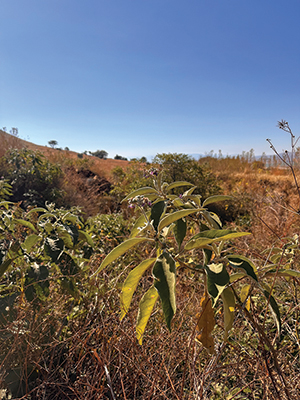
One of the most important diseases the Scheme monitors is bacterial wilt, also known as brown rot (Ralstonia solanacearum). It is not merely a plant disease, but a seed, soil, water, and sanitation issue. Although it can cause severe yield losses, the greatest risk lies in the phytosanitary and economic consequences when strict quarantine is imposed on infected fields, seed lots, or farms.
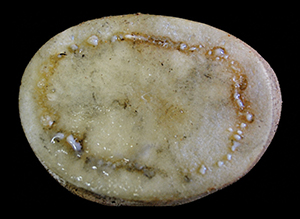
Typical symptoms include rapid wilting of leaves and stems (especially during the warmer parts of the day), brown discolouration of the vascular tissue inside stems and tubers, and characteristic white to cream-coloured bacterial slime running from cut stems or tubers. The greatest danger, however, is that tubers can harbour infection without showing any aboveground symptoms, allowing the disease to spread unnoticed.
Consequently, all registered seed potato plantings are tested for Ralstonia species. Prevention and rapid action remain the most effective control measures. To contain outbreaks successfully, farmers report positive cases immediately to the relevant authorities, including the Potato Quarantine Pest Committee and the National Plant Protection Organisation of South Africa. The affected unit is quarantined, host crops may not be planted for eight years, and seed potatoes from the unit or isolation zone cannot be certified.
Sanitation must be central to the production system because the disease spreads through contaminated plant material, soil, mud, water, equipment, humans, animals, and storage facilities. In this context, sanitation refers to the systematic removal, destruction, or disinfection of any material that could harbour or spread Ralstonia bacteria.
We distinguish between proactive (preventative) sanitation, which stops the problem before it starts, and corrective sanitation, which focusses on targeted disinfection or destruction of infected material once a risk has been identified. The principle is simple: Sound sanitation and disease-free planting material mitigate risk, whereas poor sanitation and infected material increase it dramatically.
Sanitation protocols involve various physical actions, with staff training and awareness forming a vital component:
Field selection: Plant potato seed only in fields with no history of Ralstonia. Avoid waterlogged areas or poorly drained soil. Comply with quarantine requirements, including the eight-year period (where applicable), and isolate using distance, time, and rotation with cereal crops.
Seed source: Use only certified seed potatoes sourced from reliable suppliers.
Field sanitation: Eradicate self-sown plants and alternative weed hosts, as these can harbour and spread the bacterium.
Water management: Use only clean, uncontaminated irrigation water. Water lines that could potentially harbour bacteria must be tested and regularly disinfected.
Movement and access: Staff, clothing, footwear, vehicles, and implements can all spread contaminated soil, mud, and plant material. Enforce strict access control, directing workflow from clean areas to dirty or high-risk zones, not the other way around.
Cleaning and disinfection: First remove all soil and mud using soap, water, high-pressure washers, brushes, or steam (above 80°C). Follow up with suitable disinfectants such as quaternary ammonium compounds, hypochlorite, phenolic/carbolic products, acid-based products, or sodium hypochlorite, and strictly follow label instructions.
Harvesting, handling, and storage: Harvesting and handling represent critical points for cross-contamination. Clean tools between fields and blocks, handle tubers carefully to minimise bruising, and maintain optimal storage conditions: a constant temperature range of 4 to 8°C, relative humidity of 90 to 95%, and effective airflow.
Conclusion
Certification, whether statutory or voluntary, remains one of the most effective strategies for managing plant health risks. While it does not guarantee entirely disease-free seed potatoes or eliminate every risk, it does reduce the likelihood of introducing pathogens via seed or seed potatoes. It affords producers peace of mind, protects the industry, and reinforces biosecurity. In the case of Ralstonia, prevention is an integral part of certification and has proven far more effective than cure. Good sanitation is not a once-off task, but an ongoing discipline maintained from the field to the packhouse. – Dr Rikus Kloppers
The author expresses his sincere gratitude to Dr Ansa van Vuuren and André Wessels of PCS, Anél Espach of Plantovita, and weed specialist Dr Charlie Reinhardt for their valuable input.
An adapted version of this article originally appeared as a column in Landbouweekblad (No 2384, 25 June to 2 July 2026). Email rikus.kloppers@robigalia.co.za for more information.