
The role of herbicides in defending crops
Estimated reading time: 5 minutes
Weeds pose a constant threat to crop plants, not only when they grow alongside crops, but also in the absence of plants through seeds in the soil seed bank. The harmful impact of weeds on crop plants stems from two natural phenomena that dictate the nature and extent of this interaction.
Firstly, competition for water, light, and nutrients takes place. Secondly, chemical growth inhibitors, collectively known as ‘allelochemicals’, may be produced and released by weeds and crops to limit each other’s growth.
Weeds cause damage
Weeds generally compete strongly for growth factors and can release a large arsenal of growth-inhibiting substances simultaneously into the environment. Competition and allelopathic phenomena therefore act together to contribute to the harmful impact of weeds on crop growth and yield.
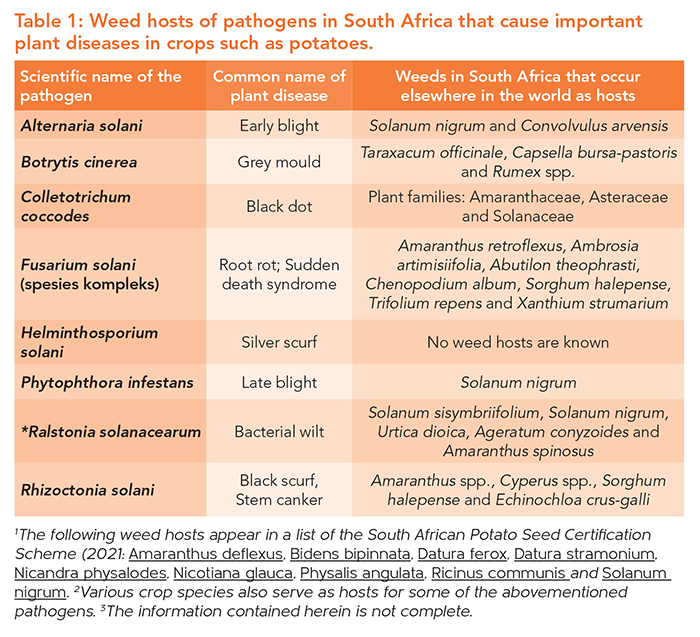
Indirect damage caused by weeds to crop plants can, among other things, be attributed to the weakening of their natural resistance to predators and pathogens. This results from the suppression of physiological and biochemical defence mechanisms when weeds, as previously described, exert a harmful influence. In addition, many weed species act as hosts for insects and pathogens that attack crop plants.
Natural defence mechanisms
Structural or anatomical defence mechanisms include the waxy cuticle of plants on leaf surfaces; cell walls containing pectin and cellulose; stomata, whose accessibility to pathogens depends on their structure; trichomes (plant hairs) on plant surfaces that form a physical first line of defence; and wax particles of the cuticle (effectively the skin of plants).
A range of compounds provides primary physiological and biochemical defence against pathogen infection. These compounds form part of a large group of metabolites that are produced and maintained spontaneously, without external stress stimuli. They are toxic to pathogens attacking the plant and include alkaloids, saponins, phenolic compounds (tannins, flavonoids, and lignin), hydrolytic enzymes, and cyanogenic glycosides. The latter are non-toxic but release toxic cyanide in response to infection.
Secondary biochemical defence is provided by metabolites known as phytoalexins. These are produced in response to external stress stimuli, with pathogens and insects constituting the biological component. Rishitin is one such compound produced by potatoes that is toxic to Phytophthora infestans and Fusarium solani.
Influence of herbicides
The natural defence mechanisms of plants, which are physical and/or physiological and biochemical in nature, have already been discussed. The nature and extent to which these mechanisms develop and function effectively vary between plant species.
Since herbicides disrupt certain essential life processes of sensitive plants, they may promote the severity and development of plant diseases by increasing the susceptibility of crop and weed plants to pathogen infection. It is therefore an important consideration in diagnosing herbicide damage to determine whether plant diseases play a primary or secondary role; in other words, what the initial damaging factor was – herbicide or plant disease?
The selectivity shown by herbicides, whereby certain plants (weeds) are eliminated without damaging crop plants, is central to the chemical control of weeds in cropping systems. Herbicide selectivity is, however, relative rather than absolute – it can be compromised through overdosing, application on crops for which it is not registered, the use of unregistered pesticide mixtures, as well as environmental factors that weaken or negate the crop’s inherent tolerance or resistance to a herbicide.
During the 1960s, several studies reported the influence of herbicides on soilborne pathogens. Since then, numerous studies have examined the direct and indirect effects of herbicides on the promotion of plant diseases. An example of an indirect effect is the finding that the herbicide nicosulfuron, used to control Sorghum halepense (Johnson grass) in maize, increased the feeding activity of a virus-vector insect on the weed, resulting in greater infection of the crop.
Laboratory versus veld
More studies have focussed on the direct influence of herbicides on pathogens, particularly in laboratory studies using artificial growth media. However, conflicting findings exist in the scientific literature as to whether herbicides stimulate pathogens and plant diseases.
Rhizoctonia solani serves as an example: It has been found that this pathogen uses certain herbicides as an energy source, while other studies report suppression of the pathogen by herbicides such as alachlor, atrazine, paraquat and trifluralin. Another laboratory study found that glyphosate and paraquat suppressed R. solani in potatoes by 35 and 80%, respectively. Diquat herbicide has a similar drying effect on living cells as paraquat and is used, among other purposes, for pre-harvest drying of potato foliage.
Glyphosate herbicide has been found in numerous studies to promote Fusarium species, but in other cases, it has shown inhibitory effects. Proving the effects of herbicides on pathogens is particularly complex under veld conditions, since many confounding factors are beyond the researcher’s control.
The extrapolation of laboratory results to veld conditions, therefore, remains problematic and often controversial. Many herbicides are applied with a promoter or activator. These substances improve contact between spray droplets and plant surfaces and enhance foliar uptake of herbicides. Their effects include weakening the cuticle’s resistance to penetration by foreign molecules. Care must be taken to ensure that such effects are not so drastic as to expose the crop to an increased risk of pathogen infection and plant diseases.
Herbicides are an essential tool for profitable and sustainable crop production, provided they are applied correctly and responsibly. Failure to use them with the necessary care will increase international pressure to reduce and ban pesticides in general.
– Dr Charlie Reinhardt
Dr Reinhardt is a former professor and head of the Department of Plant and Soil Science at the University of Pretoria, and an independent consultant on weeds and herbicides. For more information or references, contact him at dr.charlie.reinhardt@gmail.com or 083 442 3427.