
Estimated reading time: 5 minutes
The global potato industry entered 2026 in a markedly different environment from just two years prior. After a period characterised by strong demand, tight supplies, and elevated prices, the market has shifted into a phase of oversupply, particularly across Europe. Large potato stocks, weakening prices, rising production costs, and growing uncertainty surrounding weather conditions have emerged as dominant themes.
At the same time, changing trade patterns and increased competition from emerging exporters are reshaping the international potato landscape. Recent world potato market (WPM) articles highlight an industry navigating one of its most significant periods of adjustment in recent years, with important implications for producers, processors, and exporters worldwide.
European oversupply
The dominant theme throughout recent WPM reports has been the severe oversupply of potatoes across Europe. Large stocks in Belgium, the Netherlands, France, and Germany have placed significant pressure on growers and processors alike. In some regions, free-buy processing potato prices have collapsed to unprecedented levels, with reports of potatoes being diverted to livestock feed or biogas production, or even disposed of entirely due to a lack of market demand.
Belgium, the world’s largest frozen fry exporter, remains at the centre of the oversupply crisis, while similar conditions have been reported across the Netherlands, France, and Germany. Figure 1 illustrates the sharp increase in European potato stocks, highlighting the extent of the current oversupply situation, while Figure 2 demonstrates the corresponding decline in free-buy processing potato prices.
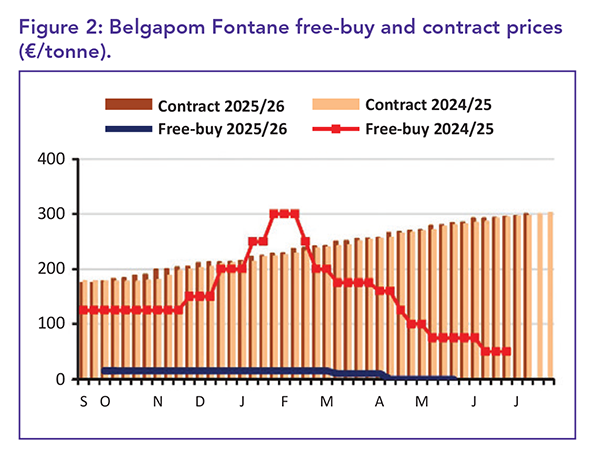
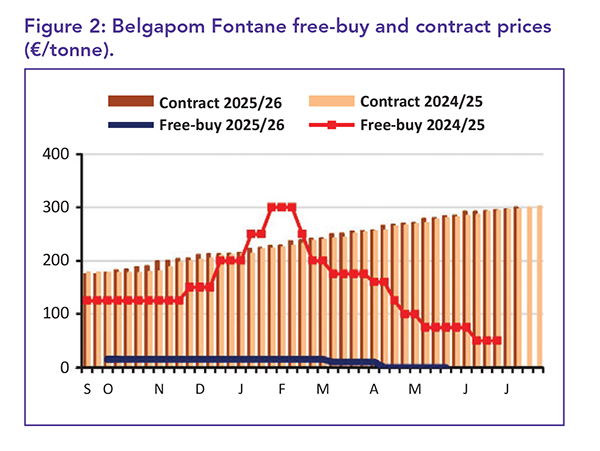
Record stock levels and the collapse in free-buy prices have exposed the vulnerability of the European potato sector, where production growth has outpaced both processing demand and export market expansion during the 2025/26 season.
In response to poor market conditions, several European countries are expected to reduce potato plantings during 2026. France, Germany, Spain, Portugal, and Belgium have all reported lower intended planting areas compared with the previous season. While these reductions represent a necessary attempt by growers to restore market balance after a season characterised by excessive stocks and weak prices, analysts remain uncertain whether the decreases will be sufficient. Favourable growing conditions could still result in large crops and continued supply pressure during the 2026/27 season.
Global trade continues to evolve
Although oversupply has dominated market discussions, international trade remains an important driver of the potato industry. Frozen fry exports continued to grow globally throughout 2025, supported by increasing demand in developing markets. China and India continue to grow their presence in international markets through competitive pricing and expanding processing capacity.
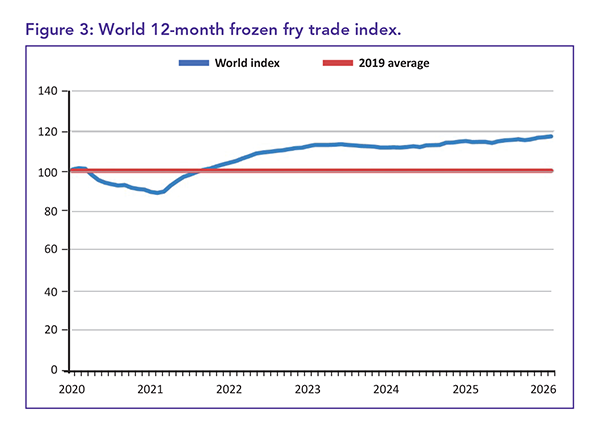
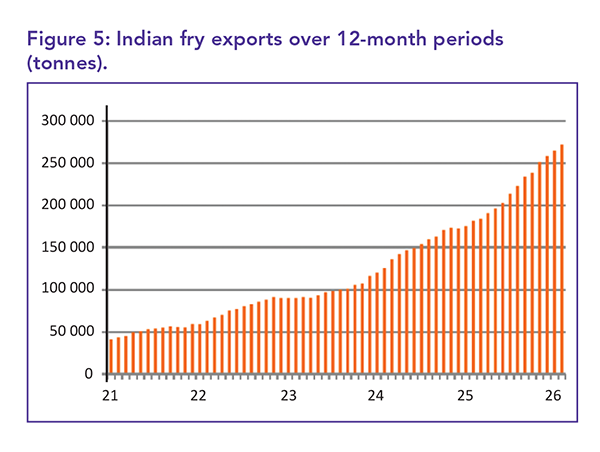
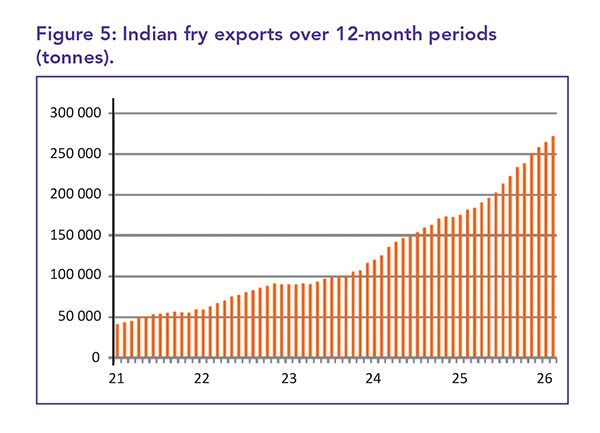
Concurrently, geopolitical tensions in the Middle East have disrupted shipping routes and increased transport, energy and fertiliser costs. The rapid growth in exports from these emerging suppliers is reshaping competitive dynamics in a market traditionally dominated by Europe and North America. These developments have introduced additional uncertainty into global trade flows and may influence market dynamics for the remainder of the year.
Despite the current oversupply situation, weather may ultimately prove to be the most important factor influencing global potato markets during the second half of 2026. Reports of record temperatures in parts of Northern Europe, widespread drought concerns in the United States, and the development of an El Niño weather pattern have raised concerns regarding production potential in key exporting regions.
Should drought and heatwaves significantly reduce yields in Europe and North America, the current surplus could diminish rapidly, resulting in firmer prices and improved market conditions. Conversely, favourable growing conditions could prolong the current oversupply and keep prices under pressure throughout the marketing season.
Implications for South Africa
While the global potato market currently remains burdened by excess supply, the outlook for the remainder of 2026 is far from certain. Reduced plantings across Europe, ongoing geopolitical tensions, and increasing weather-related risks all have the potential to alter market conditions.
For South African producers, these developments reinforce the importance of maintaining production efficiency, managing input costs, and staying alert to opportunities in regional export markets. Although uncertainty remains high, the coming months are likely to determine whether the industry continues to grapple with oversupply or begins a transition towards a more balanced market environment. – Anjé Venter, Potatoes SA
Send an email to anje@potatoes.co.za for more information.