
Estimated reading time: 10 minutes
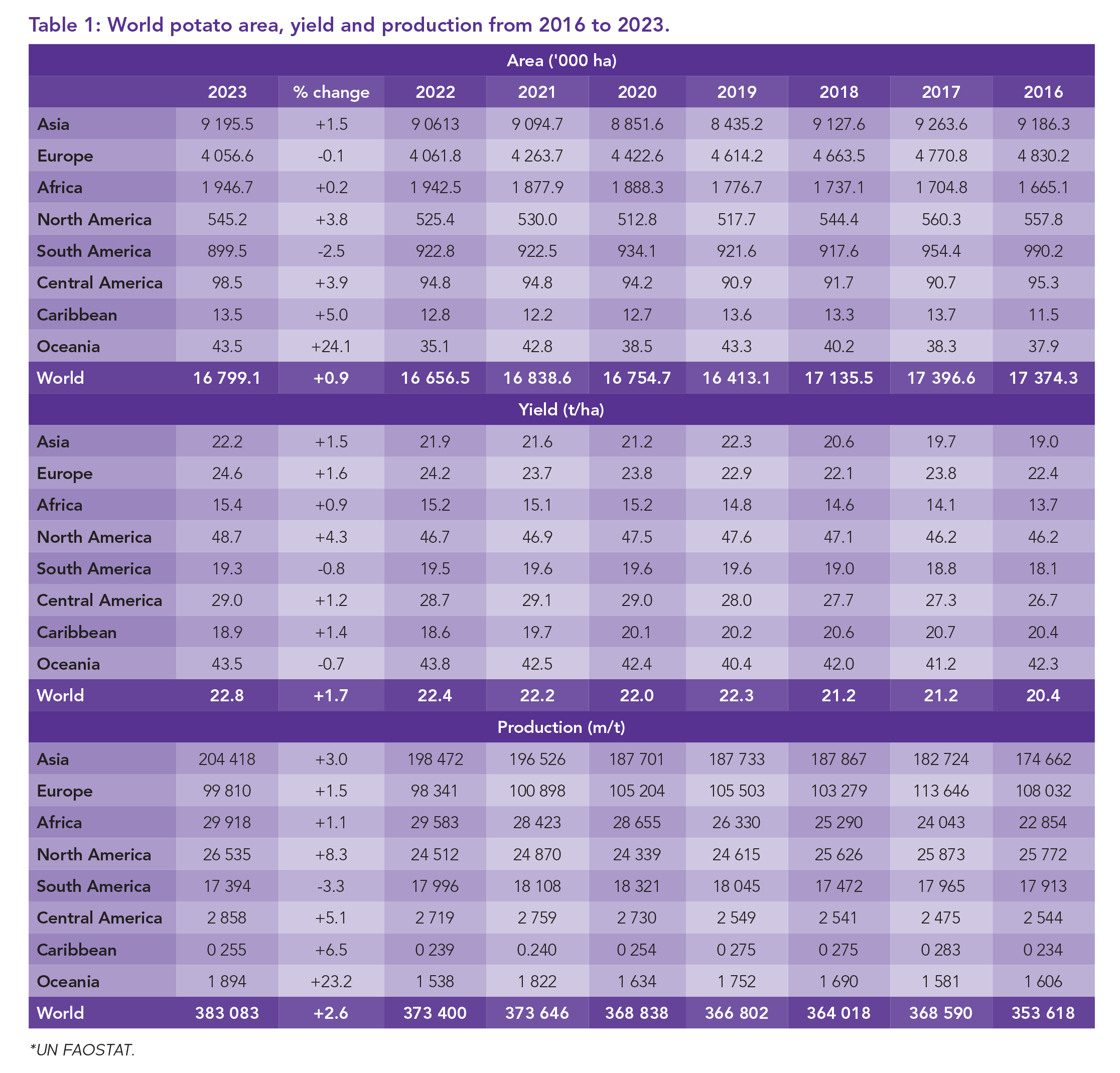
Globally, potato production reached a record high in 2023, with 383.1 million tonnes produced across 150 countries. However, despite this growth, potatoes continue to lag other major crops in popularity.
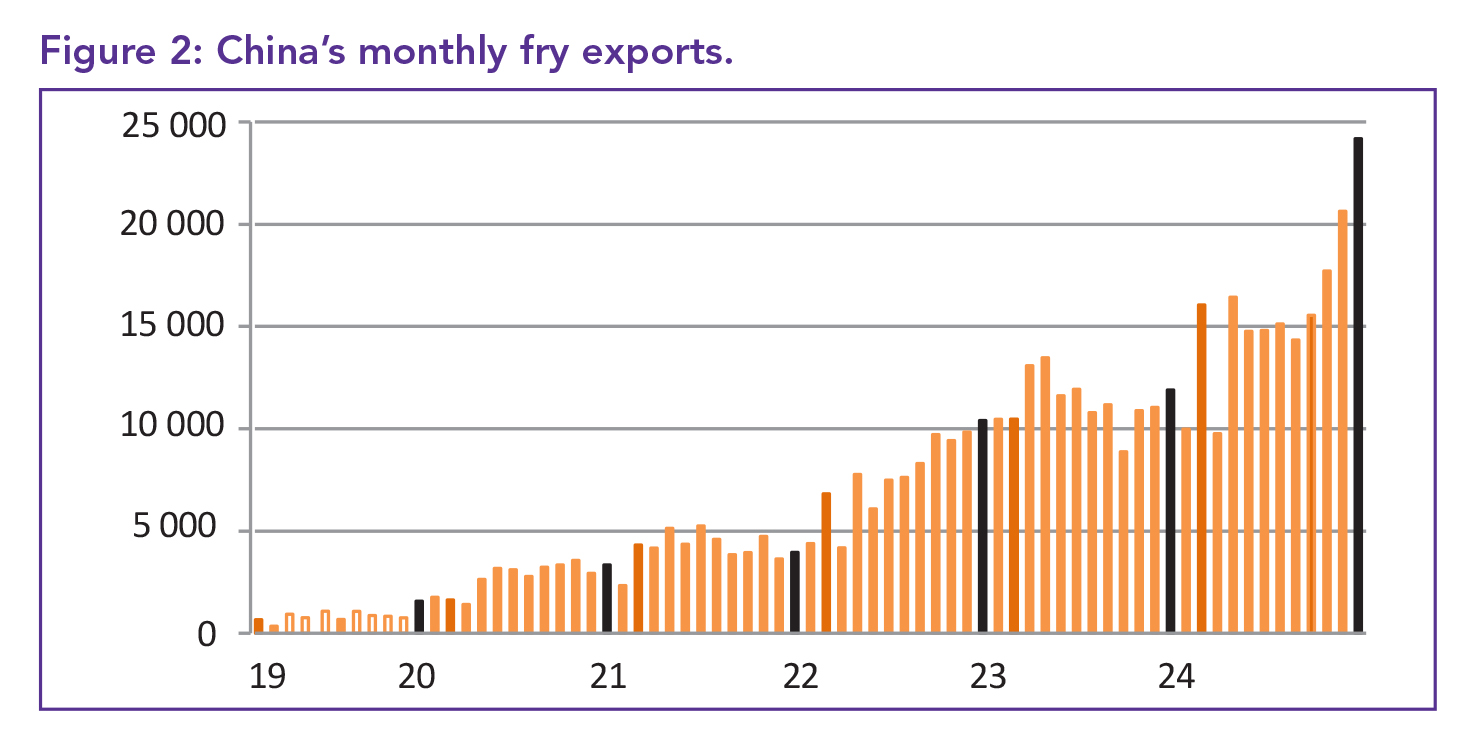
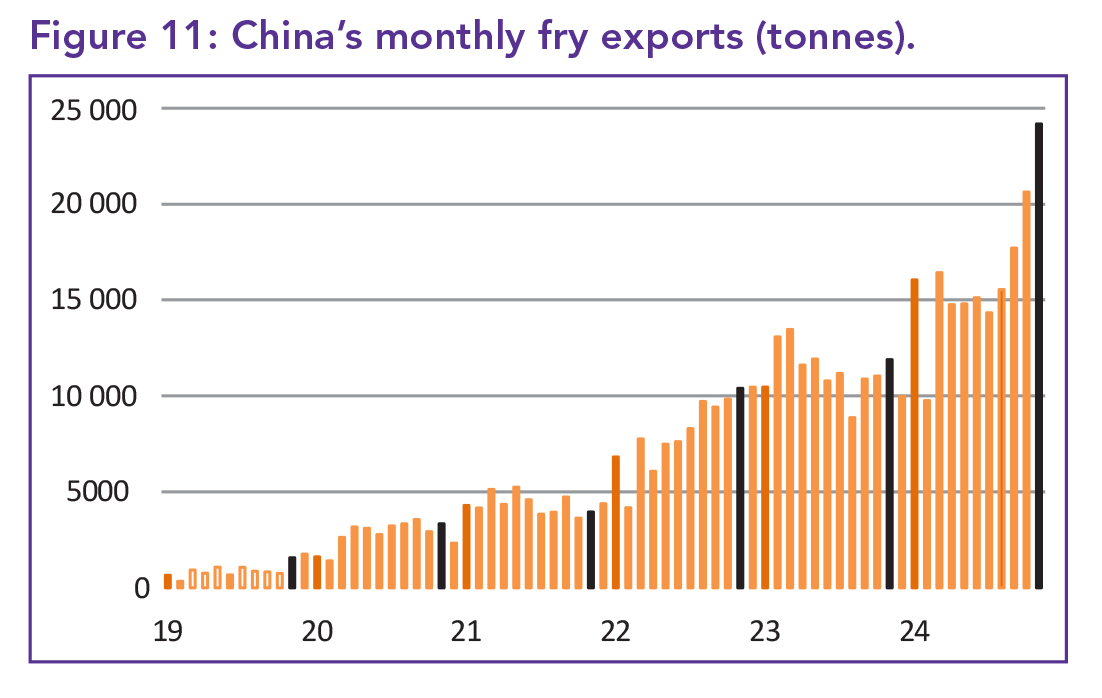
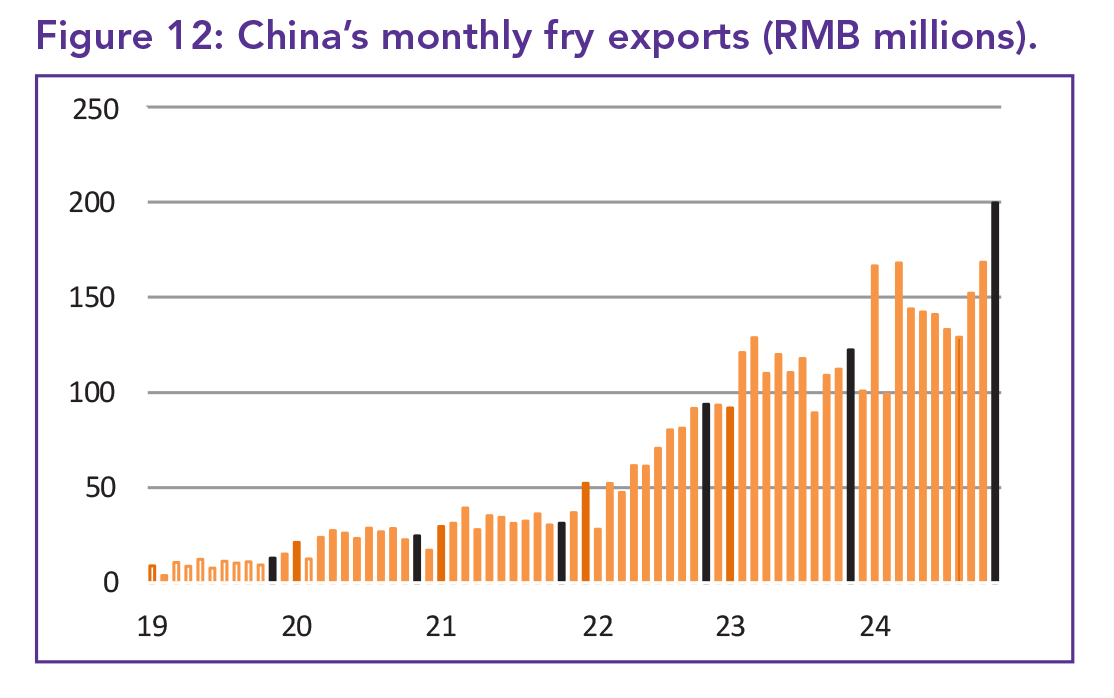
Most of the increase in potato production came from Asia, with India producing more than 60 million tonnes in 2023. Potato production also increased by more than ten million tonnes in the last decade. This increase saw a rise in exports from the world’s two largest potato producers, with record fry exports from China in November last year reaching 24 178 tonnes, a 3 550-tonne increase from 2023.
Potato yields are still far ahead of other crops, providing a higher nutritional value per ha. At the beginning of the year, European Union (EU) prices looked as though they were on the rise as demand remained strong.
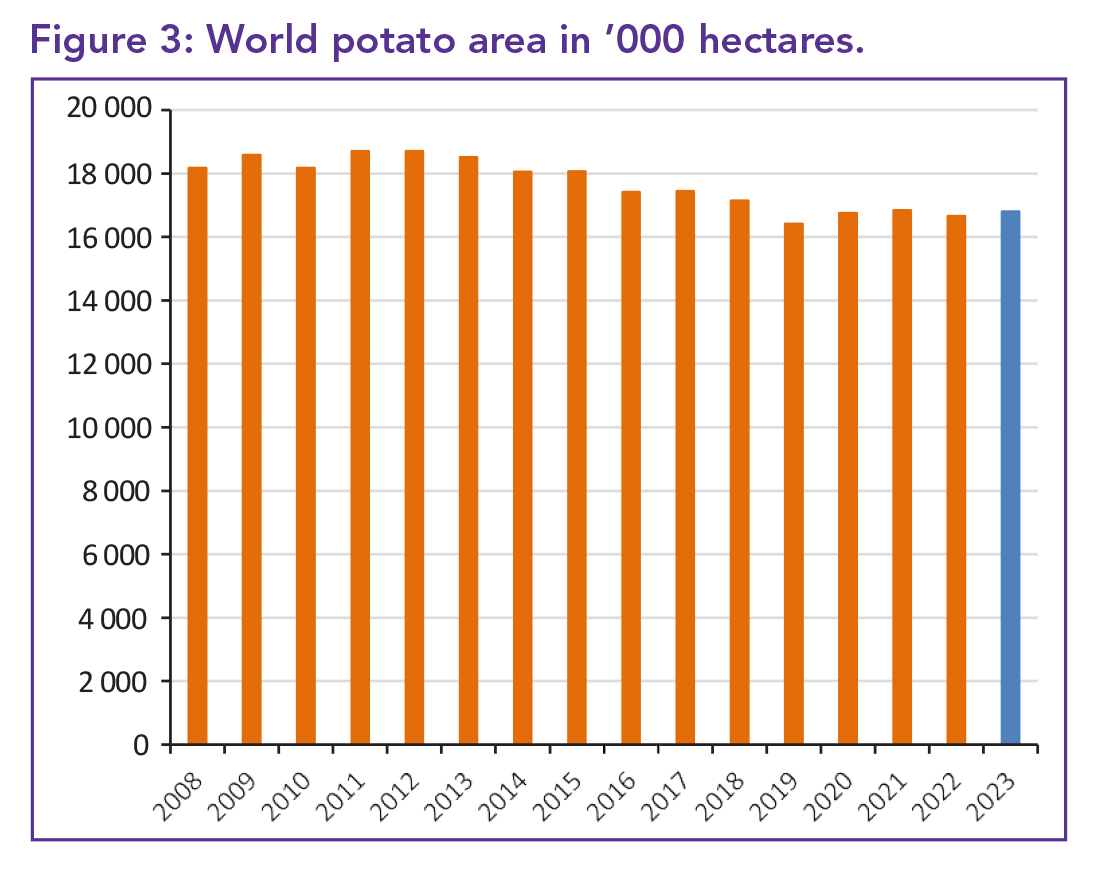
Global potato production reached a new high in 2023 according to the United Nations (UN). Despite potatoes having the highest nutritional yield per ha among major crops, their production growth (+4.6% in the last decade) remains well below that of soya (+33.7%), maize (+22.1%), and wheat (+12.5%), as producers are favouring crops with lower production and storage costs.
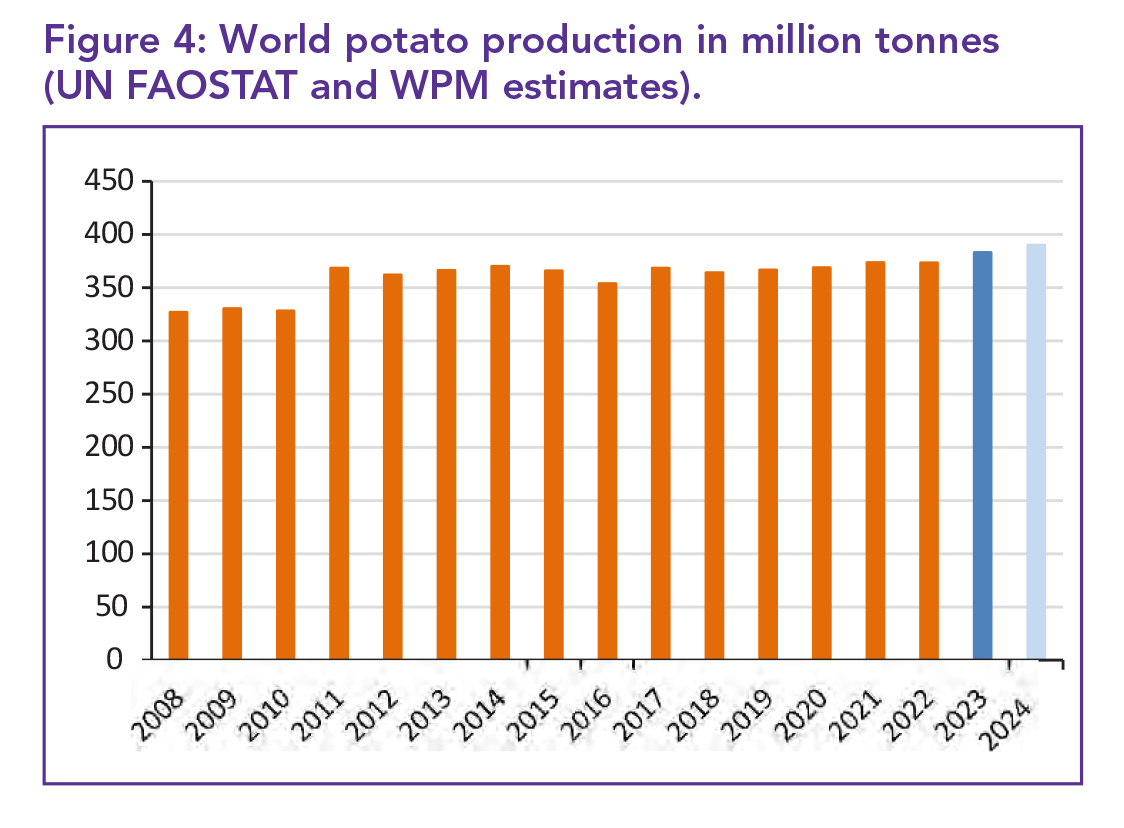
Asia remains the largest potato growing continent at 204.4 million tonnes. Europe’s potato growing areas were marginally down, but output was up 1.5% to almost 100 million tonnes. African potato production was at a record 29.918 million tonnes, 1.1% more than 2022. Oceania experienced the highest production growth rate (+23.2%), totalling 1.894 million tonnes. North America rebounded from previous declines, increasing production by 8.3% to 26.5 million tonnes, while South America was the only region to see a production decline, down 3.3% from 2022.
European Union
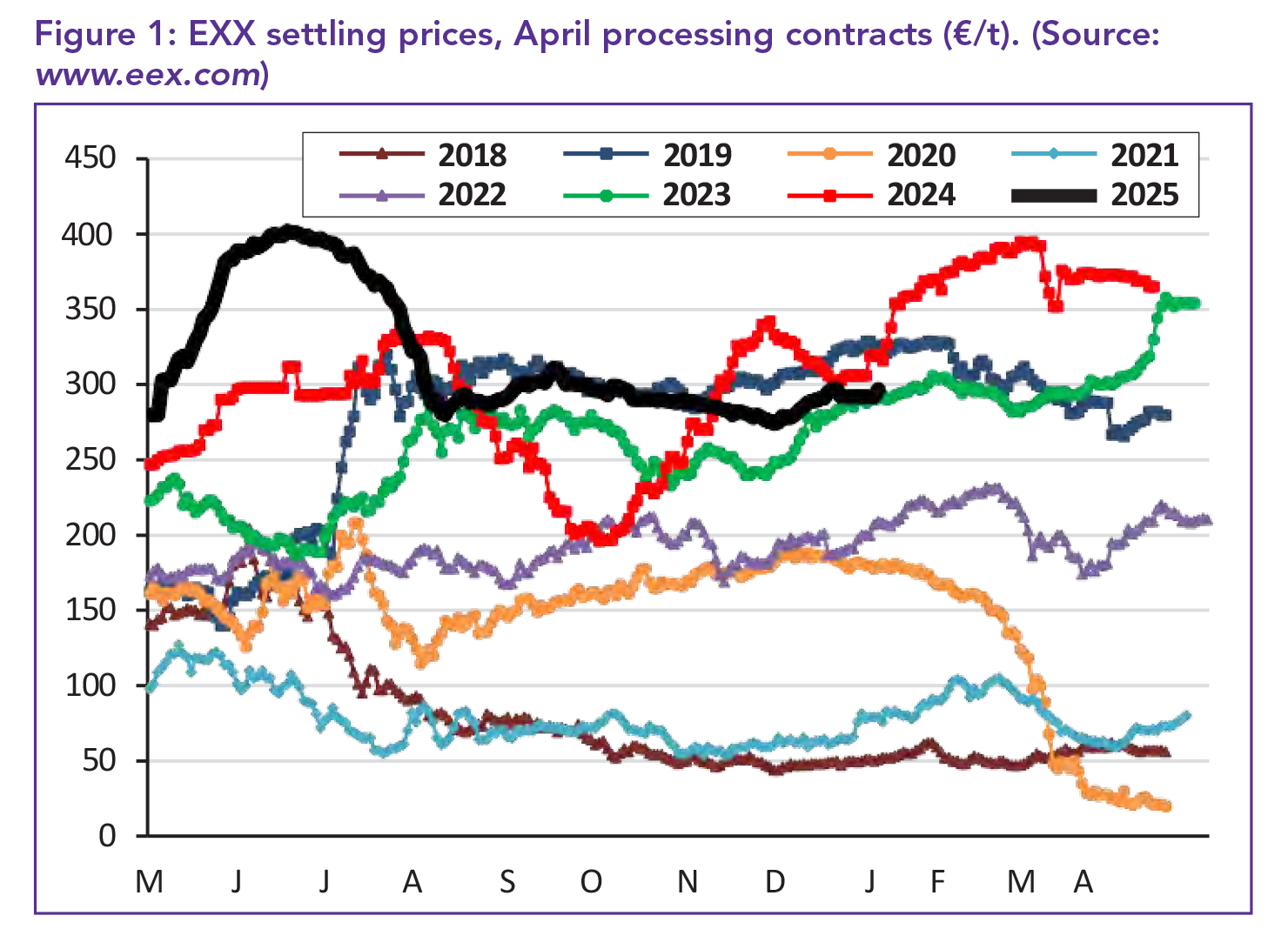
Potato prices are likely to rise within the next few months due to strong demand and limited supply. The first price quote of the year by German organisation REKA showed prices in the range of €210 to €310/t (R4 032 to R5 939/t) with an average of €260/tonne (R4 981/t), which is €10/t (R192) higher than pre-Christmas levels and €45/t higher year-over-year.
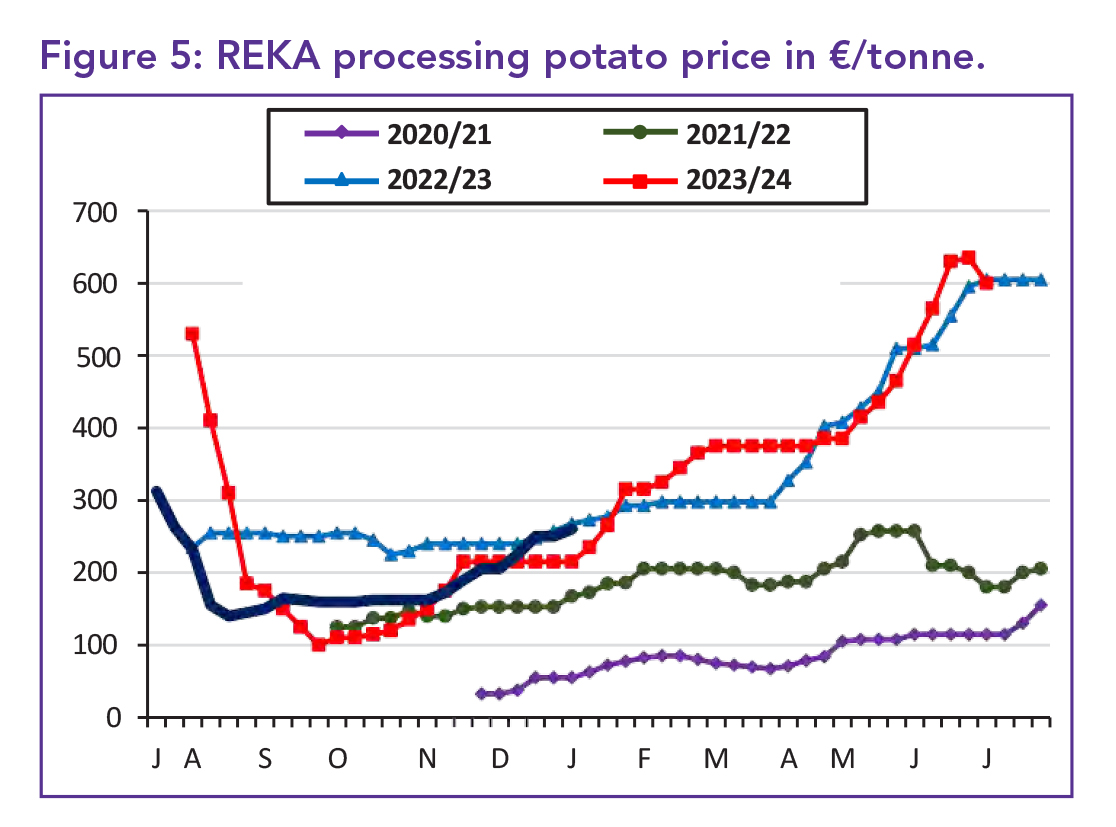
Similar trends occurred in Belgium, where free-buy prices remained at €200/t (R3 832/t), identical to a year ago but with expectations for rapid increases.
Germany
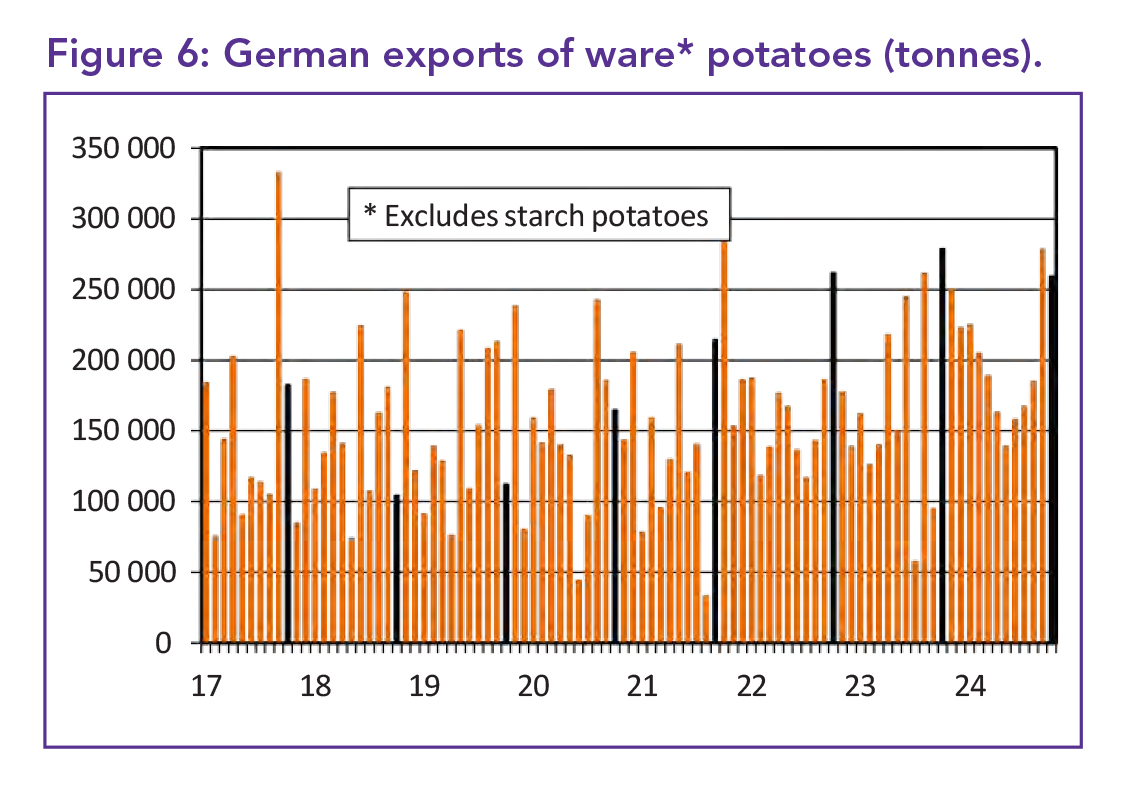
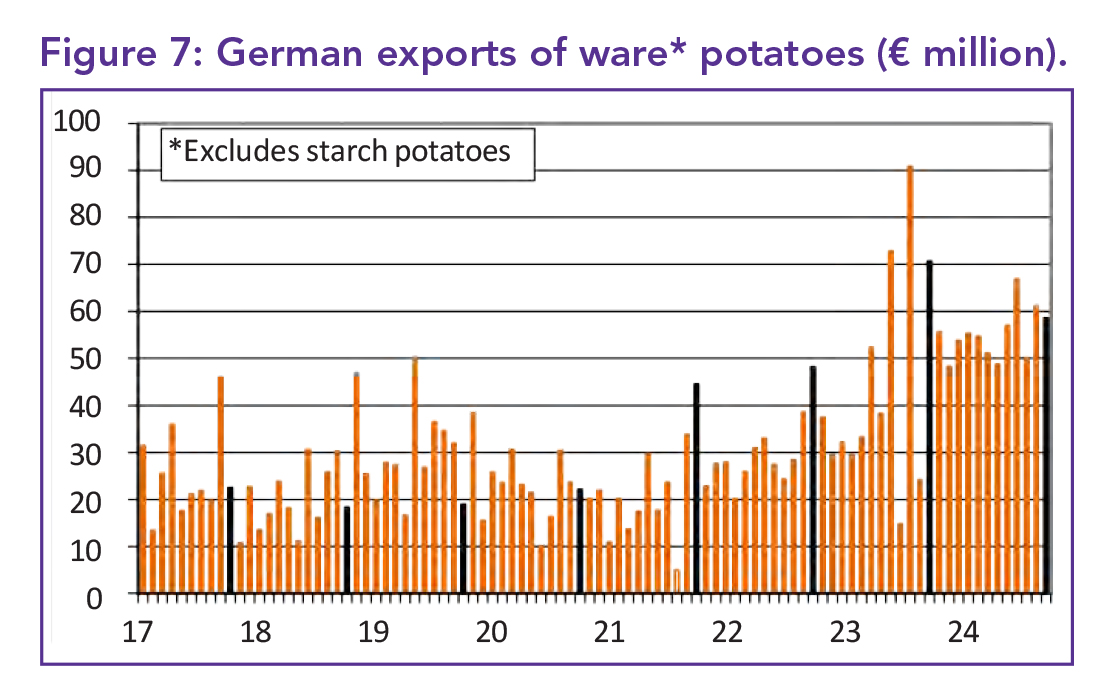
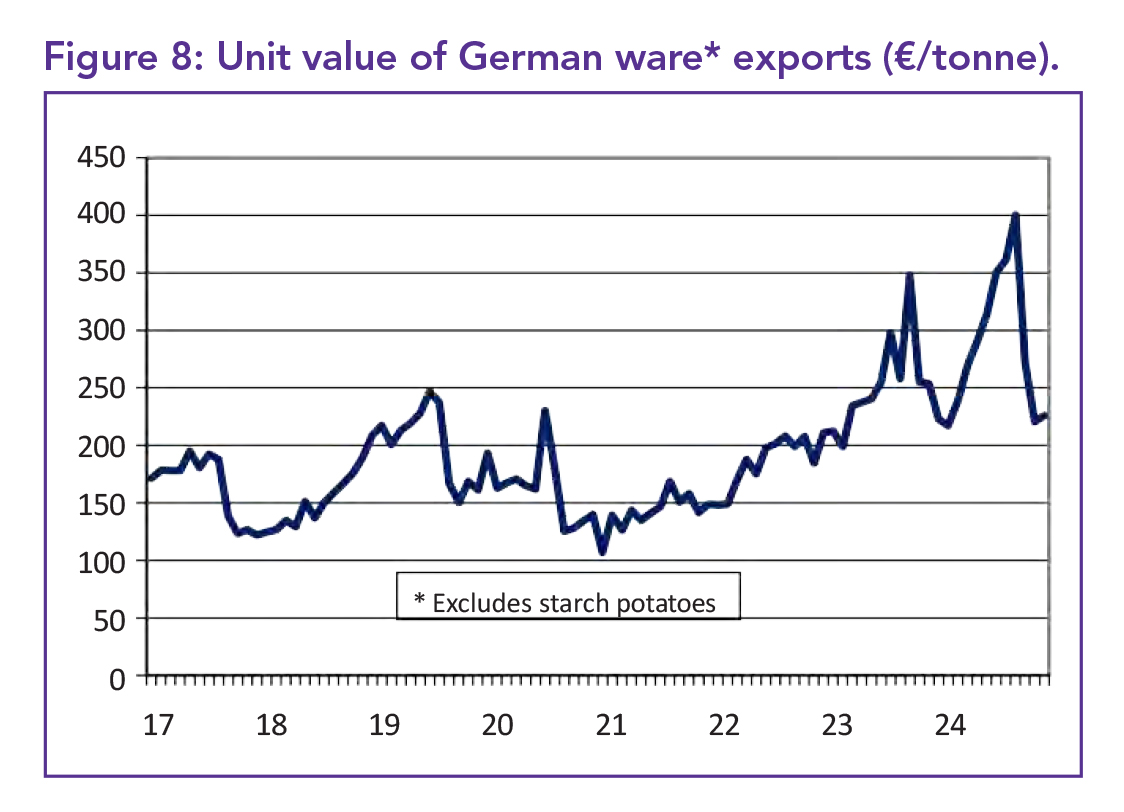
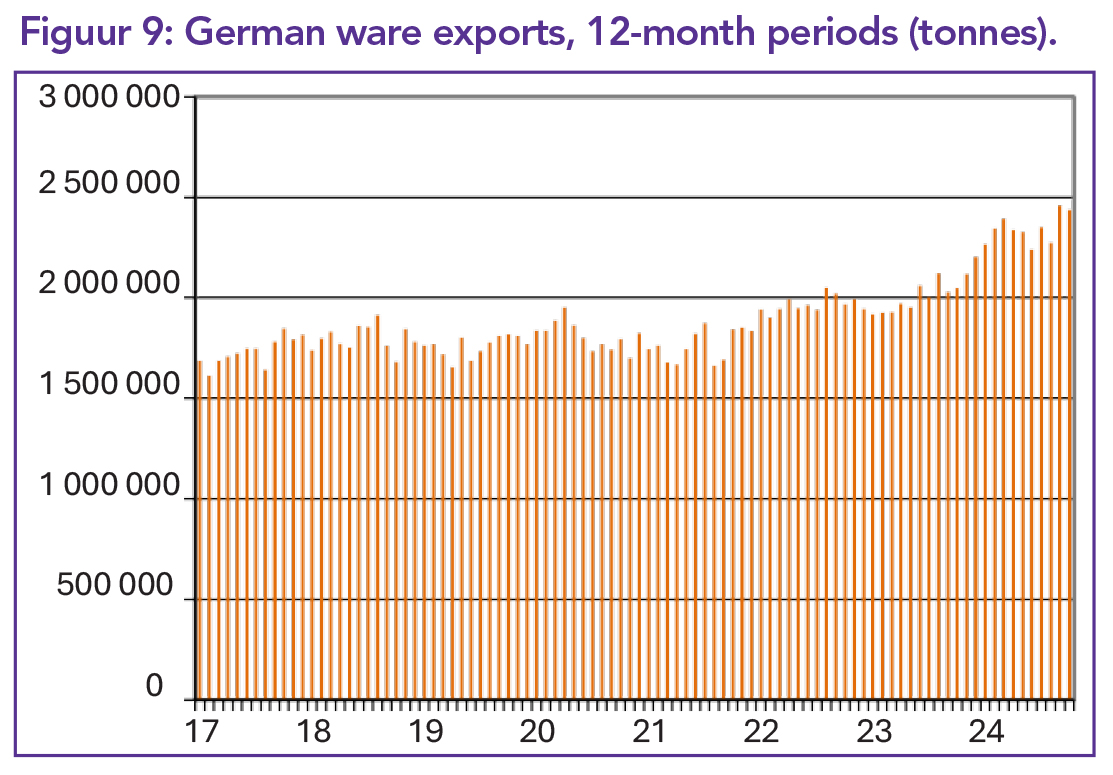
Seasonal exports were seen at record highs, as in the four months to the end of October last year, exports were at 889 341 tonnes, 28.5% more than in the same period in 2023. The average price of exports in October last year was €226/t (R4 330/t), 10.9% less than the same month in 2023.
Spain
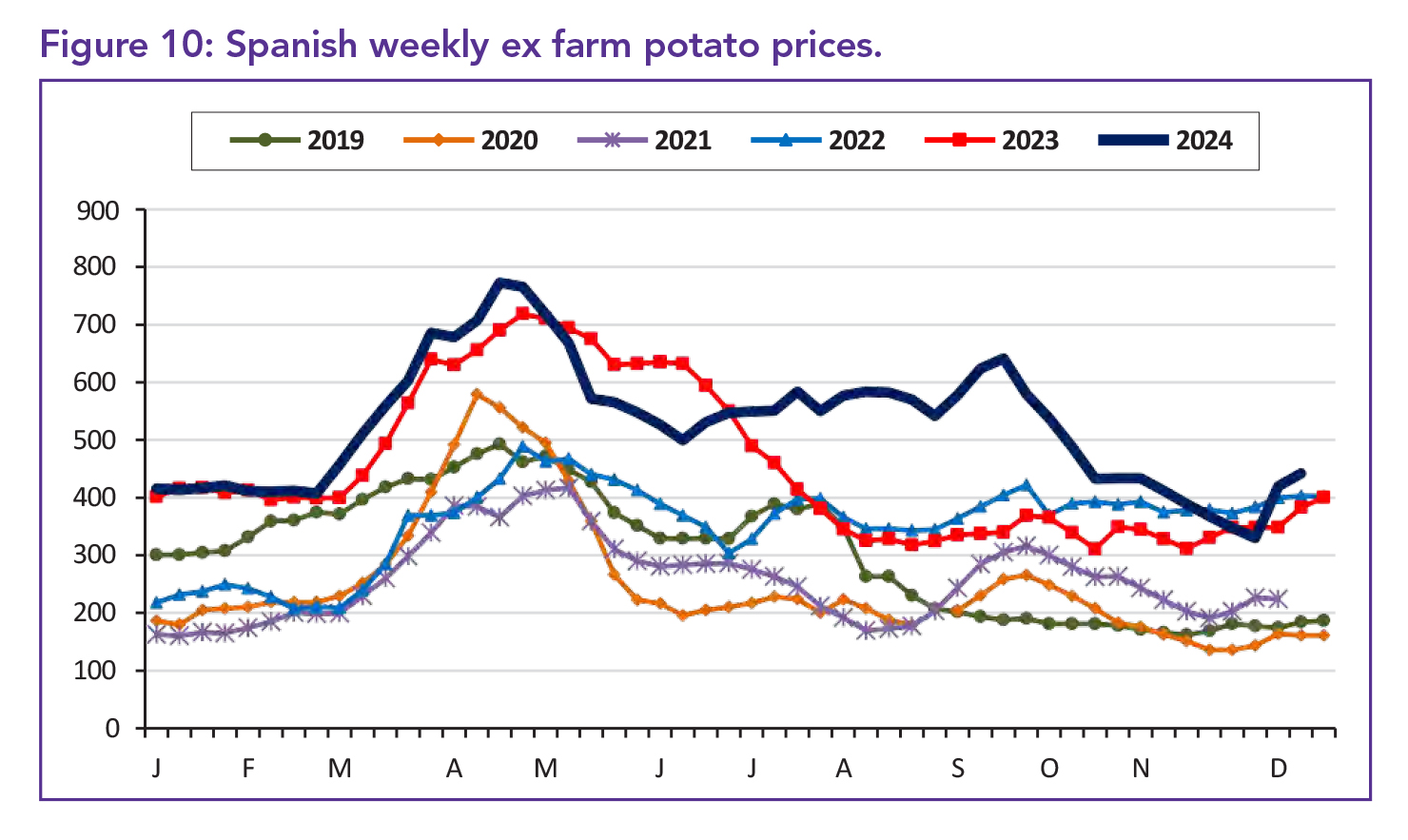
A larger area was planted in the South of Spain with potato planting in the Murcia and Andalucia regions of southern Spain progressing well. In Sevilla, 80% of the potato area was planted in January, with farmers rushing to finish before expected rain on 6 January this year. There is a larger early potato area this year compared to previous years after a decline in recent seasons.
Seed potato supply has increased by 10% this year for regions such as Andalucia, Murcia, Valencia, and the Balearic Islands. Despite some seed shortages in Europe, the potato area in southern Spain is slightly up compared to last year. Over the past seven years, Spain’s early potato area has decreased by 15%, from 18 033 ha in 2018 to 15 222 ha last year.
Meanwhile, producers are harvesting batata de verdete, a summer-planted potato variety with lower yields but higher consumer preference. The area dedicated to this variety is growing, estimated at 2 000 ha.
Producers in Spain, represented by the ASAJA union, protested the approval of Egyptian potato imports through Alicante Harbour, arguing that it undermines EU preferences and creates unfair competition. ASAJA Alicante’s president, José Vicente Andreu, stated that there is sufficient local potato production in Alicante, harvested from March to May and December to February, making imports unnecessary. Andreu also criticised Egypt for not meeting the same phytosanitary standards as Spain.
Portugal
Potato planting in Portugal could see a significant increase this year, driven by producers seeking more profitable crops after poor returns from other produce such as maize, wheat, and onions. However, the high cost and limited availability of seed potatoes may hinder this growth. Therefore, producers are trying to secure contracts with chips/crisp processors, but many processors are hesitant to sign agreements this year.
António Saramago from DPA Lda warned that if the planted area increases and yields are normal, the market could face a return to low prices seen before the pandemic due to decreased consumption linked to the economic crisis in France and Germany. On the other hand, Ricardo Guerra from José Guerra Lda is more optimistic, pointing out that Spain’s potato production dropped last year, and French potatoes will not last through the season. He believes there will be a good sales window in April and May, when the new harvest begins.
However, Guerra cautioned that to make potato farming profitable, a minimum yield of 45 tonnes per ha is required, with production costs in Ribatejo averaging €9 500/ha (R182 000/ha), excluding land costs.
Since 21 December last year, potato prices were stable in most Portuguese markets, with red-skinned potatoes in Guarda priced at €350/t (R6 705/t) and white-skinned varieties in Viseu at €500/t (R9 579/t). Prices for new potatoes in the Algarve reached €1 200/t (R22 990/t).
China
In November last year, exports of frozen potato fries and other processed potato products from China reached a new monthly record of 24 178 tonnes, marking an increase of 3 550 tonnes over October last year’s record and double the exports from 2023. A significant contribution to this record came from a 2 500-tonne rise in sales to the Philippines, which reached a total of 6 825 tonnes.
Despite a price increase to RMB9 197/t (US$1 257 or R23 070/t; €1 220 or R23 380/t), this was still a strong performance. In November last year, sales were 139.7% higher than in the same month in 2023 with the Filipino price remaining stable since then.
Turkey snags America’s crown
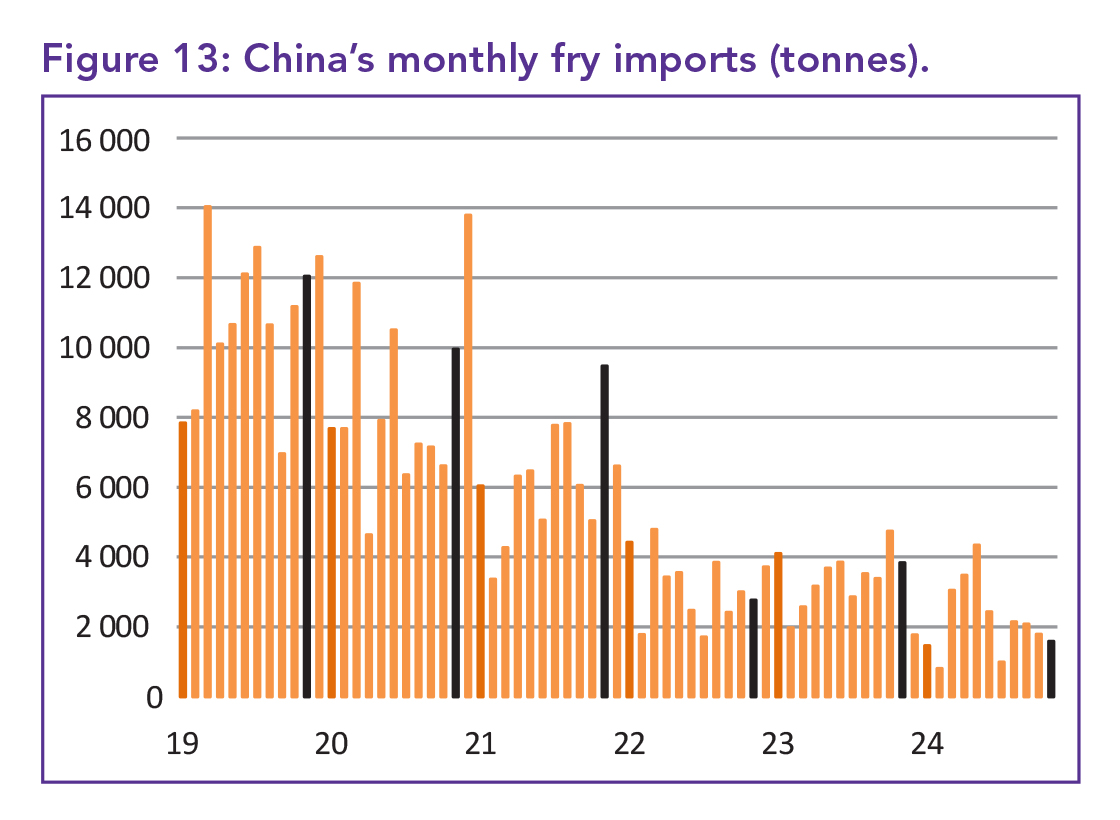
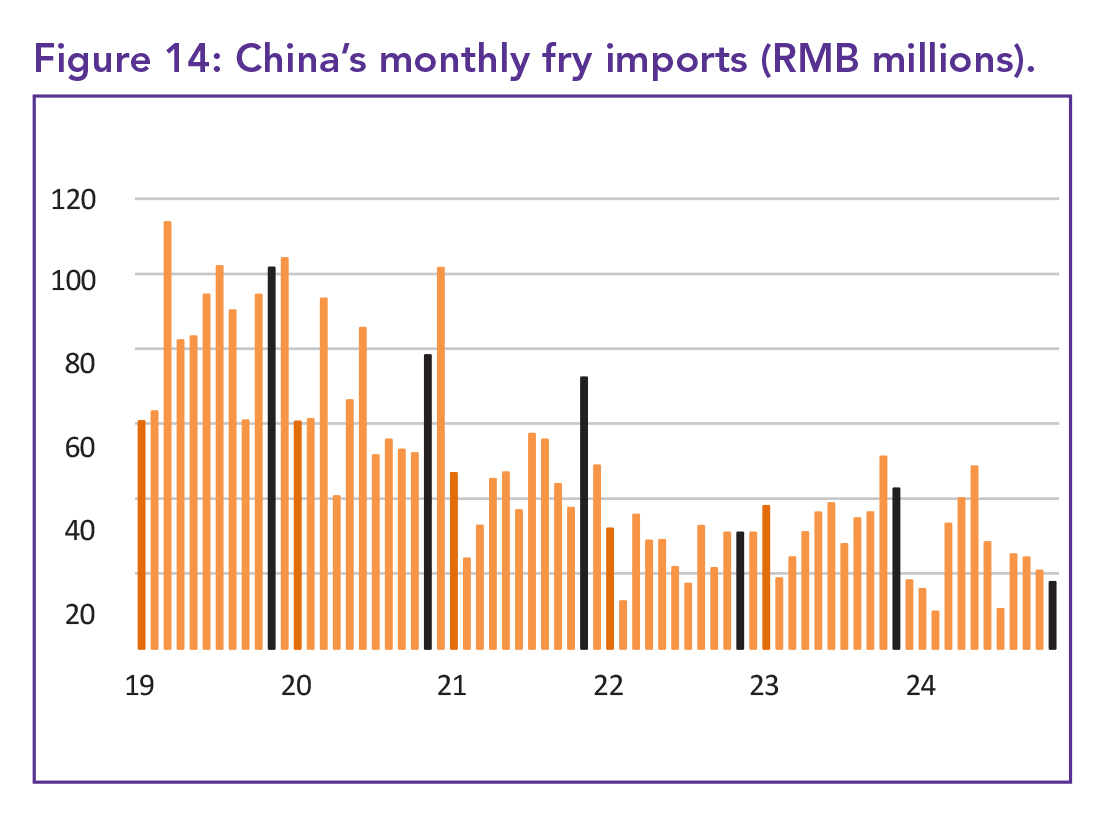
In November last year, Turkey surpassed the United States (US) as the largest exporter of fries to China, with 507 tonnes sold. However, total imports to China for the month were 1 588 tonnes, which is 204 tonnes less than October last year and 58.6% lower than the same month in 2023. Year-to-date imports are also down significantly totalling 25 959 tonnes, a 37.4% decrease compared to the previous 12 months.
Turkey’s fry exports to China nearly doubled in November last year compared to October in the same year, driven by a RMB140 (R354) price reduction. Turkish fries were priced at RMB11 741/tonne (US$1 604 or R29 439/t; €1 558 or R29 958/t), while US fries were slightly more expensive at RMB12 106/t (US$1 654 or R30 356/t; €1 606 or R30 777/t), reflecting a RMB86 (R217) price increase from October last year and a 19.3% rise compared to 2023.
The US exported only 468 tonnes, half of their October last year total, and their annual sales to China have fallen by 40.4%, now totalling 11 076 tonnes.
Japan
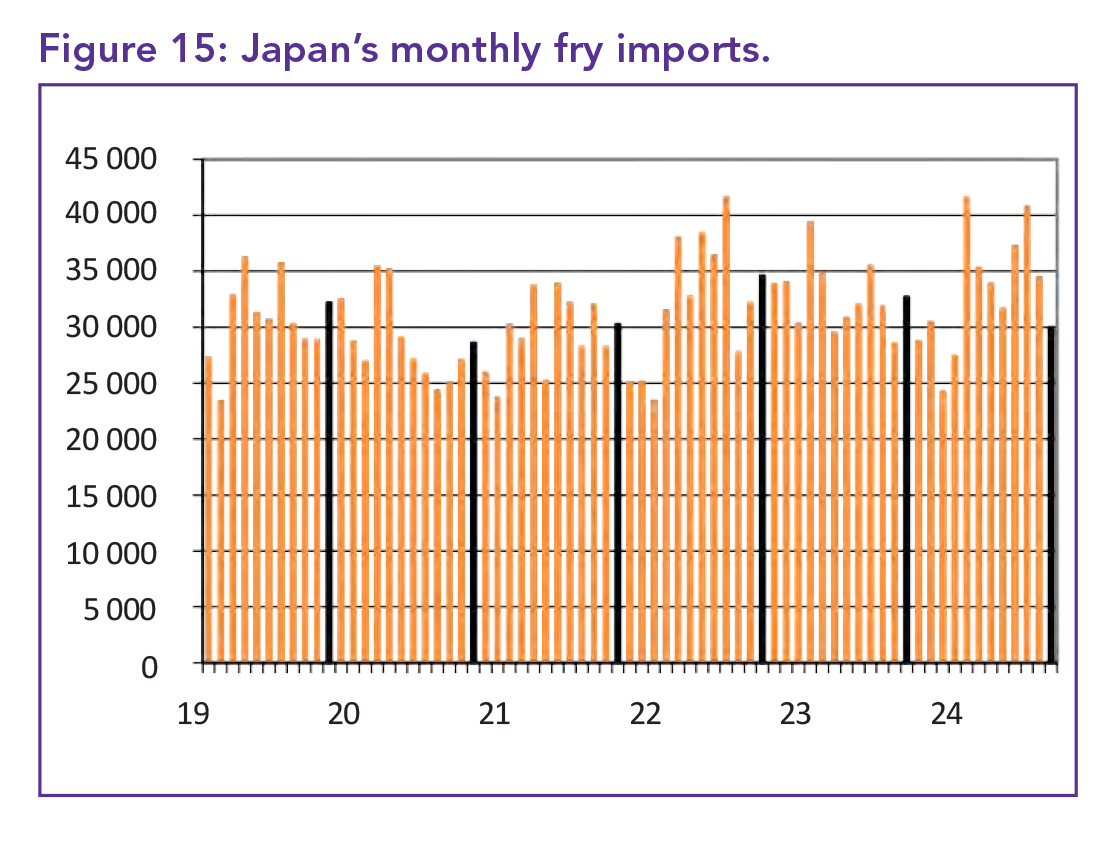
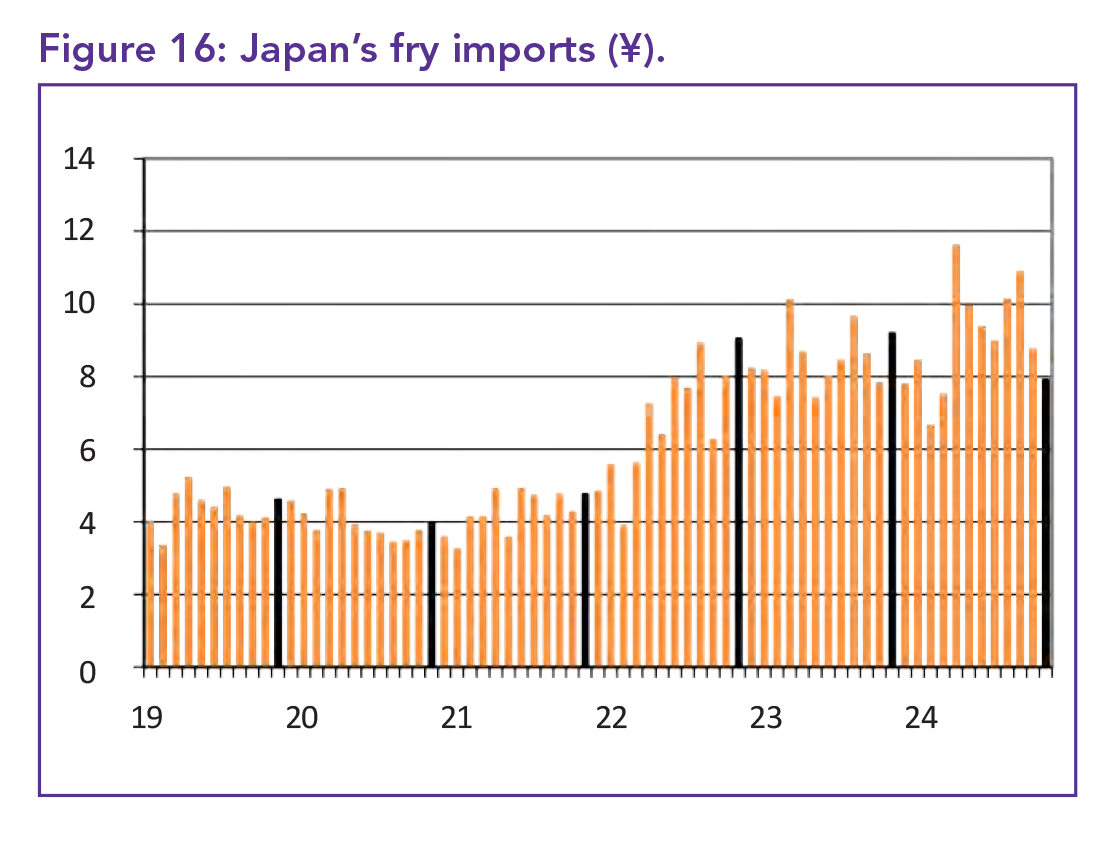
Buyers in Japan are weary because of rising inflation with fry imports to Japan dropping for the second consecutive month in November last year, reaching 30 019 tonnes as inflation concerns grew. Japan’s annual inflation rate rose from 2.3 to 2.9%, with food prices increasing by 4.5%. November last year’s imports of processed potato products were 8.3% lower compared to the same month in 2023.
New Zealand
In November last year, New Zealand’s fry exports to Australia exceeded imports for the first time in eight months, marking its best monthly export figures since June last year. New Zealand exported 3 877 tonnes of fries, 852 tonnes more than October last year, though still 4% lower than 2023. Australia’s imports were 1 561 tonnes, the highest since March last year at $NZ2 077/t (US$1 166 or R21 400/t; €1 123/t), NZ$112 (R1 180) higher than October last year. Despite a 32.2% drop in volume, the higher price meant earnings were only down by 18.6%.
New Zealand imported 1 377 tonnes of fries from Australia at $NZ2 282 (R24 040)/t (US$1 281 or R23 598/t; €1 234 or R23 699/t), spending $NZ3.28 million (R34.54 million), 16.1% less than last year.
New Zealand’s overall export performance was supported by strong trade in Southeast Asia, where exports increased by 52.9% year-on-year.
Thailand was the largest buyer of 619 tonnes, although exports there slightly dropped due to a price increase, while Malaysia’s imports nearly doubled, boosted by a price reduction. – Damien Da Cal, Potatoes SA
For more information, email the author at damien@potatoes.co.za or visit www.potatoes.co.za.