
Estimated reading time: 6 minutes
Stephan en Seun Boerdery is a family farming business that has been in operation since 1965. Today, the business operates in two regions on the West Coast and is led by Stef Stephan and his sons, Johan and Lourens, who joined the enterprise as fourth-generation producers.
The operation produces potatoes in a unique area where the crop can be planted year-round. CHIPS visited them at Saamstaan Farm near the Atlantic coast to learn more about their production and packing operations, as well as the challenges and opportunities related to market access, labour management, and water availability – factors that are critical to farming in the region.
Supplying the market year-round
“We farm on more than one property, which allows us to produce potatoes throughout the year,” says Stef. “My late father, Johan Carl Jacobus Stephan, originally operated a mixed farming enterprise until he realised how well potatoes performed in our sandy soils. Over the years, the business has grown into a large-scale potato operation, loading two to three truckloads of potatoes every day for delivery to retailers, fresh produce markets, and processing facilities.”
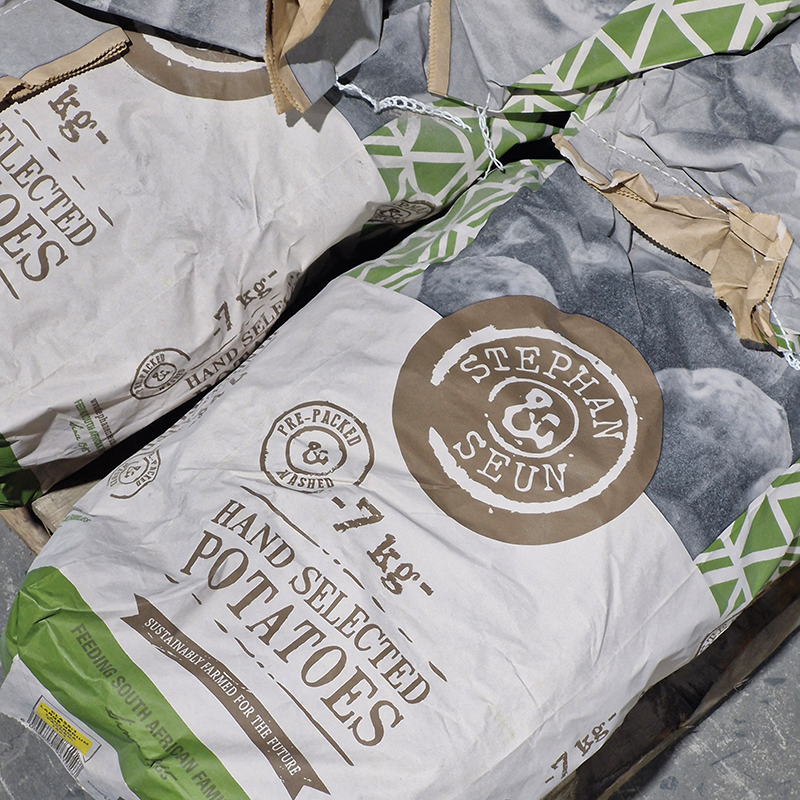
Marketing plays a crucial role, he says, particularly when one has an established brand. “Like all fresh produce, our potatoes have a limited shelf life, which is shorter during the warmer summer months. As a result, we primarily supply the Cape metropolitan area during summer. In the cooler months, when shelf life is longer, we are able to market our potatoes much further afield, including Gauteng and the Eastern Cape.”
The area of the Sandveld where potatoes can be grown year-round is largely limited to a narrow coastal strip. Here, summer temperatures are moderated by a cool sea breeze that develops almost every afternoon.
“It all comes down to climate. The cooler summers and milder winters make year-round production possible. As a result, potatoes are harvested every day of the week, every month of the year. It is difficult to define exactly how far inland this production zone extends. Our family farm, Compagniesdrift, is situated approximately 70 km from Saamstaan, and there we can grow only one seasonal potato crop suitable for processing,” Stef explains.
Choosing the right potato varieties is another key factor in the farm’s success. Varieties are carefully selected through scientific evaluation to ensure they perform optimally under the region’s specific climate and soil conditions. This contributes to improved production efficiency, lower water requirements, and stronger disease resistance.
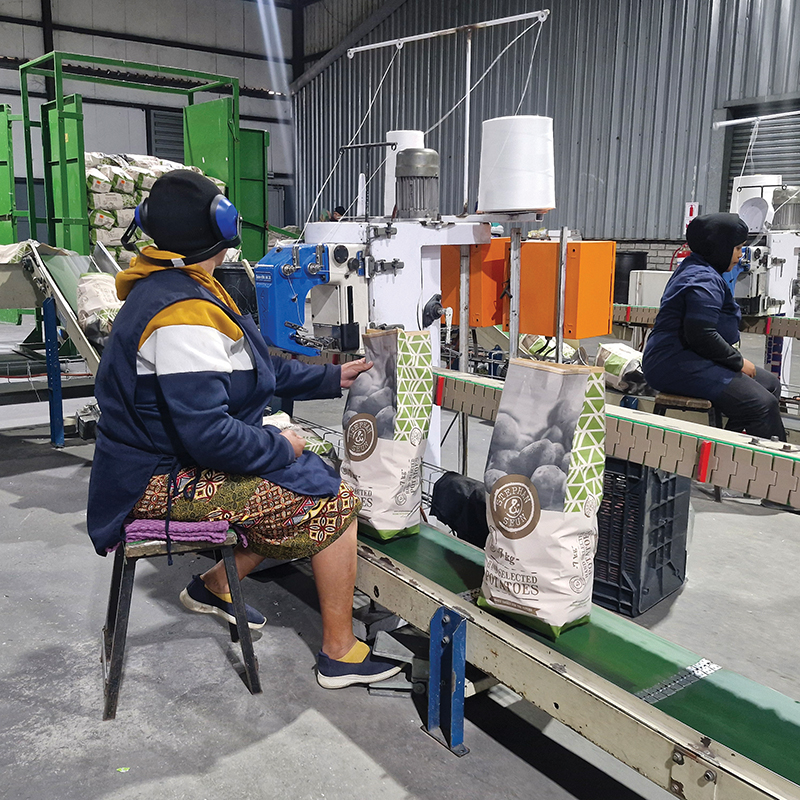
Technology powers production
Stef believes that keeping pace with agricultural innovation is essential for future production. “Agricultural technology is advancing rapidly, and the ability to adopt the right innovations will play a major role in the success of future farming businesses.”
The family is also mindful of the challenges posed by climate change and remains committed to sustainable farming practices. “We need strong partnerships with companies that help us make informed and responsible decisions. A shared commitment to sustainability among our suppliers and business partners is essential for the long-term resilience and success of our farming operation.”
Johan has been actively involved in the business for the past six years. He believes it isn’t always possible to follow a fixed pest and disease management programme. “The Sandveld generally experiences high insect pressure, with leafminer being one of the biggest challenges. Because potatoes have a relatively short growing cycle, we need to constantly monitor the fields for pests and diseases and adjust our strategies when necessary. Climate conditions change from year to year, and pest pressure can develop unexpectedly.”
Getting the basics right
The enterprise has improved both yield and quality by adopting modern technology and improved farming practices. “Automated irrigation systems, soil moisture monitoring, and data-driven irrigation scheduling help us use water more efficiently and make the most of every drop,” says Stef. “Technology such as the normalised difference vegetation index (NDVI) allows us to closely monitor crop growth and identify problem areas early.”
When it comes to pest and disease management, Johan believes success starts with getting the basics right. “We use a highly calibrated spray rig and tools such as John Deere application maps to evaluate spray coverage and accuracy. Although these technologies have been available for some time, they remain valuable management tools in our day-to-day operations.”
Weather stations installed across the farms, along with reliable forecasting systems, allow the team to identify optimal spray windows based on factors such as humidity and wind conditions. “We also collect and analyse data on pests and diseases to support faster and better decision-making. Together with InteliGroand other service providers, we continuously monitor for aphids, tomato leafminer, and potato tuber moth.”
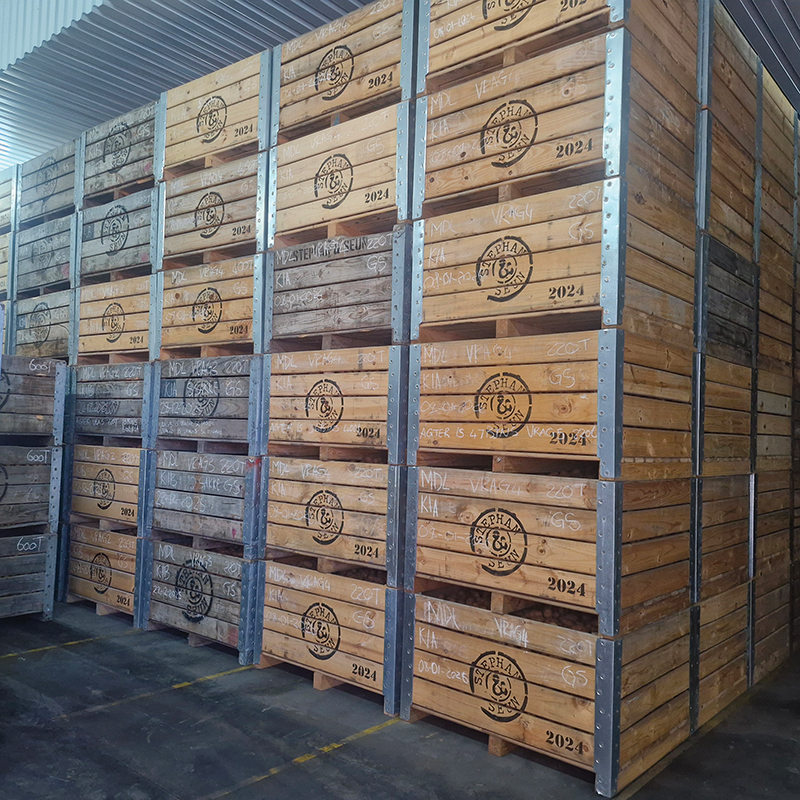
Looking towards the future
“The potato industry is one of the world’s largest and most important agricultural sectors, generating value and opportunities throughout the supply chain,” notes Stef, who has observed more young people returning to agriculture, particularly the potato industry, because of the greater role played by technology.
“My sons are passionate about technology. The technology available on modern farms is remarkable, and ranges from GPS-guided tractors and optical sorting cameras to multi-head scales that can weigh potatoes to within 20 g. It gives me great confidence in the future of the industry and in the next generation of potato producers, who will continue to drive innovation and add value.”
Johan agrees, saying that one of the biggest lessons he and his brother have learned is the importance of adaptability and problem-solving. “Farming teaches a set of skills that you may not develop as quickly in a more structured business environment. The potato industry needs versatile young people who are eager to implement technology, learn continuously, and solve problems independently. Those who are willing to put in the effort will develop skills that will allow them to make a difference, wherever life takes them.” – Carin Venter, Plaas Media
For more information, contact Johan Stephan at 073 217 2617 or send an email to johan@stephanenseun.co.za or stef@stephanenseun.co.za