
Estimated reading time: 7 minutes
Students from the Department of Food Science at Stellenbosch University have developed a potato milk alternative called Kapôkí as part of the department’s new product development project for 2023. The challenge, ‘Pantry Party – Unnovate to Innovate’, was to create a product that is suitable for storage at an ambient temperature with a minimum shelf life of 14 days. We decided to develop potato milk.
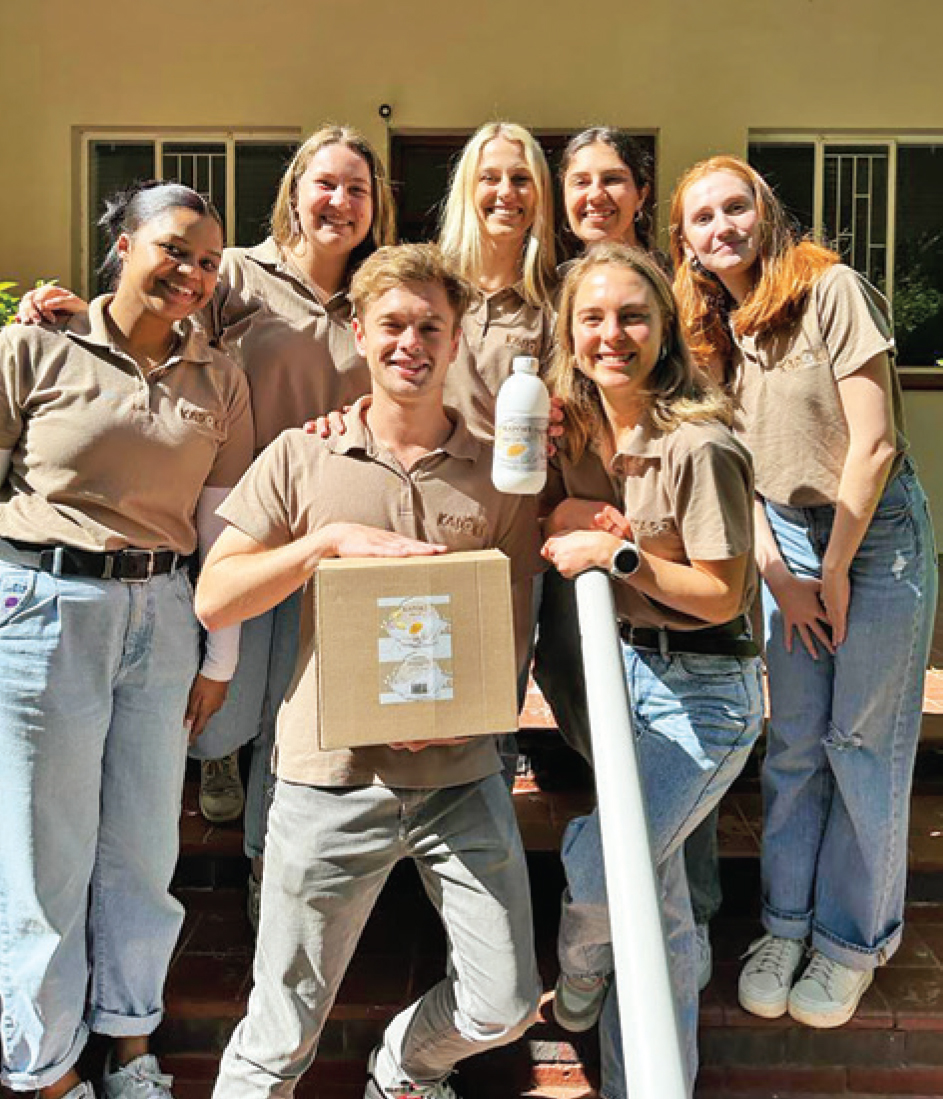
It is an affordable, minimal labour input, low-fat, plant-based, shelf-stable ‘milk’, that is free of soya bean, tree nuts, gluten, dairy and lactose. Therefore, it can become a staple in homes – even for South Africans without refrigerators.
‘Unnovation’ entails thinking laterally to solve new problems with existing technology and systems. Unnovation in this instance meant that we needed to utilise tried and tested methods of production. That is why we decided to use retort sterilisation, a method used for thermal processing to ensure that Kapôkí remained stable for the required 14-day shelf life. Retort sterilisation is based on the principles of the traditional canning preservation method, which dates to 1790.
The potato has been cultivated and consumed by humans for 8 000 years and was used as one of the main ingredients in Kapôkí. Potatoes are a staple in many nations’ diets because it is nutrient-dense, easily cultivated and versatile. By using functional ingredients such as flavour masking agents, emulsifiers, and flavourings we were able to create a final product that imitates cow’s milk in taste, appearance and mouthfeel.
Affordable milk alternative
The target market for this product would be individuals who prefer an alternative product to dairy milk. This market has massive growth potential. Global market insights estimate that the dairy alternative market already exceeded US$27.5 billion in 2022 and projected a compound annual growth rate of 9% between 2023 and 2030.
Market research was done in the form of research forms using the Internet platform, Google. From the responses of 50 respondents, it was evident that affordability was a major concern among regular consumers of plant-based milk, especially in respect of existing products. We learnt that there was a gap in the market for an affordable product.
Most of the raw ingredients used in the potato-based milk were more affordable than those used to make nut and oat milk.
Additional factors driving the potential success and motivation to develop Kapôkí, include lactose (or milk sugar) intolerance, allergies to cow’s milk, nuts, soya, and gluten as well as sustainability.
According to a local study performed by international vegetable wholesaler, ProVeg, more than 75% of adults globally are intolerant to ingested dietary lactose. A similar study conducted in 1983 revealed that 78% of black South Africans are lactose intolerant. Providing this large population group access to affordable plant-based milk free from lactose could be profitable.
As potatoes are naturally free from lactose, dairy, tree nuts, soya, and lactose – no additional processing and input costs will be necessary to eliminate these substances.
Apart from its allergy-free benefits, Kapôkí can expand the world of alternative milk to lower socio-economic measure (LSM) groups. By using a more cost-effective ingredient (potatoes) as opposed to expensive almonds or oats, the input costs and final selling price of this product were reduced.
Sustainability factors
This product aims to be more sustainable and environmentally friendly than its alternative milk competitors. Existing milk alternatives contribute significantly to greenhouse gas emissions and water usage. To produce 1 ℓ of oat milk and 1 ℓ of almond milk, 0.9 and 0.7 kg of carbon dioxide (CO2 gas) are produced respectively, compared to potato milk which only produces 0.27 kg of CO2 gas/ℓ.
Additionally, potato cultivation uses significantly less water than almonds and oats. Only 287 ℓ water is required to produce a kilogram of potatoes, which is significantly less than almonds, which require 7 195 ℓ water to produce a kilogram of almonds, and oats which require 3 800 ℓ for a kilogram of nuts.
Kapôkí’s carbon footprint will also be smaller than imported produce because locally sourced potatoes can be used.
The South African food industry wastes ten million tonnes of food every year. A large portion of wasted food ends up in landfills which ultimately leads to large emissions of greenhouse gases – like methane and carbon dioxide gas. Common byproducts that result from industrial potato processing are rejected potatoes and potato pulp. The production process of Kapôkí can utilise rejected potatoes and potato pulp by incorporating it into its formulation to minimise food wastage.
Kapôkí can be produced with a resource-efficient mentality by producing as little waste as possible. Apart from packaging material, the only waste generated during the production process of this product would be the potato peels. Cooked potato peels can be fed to pigs as they are a source of fibre and easily digestible.
Alternatively, the potato peels can be added to compost heaps and used as organic fertiliser on farms.
Production and taste
Sifra, a potato cultivar that is available throughout the year across South Africa, was initially used to produce Kapôkí during our product development phase.
To make the potato milk, the potatoes are first processed into a powder. The raw potatoes are washed, peeled, and sliced. The cut potatoes are then boiled until soft and strained to remove the excess water. Once boiled, the potatoes are then mashed and spread thinly on a baking tray. It is then dehydrated and ground into a fine powder using a high-speed blender.
The potato milk is then produced by blending the potato powder and water in a high-speed blender. An emulsifier with added minerals is added to the potato and water mixture and blended again.
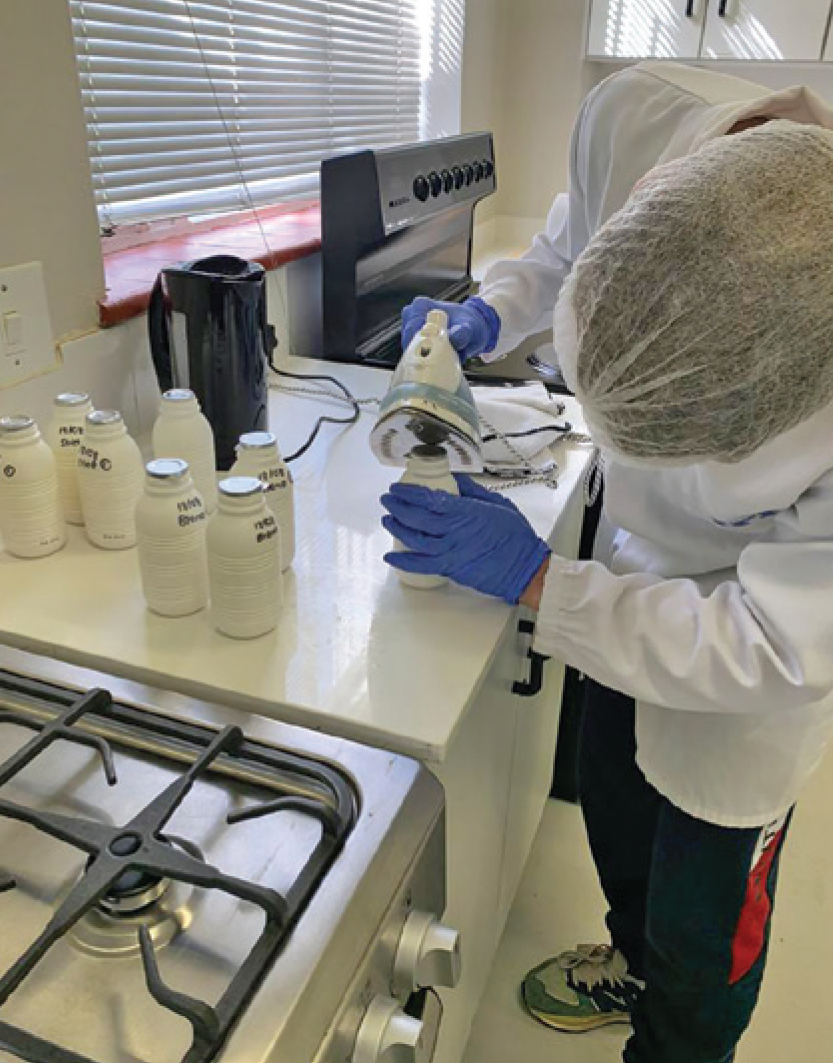
The remaining ingredients are added which include canola oil, a flavour-masking agent, fructose, salt, flavourings, and a sweetness enhancer. The mixture is blended again and ready to be bottled. The potato milk is bottled, sealed, and taken to a facility for in-pack retort sterilisation.
Ultimately, this process leads to the manufacturing of plant-based milk with a faint potato flavour and an off-white colour. It has a neutral taste and is not predominantly sweet or savoury. The flavour, colour and aroma of cow’s milk were used as a reference during the development of Kapôkí.
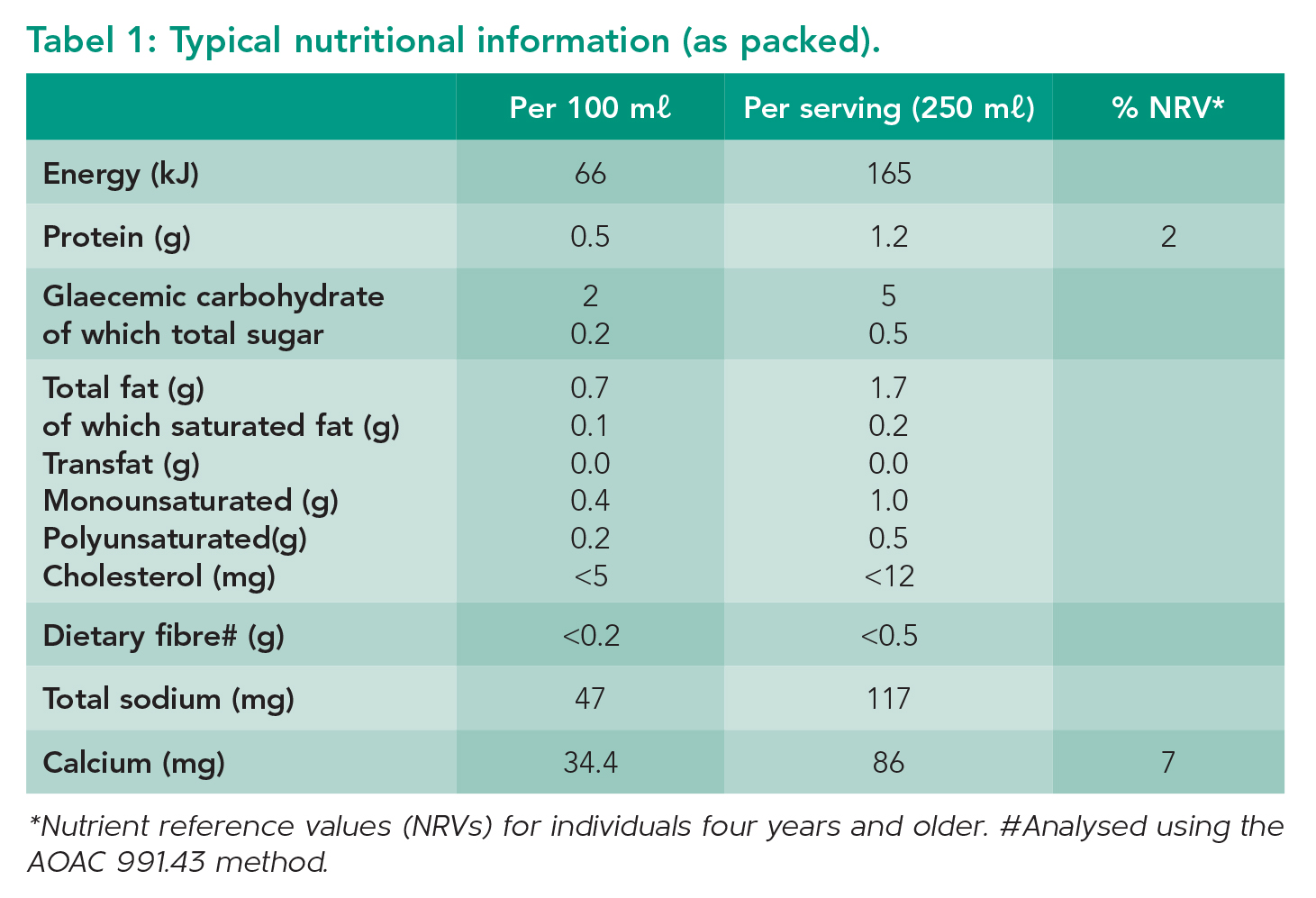
The nutritional composition was analysed by Microchem Lab Services. The typical nutritional information can be found in Table 1.
Commercial possibilities
Kapôkí could be mass-produced. The ingredients used are relatively inexpensive, the raw ingredient (Sifra potatoes) is available year-round in large supply, and large-scale production won’t be labour-intensive.
However, processing would require some expensive equipment. The necessary equipment includes a homogeniser, decanter, ultra-high-temperature pasteuriser, mixing vessels, dehydrator, milling machine and an industrial roller to mash the potatoes into a thin sheet.
Kapôkí could be sold to retailers at an estimated price of just over R20/ℓ when produced on a small scale. However, this price will decrease significantly if the product is produced on a larger scale. When comparing the estimated price to existing plant-based milk alternatives in the South African market, the production of Kapôkí proves to be less expensive.
A clever marketing proposal from the group is to set up a stall on Stellenbosch University’s Rooi Plain (outside the Neelsie student centre) and hand out Kapôkí samples to students. They can in turn post a picture of themselves consuming Kapôkí to win a prize.
Kapôkí stalls can be set up at grocery stores to hand out samples to shoppers. Most local retailers have social pages. Kapôkí could be advertised on these platforms, creating awareness of this new product. – Lize Theunissen, Courtney Hildebrandt, Lara Havenga, Ilke Olivier, Zàn-Mari Roth, Christopher Doms and Elzaan Louw, Kapôkí developers and students from the Department of Food Science at Stellenbosch University
For more information, contact Dr Debora van der Merwe, Food Science lecturer at Stellenbosch University, on 021 808 3654 or jdvandermerwe@sun.ac.za.