Growing potatoes under challenging soil conditions: GRIMME has the solution
Estimated reading time: 4 minutes
Growing potatoes in stony and cloddy soil can be challenging, but it’s possible. Effective and precise soil preparation and cultivation enable the production of high-quality crops while maintaining production efficiency. As an international leader in innovative agricultural machinery, GRIMME has developed a range of bed formers and destoners to optimise soil preparation.
Growers worldwide recognise the advantages of a three-phase system for soil preparation: forming beds, separating clods and stones, and planting in a prepared bed.
Effective soil preparation during the first two phases ensures higher-quality potatoes with less damage. It also reduces wear on planting and harvesting machinery, thereby lowering maintenance, repair and picking costs. In addition, it can eliminate the need for repeated ridge shaping or using rotary hillers.
Precision in bed formation
The first step is setting up the beds, which provide the groundwork for efficient soil separation. GRIMME offers two easy-to-pull models for various soil conditions. The BF series is suited for medium to heavy soils with large stones and a significant number of clods. The lighter BFL series is ideal for light to medium-heavy soils and retains loose soil in the bed, minimising the amount that trickles back into the furrow.
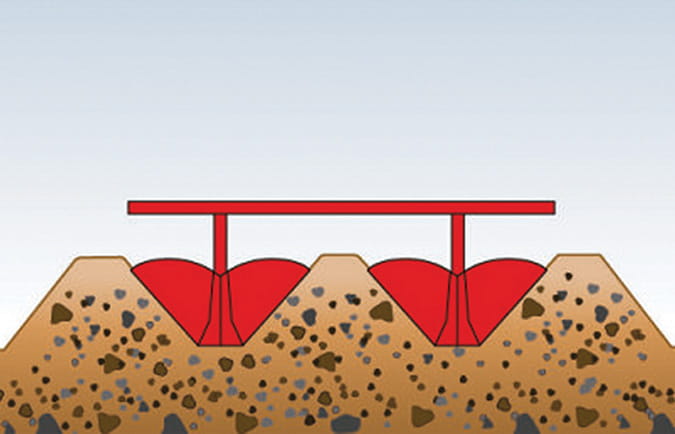
These models can form one-, two- or three-bed systems per crossing to create optimal conditions for separation. The width of beds and rows depends on the planting direction, stone content, and the farm’s business structure.
Once the beds have been formed, the next step involves separating the soil. Uniform, sieved beds free of clods allow the soil to warm up quickly, creating ideal conditions for potato emergence.
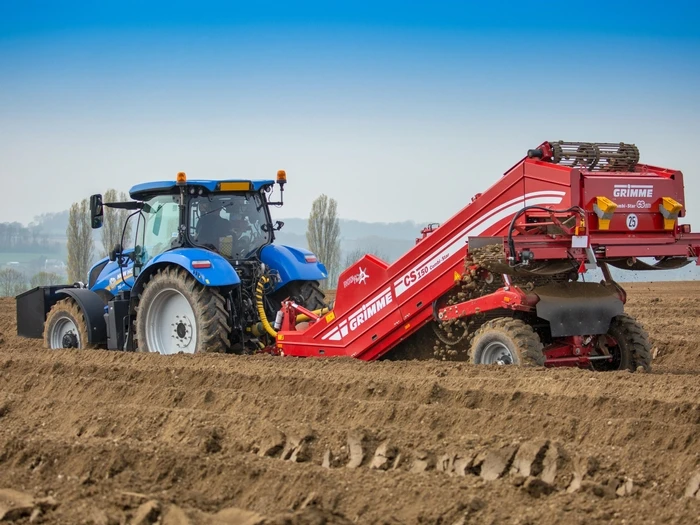
GRIMME’s CS 150 series of destoners is designed for optimal separation quality and economy.
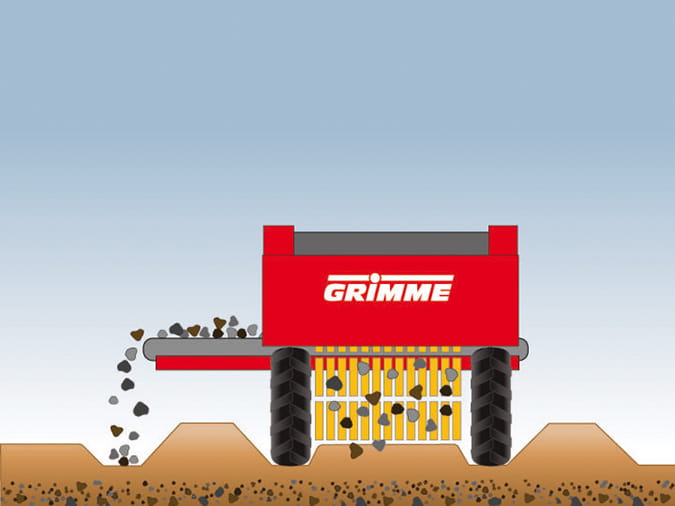
The range includes models such as the Combi-Star, Combi-Web, and Multi-Web, each offering unique combinations of star rollers and main webs, a variety of tractor attachment options, and flexible depth control to suit different soil conditions.
Other highlights of the CS 150 series:
- Improved sieving: The RotaPower shaft performs the heavy work of breaking up clods, improving sieving capacity by up to 25% compared with conventional machines. At the same time, it reduces wear, power requirements, and fuel consumption.
- Streamlined maintenance and reduced wear: The drive unit is easily accessible, simplifying maintenance. Durable materials further minimise wear.
- Improved soil texture: The inclusion of star rollers and a clod mat, which enhances clod grinding and is available in different configurations, improves soil texture, creating ideal conditions for planting.
- Efficient removal of stones: The stone box collects larger admixtures, especially large stones, for deposition at the edge of the field.
- Versatility: A comprehensive range of fixtures and fittings allows for configurations tailored to specific operational requirements.
Committed to innovation
According to JP Smit, managing director of GRIMME Africa, the CS 150 series is a prime example of the company’s commitment to innovation and excellence in agricultural machinery. “The CS 150 destoner exemplifies our dedication to enhancing efficiency and quality in potato farming. By investing in precise soil preparation with the CS 150, producers not only reduce machinery wear but also ensure superior crop quality.”
With its advanced design and versatility, the CS 150 destoner is an indispensable tool for achieving high-quality potato production under challenging soil conditions.
For more information on the CS 150 destoner or GRIMME’s bed formers, contact GRIMME Africa at info@grimme.africa or visit www.grimme.com.