
Estimated reading time: 7 minutes
Limpopo is a major potato-producing region, where approximately 12 760 ha of potatoes (24.8% of the country’s total commercial potatoes) are produced by 121 producers. The most prominent cultivars produced in this region for table and processing purposes are Mondial, Panamera and Sifra.
Tom Burke is located in South Africa’s tropical summer rainfall region (Figure 1) and has, over the past 19 years, received an average annual rainfall of 375 mm, according to the nearby Agricultural Research Council (ARC) weather station. Winters in this region are cool and short, while summers are very hot and long.
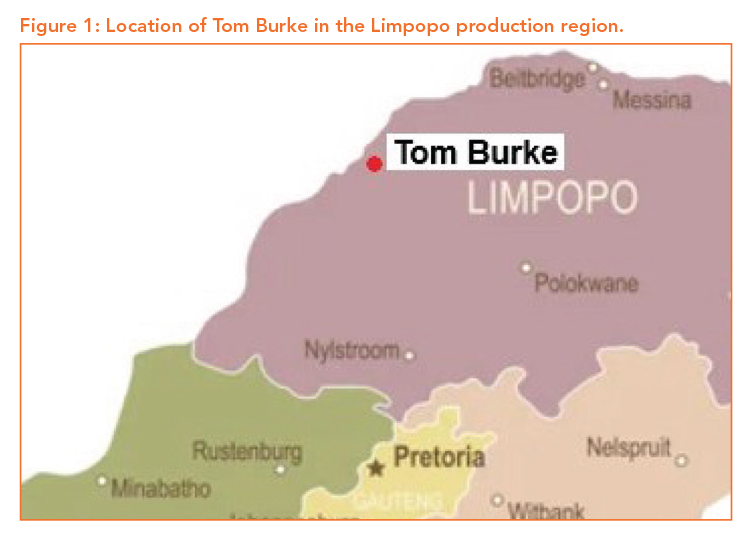
In the winter months (May to July), the region’s long-term temperatures range between an average minimum of 6°C and a maximum of 27°C, with a few days dipping below 0°C. Two production seasons are therefore possible: an early planting from January to March, and a main planting from April to July. Because of the two planting seasons, this region is one of the major contributors to the South African potato industry.
Trial design and details
The Tom Burke cultivar trial is laid out in a random block design with four replications per cultivar. Table 1 contains extra technical information about the trial.
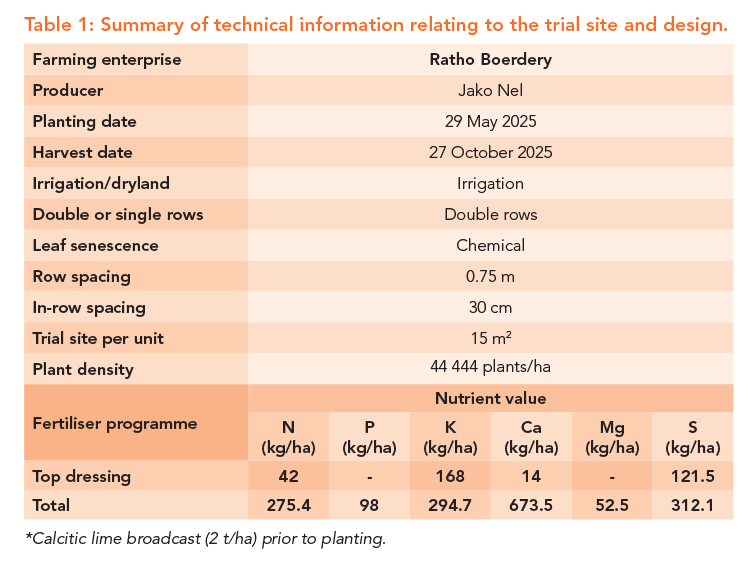
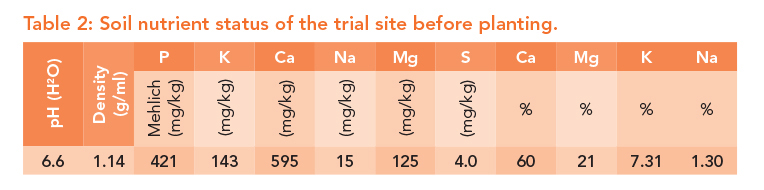
The cultivar trial includes cultivars with short and long growing periods, which can influence the final yield of certain cultivars. The length of growing periods varies with the nature of the seasons but is generally defined as the time from emergence to natural leaf senescence. Soil analyses collected prior to planting are set out in Table 2.
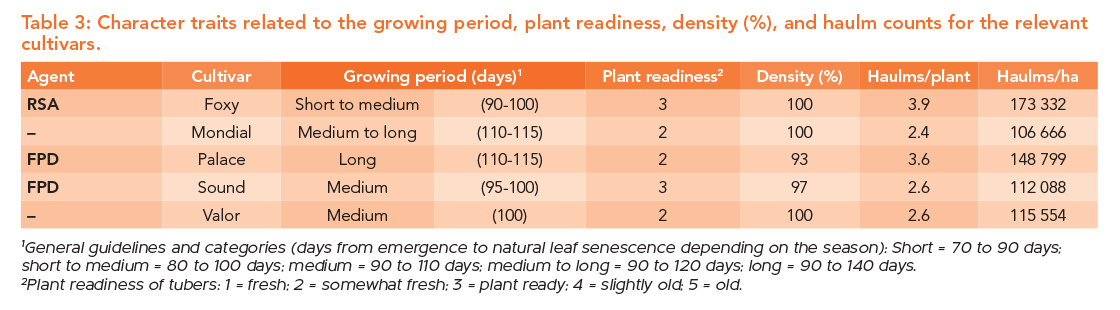
The conventional growing period of cultivars, as well as plant readiness and density, are presented in Table 3.
Marketing-related results
The evaluation of new cultivars, as in the Tom Burke cultivar trial, provides results on yield and marketing index. The marketing index of the cultivars is calculated by classing and sorting each cultivar based on quality and size groups (for example, Class 1 large or Class 2 large-medium).
Prices were then compared to market prices obtained at the time of harvest. However, the performance of cultivars cannot be based solely on a single season’s results, as climate varies from year to year. Therefore, cultivars are preferably tested across several seasons.
Seasonal aspects
As with any crop, factors such as temperature, water availability (whether through good irrigation scheduling or rainfall), and heat units significantly influence the potato plant during its growth period. These factors are considered when evaluating cultivar performance. Applicable daily weather data for the season is obtained from the nearest ARC weather station.
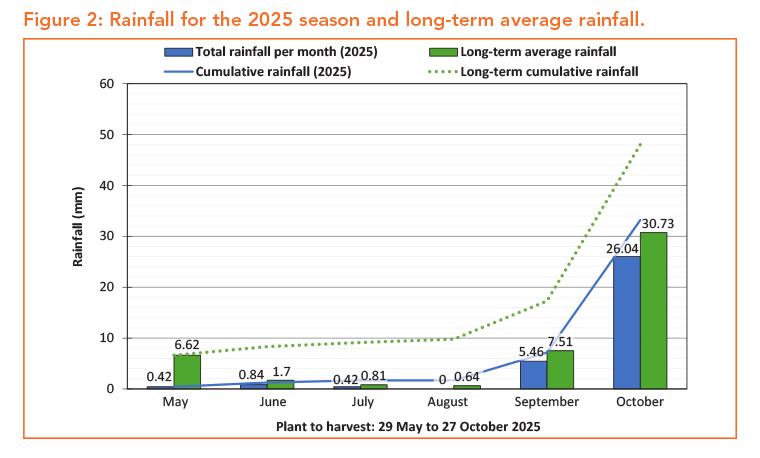
The rainfall data is presented in Figure 2. Very little rain was recorded during this season. Since Tom Burke receives summer rainfall, proper irrigation scheduling is essential, especially during key growing periods when temperatures are high.
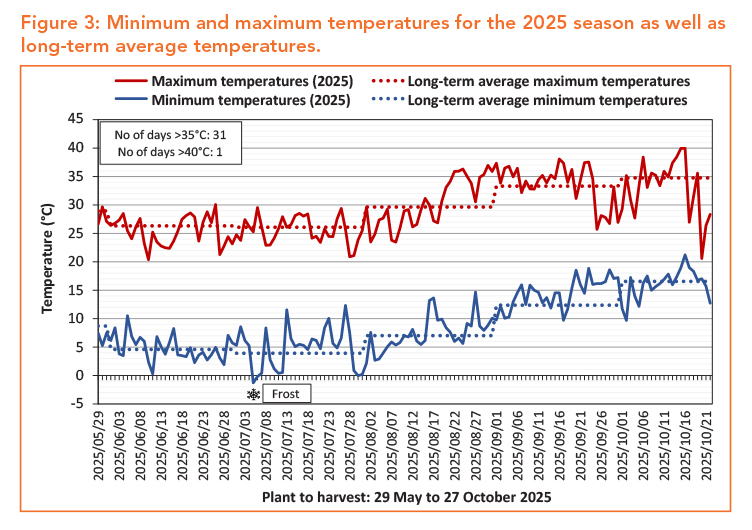
Minimum and maximum temperatures are illustrated in Figure 3. A total of 31 days with temperatures above 35°C and only one day above 40°C were recorded, which is less than in previous seasons. One incident of light frost was recorded over two days at the beginning of July.
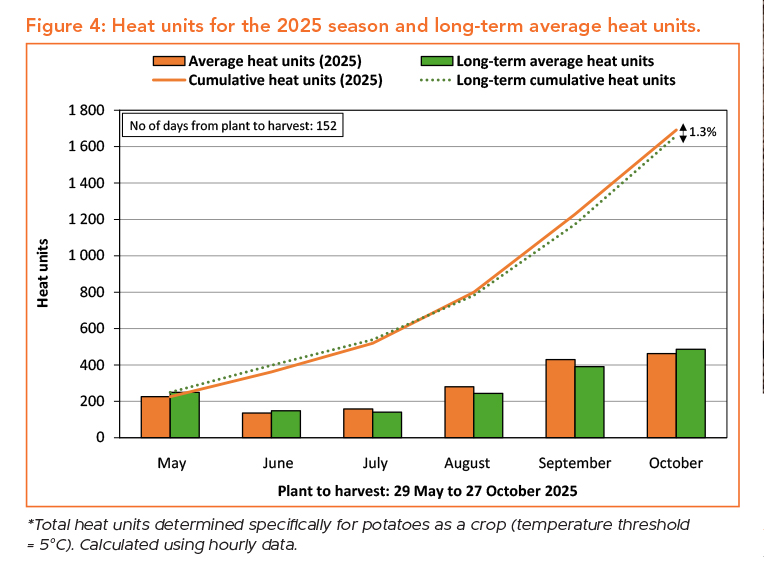
The collection of heat units during a growing period is an important factor in the development of a potato plant. The trend of heat units available for this season appears to be somewhat higher, but still very close to the long-term data trend (Figure 4).
Yield and cultivar effect
Yield data recorded during harvesting was subjected to statistical processing using the GenStat® program. The Tukey test of least significant differences (LSD) was used to separate the mean. The cultivar effect during this trial (Figure 5) was statistically significant (p<0.05), and the coefficient of variation (CV) was excellent (7.2%). These factors indicate that the trial was well executed, and the results are therefore reliable.
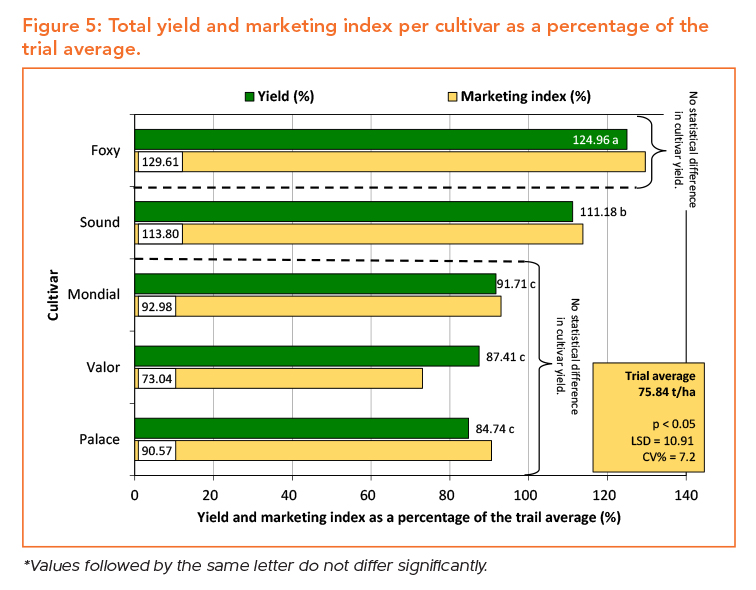
The yield of each cultivar is divided by the trial average, with the average across all cultivars set to 100%. This is used to determine a yield index, with each cultivar’s yield performance expressed as a percentage of the trial average.
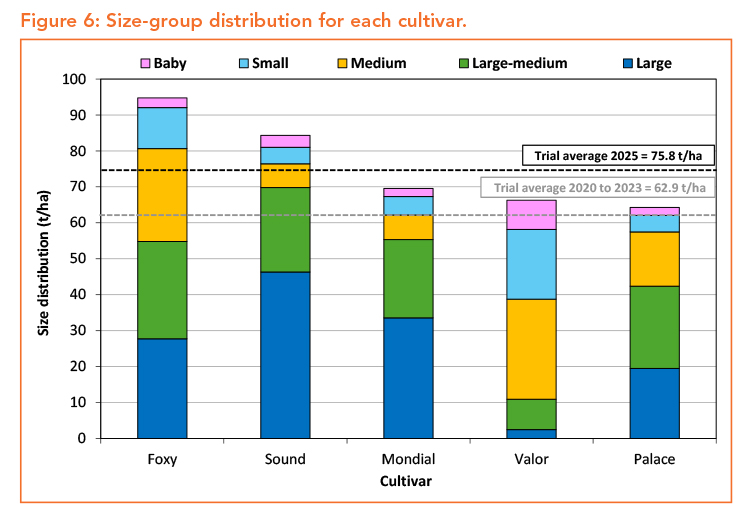
The average yield of the trial in the 2025 season was 75.84 t/ha, which is higher than the previous three seasons’ average of 62.9 t/ha. Foxy statistically produced the highest yield and, together with Sound, recorded the best marketing indices. A good marketing index can be attributed to a higher yield of large potatoes and/or a good percentage of good-quality potatoes. Size group distribution and grading are important evaluations regarding a potato cultivar’s marketability (Figures 6 and 7).
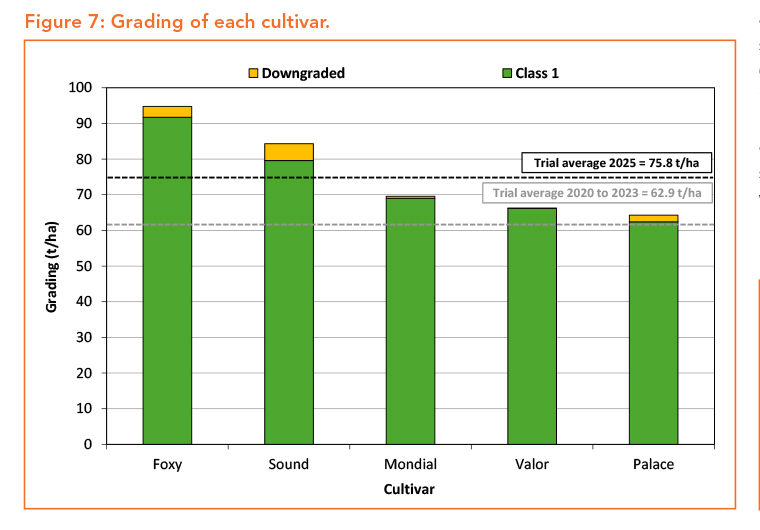
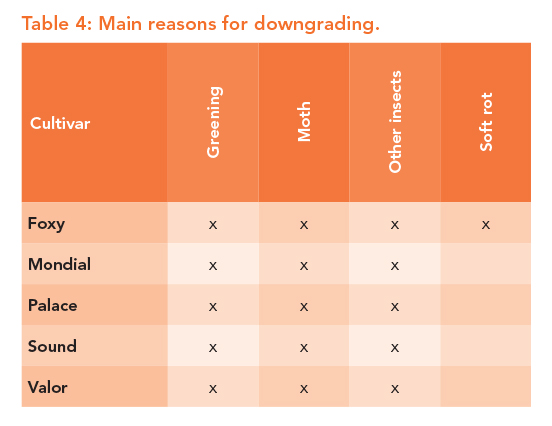
The major reasons for downgrading are presented in Table 4. However, it is worth noting that the quality was consistently exceptionally good. Greening, moths, and other insects had the greatest influence on the quality of potatoes in this trial.
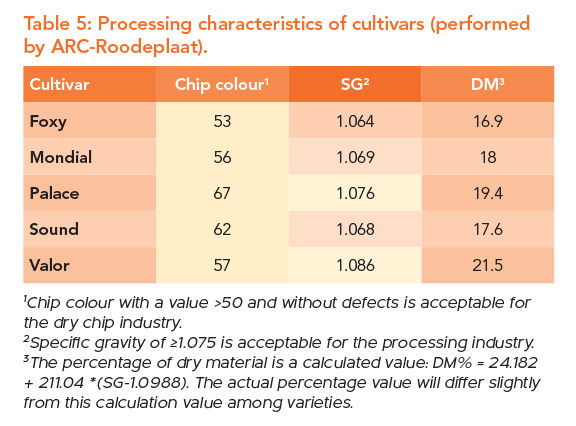
Lastly, when considering the internal quality of potatoes, processing characteristics can also be evaluated. To adhere to processing requirements, cultivars must meet a chip colour standard of >50 and a specific gravity (SG) of ≥1.075 (Table 5). All the cultivars met the required chip colour, while only Palace and Valor met both the correct chip colour and SG. No internal defects such as brown spot or hollow heart were observed.
Special thanks to Jako Nel (producer), Schalk Grobbelaar (working group chairperson), participants FPD and RSA, as well as Ané du Plessis and other Potatoes SA staff. – Enrike Verster, Potatoes SA