
Estimated reading time: 5 minutes
Faced with the current economic realities, producers worldwide are searching for new ways to survive and expand their business endeavours. One of the many opportunities to grow turnover and profits is by adding value to farm produce through processing.
Just call me Spud
Potatoes are cultivated across South Africa in areas as diverse as Marble Hall in Limpopo to Mpumalanga and even the Sandveld in the Free State.
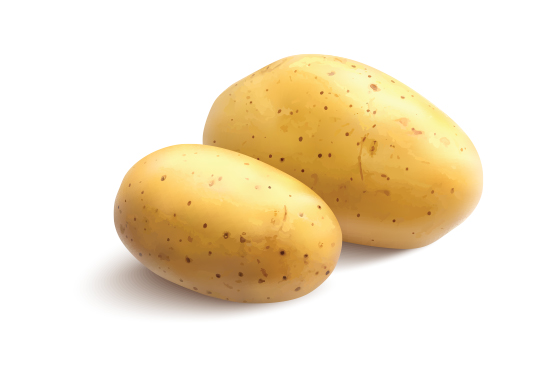
Potatoes SA classifies potatoes into three categories:
- Waxy: This type of potato includes the cultivars Mondial, Fabuka, and BP13 and are categorised as having a high moisture and low starch content. During boiling, waxy potato varieties will stay firm and not lose their shape, making them suitable for applications where one does not want the potato to break up, and as such, they are not suitable for mashing. When used for making chips, they produce a slapchip instead of a crisp chip.
- Waxy-floury: Waxy-floury potato cultivars include BP1, VDP, Fianna, Valor, and Sifra (Bianca) and are somewhat moist with a mildly floury feel. Waxy-floury potatoes retain their shape well during the cooking process and are suitable for all methods of cooking. This type of potato is widely available in supermarkets.
- Floury: This potato includes the cultivars Caren, Darius, and Avalanche which have a low moisture and high starch content. As floury-type potatoes do not retain their shape well when boiled, they are often utilised in applications that require mashing. These potato cultivars are best suited for making crisps and chips.
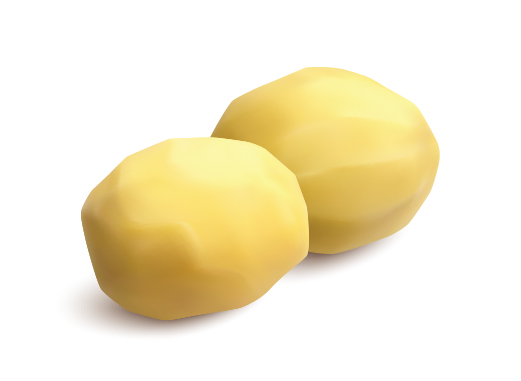
Various processing options:
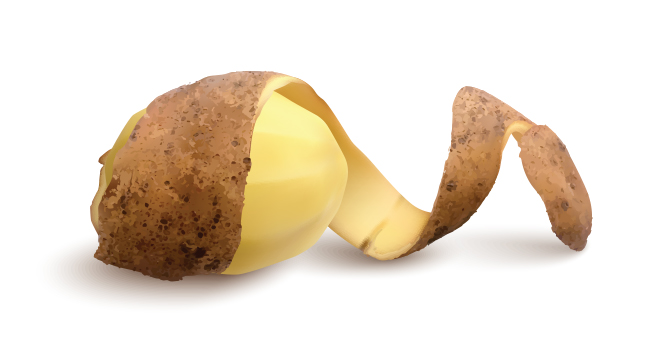
- Fresh cut, peeled potatoes: Fresh cut produce refers to any fresh fruit or vegetable that has been physically altered from its original form, yet retains its freshness. It may have been trimmed, peeled, washed, and cut to create a product that is usable in its entirety, with no waste occurring. The product is packaged for consumer convenience. Peeled potatoes fall into this category and have become very popular due to their fresh characteristics and convenience. This is a ready-to-use product that requires no further preparation prior to cooking. Young potatoes are used for fresh cut, peeled potatoes. The product is preserved by surface treatments, refrigerated storage, and protective packaging – and has a very limited shelf-life, which should be indicated by an expiry date.
- Canned potatoes: Potatoes best suited for canning are small new potatoes that are free from contours with smooth shoulders and creamy white flesh. Potatoes can be canned in several ways such as whole, diced, sliced, strips, and julienne. They can also be canned in smaller pieces with other vegetables, in curries, or meat dishes. However, whole potatoes with a diameter of less than 38 mm are predominantly used as canned potatoes. One of the primary requirements of a good canning potato is that it should not disintegrate during processing.
- Frozen diced potatoes are utilised for the preparation of hash browns or stews and casseroles. These potatoes should be large tubers that are free from contours with smooth shoulders and creamy white flesh. The specific gravity should be 1.080 and 1.120, and the reducing sugar content approximately 0.3%.
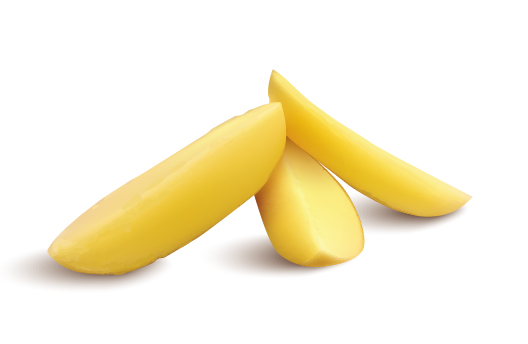
- Frozen mashed potatoes: Mashed or whipped potatoes can be moulded into various shapes and sizes before they are frozen. These potatoes are usually utilised as casings for other products, such as sauces or fillings, as mash is seldom made from fresh, whole potatoes. Off-cuts separated from the potato chip/crisp processing line are usually utilised as well as any other potatoes that are too small, have irregular shapes, or have been trimmed too much.
- Frozen hashbrowns are made from grated potato that is blended with complementary ingredients. The mixture is shaped and fried prior to freezing and packaging. Hashbrowns are seldom made from fresh, whole potatoes. Off-cuts separated from the potato chip processing line are usually utilised as well as any other potatoes that are too small, have irregular shapes, or have been trimmed too much.
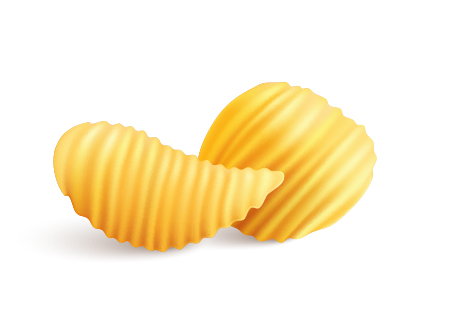
- Potato starch is extracted from pulped potatoes through a washing process after which the starch slurry is dehydrated. Potato starch is widely used in the food industry in its native form, but can also be modified to obtain special characteristics.
- Frozen potato croquettes are extruded products made from mashed potato that is blended with optional ingredients and seasoning. The seasoned mash is extruded into any desired shape, deep fat fried, and frozen. Mashed products are seldom made from fresh, whole potatoes. Off-cuts separated from the potato chip processing line are usually utilised as well as any other potatoes that are too small, have irregular shapes, or have been trimmed too much – and are not suitable for high-priority potato products such as chips or crisps.
- Potato flour is used in the baking industry to enhance the freshness of baked products. Dried potato powder may also be utilised as a flavouring and thickening agent in food. The flour may be seasoned and rehydrated by adding boiling water and/or milk to produce instant mashed potato.
Whether you call it a tater, tattie, or spud, the humble potato is an extremely versatile crop with many processing options available to both aspiring entrepreneurs and seasoned processors alike. – Theresa Siebert, ARC-Natural Resources and Engineering
For more information, send an email to the author at SiebertT@arc.agric.za.