
Estimated reading time: 9 minutes
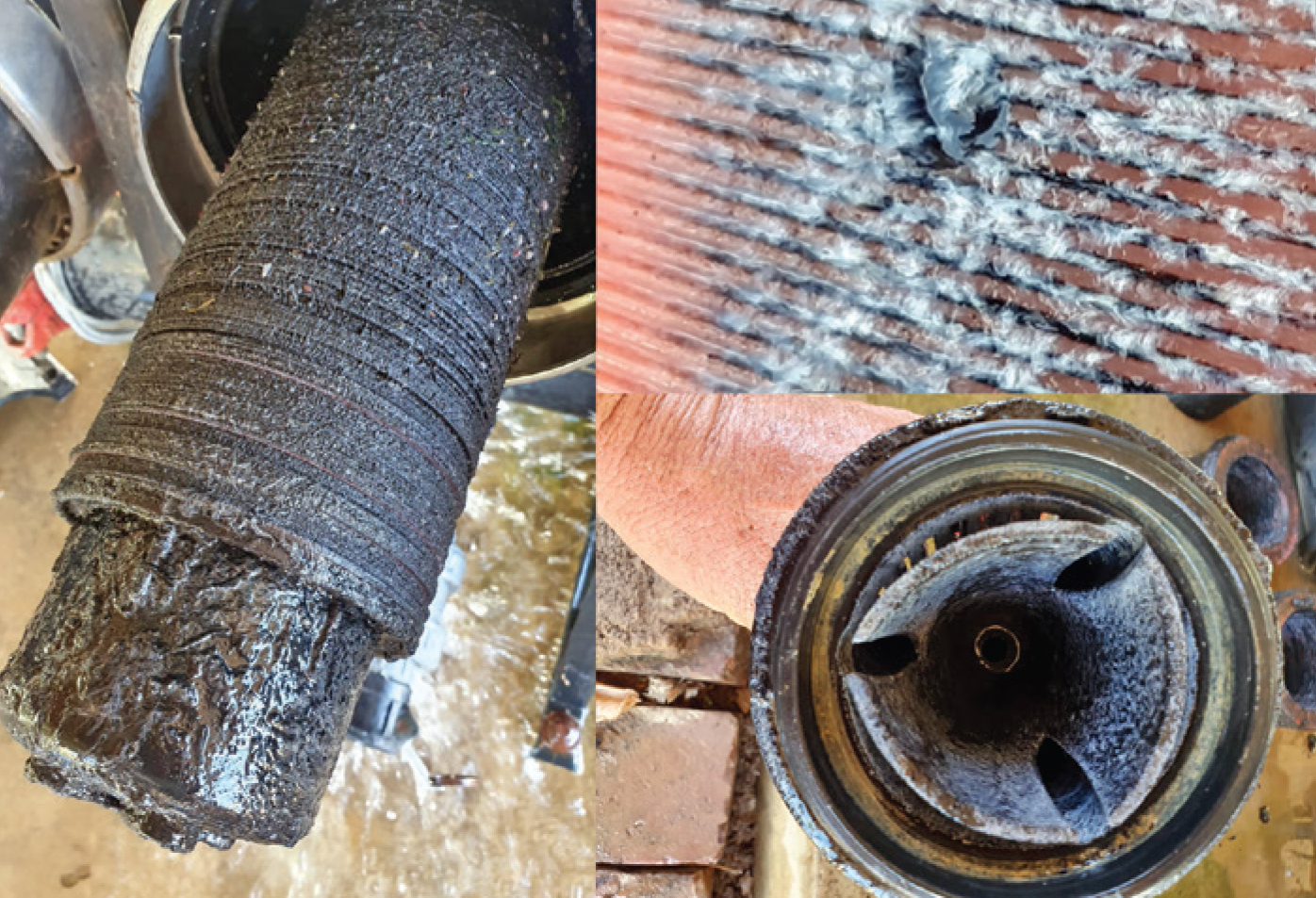
Time spent in the field this irrigation season has alerted the Netafim field team to the extremely poor and worsening quality of available irrigation water in certain areas. According to Dexter Neethling, product manager at Netafim South Africa, water quality has noticeably deteriorated this summer. This statement is based on visual assessments of filters during filter maintenance in-season. “For the first time ever, we have found various organisms growing inside a working filter, where there is no light and high pressure.” Many of these filters were assessed in the Western Cape, but the trend of declining water quality is not limited to this province. On the topic of deteriorating water quality, there are two phenomena at work. Firstly, there is a definite trend that water quality is deteriorating year by year. This can, of course, be attributed to many factors. Willem Smit, national sales manager at Netafim South Africa, reports that discussions concerning the long-term decline in water quality cite a long list of negative factors.
Declining water quality causes
- Poorly functioning municipal sewage systems that lead to sewage ending up in rivers and dams.
- Informal settlements next to riverbanks that lead to pollution of rivers or dams, as well as groundwater.
- Increased growth of invasive plant species on water surfaces, killing the natural life in the water.
- Poor quality borehole water that is used for agricultural irrigation due to increased agricultural expansion and drought conditions. This has a negative impact on natural water resources.
- Over-irrigation and the negative effect of drainage water and leaching.
- Climate change that leads to extreme weather events. Extremely high rainfall, for example, fills dams with a high concentration of organic material.
- Mining and industrial effluent water contaminating natural water resources.
Reasons for quality decline
The second phenomenon is one often faced by irrigation producers. As resources are used during the season, water quality from the relevant water source often declines as the concentration of quality-reducing properties increase. Charl van Reenen, agronomy manager at Netafim South Africa, says the latest irrigation season in the Western Cape is a good example of this phenomenon. “I believe it is due to the high rainfall during last winter and the long, dry and windy summer that followed. During the winter months, all the dams filled up after the high rainfall. High quantities of organic material and leached elements ended up in these dams. As the irrigation season commenced, producers started irrigating and the water extraction rate from dams increased as the season progressed. When the rate of water extraction increases, the extraction rate may exceed the refilling rate of dams and reservoirs. This means that dams and reservoirs tend to remain half-full during the hot spells. These low dam levels then create ideal growing conditions for organisms such as algae, leading to higher occurrences of algae blooms and a generally higher load of organic material in the water source.” According to Van Reenen, this situation led to several filtration related challenges.

Water quality and agriculture
Successful agricultural irrigation depends on the adequate availability of water fit for crop irrigation. Two issues are important: Firstly, the water available for irrigation is often of poorer quality and secondly, producers must be increasingly precise in the way they use water. The greatest concerns regarding poor quality irrigation water are damage to the crop and soil on the one hand, and damage to the irrigation system on the other. In the drive towards more precise irrigation techniques based on increasing water scarcity and burgeoning input costs, it is important to focus on water quality, and our understanding and management thereof.
Understanding water quality
The concept of water quality focusses on the physical, chemical, and biological properties that will determine whether it is fit for a variety of uses. In irrigation, these are factors that will determine crop suitability, irrigation system selection, the risk of emitter clogging, filtration requirements and fertigation. The composition and quality of water are complex, and a range of factors must be considered. The parameters that determine water’s suitability for irrigation are pH, salinity, hardness, alkalinity, the ratio of sodium, calcium and magnesium, the concentration of specific minerals, total dissolved solids, and total suspended solids.
Precision irrigation
A successful farming enterprise is one of the most complex economic activities as success depends on a wide-ranging list of factors, of which irrigation is but one. Irrigation planning and execution are based on data from a long list of necessary analyses and decisions made during the holistic project planning phase. Water analysis is one of these. Very importantly, a properly designed and planned irrigation system that is managed correctly, must ensure total control of water and nutrition delivery and levels. Such a system must accommodate all the variables impacting a farming enterprise, be it soil types, climatic conditions, water quality, energy availability, and much more. A holistic approach is therefore crucial. Producers and industry role-players must remember that no irrigation or filtration decisions can be made without sufficient knowledge of the water source and water quality, which is why a water analysis must be undertaken in the planning phase of any crop project. Furthermore, it is important to continuously monitor water quality as quality may vary during the production period along with seasonal changes.
Adherence to standards
The irrigation industry sets important standards for water analysis and irrigation water suitability in its Irrigation Design Manual, published by the Agricultural Research Council and The Water Research Commission in cooperation with other industry bodies. Neethling says it is important that filtration standards are strictly adhered to when selecting an irrigation filtration system. Filtration requirements must be communicated by the manufacturer of the irrigation system, and specifically those pertaining to the emitter. “It is crucial that these filter requirements are adhered to as it will ensure the longevity and optimal operation of the system. In addition, do not neglect the filtration guidelines communicated by the manufacturer of irrigation filters. Do not cut corners when planning the filtration section of an irrigation system. The success of filtration will determine the efficiency and sustainability of the entire system. Do not allow filters to cause a weak link in a well-designed system.”
Filtration and beyond
A filter’s job is to prevent solid particles of a predetermined size and larger from entering the irrigation system. The goal is to protect the emitter and the efficiency of the entire system. As water passes through the filter, unwanted solid particles are caught in the selected filter types, be it disc, screen, or media. Asked how filtration is influenced by deteriorating water quality, Neethling confirmed that quality irrigation filters will be able to deal with the situation at hand easily, if these filters are selected according to the correct standards, installed correctly, operated to standard, and properly maintained. “Maintenance plays a crucial role in the filtration of irrigation water. Poorer water quality will mean that your filter is working harder and must backflush more often. This increases wear and tear on the filter. It is important to go through the maintenance checklist frequently and determine if any problems can be handled preventatively to ward off future problems, inefficient operation or even breakdowns.”
Proactive and reactive maintenance
This includes proactive and reactive maintenance actions such as peroxide treatments on filters to combat organism growth in the filter. Beyond filtration, there are practical system design and installation aspects that can assist in managing the quality of irrigation water that enters the system. Neethling explains that installations are often encountered where the suction point is installed at the bottom of the dam. “This automatically leads to poorer water quality as particles that have settled in the dam are sucked into the system. A solution such as a floating suction point makes a massive difference in this regard. Wind direction must also be considered when positioning the suction point. The suction point must be positioned on the side of the dam where the wind most commonly comes from. As the wind blows over the dam, particles are collected, if the suction point is positioned at the other end of the dam, these particles will be sucked into the irrigation system.” Van Reenen adds that many aspects of poor water quality cannot be improved with filtration. “High EC, or a high occurrence of total dissolved solids, can only be treated with reverse osmosis. This is, however, not a feasible solution in the agricultural industry, due to scale and cost. If the problem concerns elements such as iron and manganese, the problem can be treated with a practical solution.”
Settling time
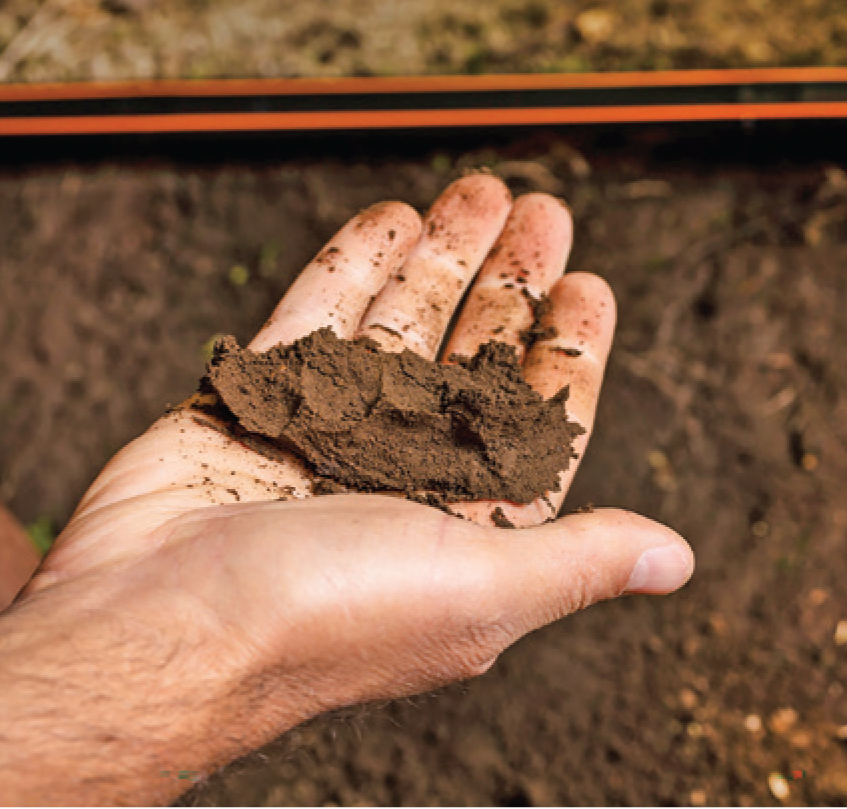
He explains that the water must be exposed to oxygen as long as possible before it is used for filtration. This allows the elements the necessary time to oxidise, flocculate and settle in the dam or other water source. This can be managed by aerating the water source and/or having a settling dam on the farm. Challenges such as the high occurrence of silt can also be managed with a settling dam and giving the silt sufficient time to settle in the dam.
Ensure water suitability
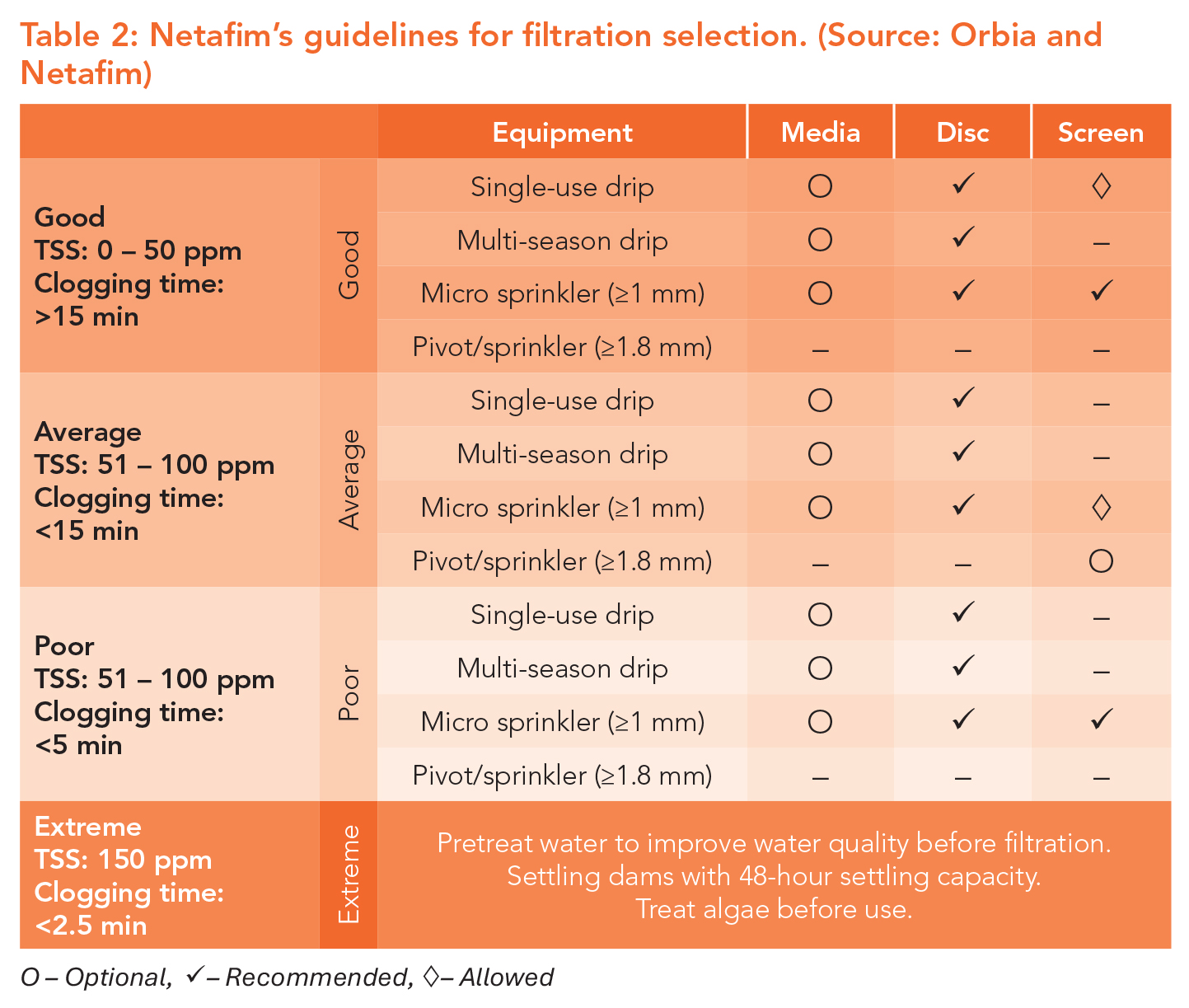
The ability of a filter to remove solid particles from water has little to no effect in the case of certain physical, chemical and biological factors occurring in the available water. In these cases, prefiltration and/or pretreatment will be necessary to ensure the suitability of the water for irrigation use. This includes conditions such as:
Physical
- High sand load greater than 2 ppm.
- Very high sand load greater than 20 ppm.
- High total TSS greater than 150 ppm.
Biological
- Algae bloom threat.
Chemical
- High iron content greater than 0.3 ppm in underground water or greater than 0.8 ppm in surface water.
- High manganese content greater than 0.3 ppm in underground water or greater than 0.3 ppm in surface water. – Marike Brits, Netafim South Africa
For more information, contact Marike Brits on 072 185 5157 or at marike.brits@netafim.orbia.com.