
Cover crops: A solution for nematode control
Estimated reading time: 7 minutes
Nematodes pose a significant threat to potato production in South Africa. These microscopic pests attack the roots and tubers of potato plants. When infestation occurs early in the season, root function is affected and can lead to reduced yields. Infestation of the tubers causes deformities such as warts and reduces their shelf life. As a result, affected tubers are often unmarketable, leading to substantial losses.
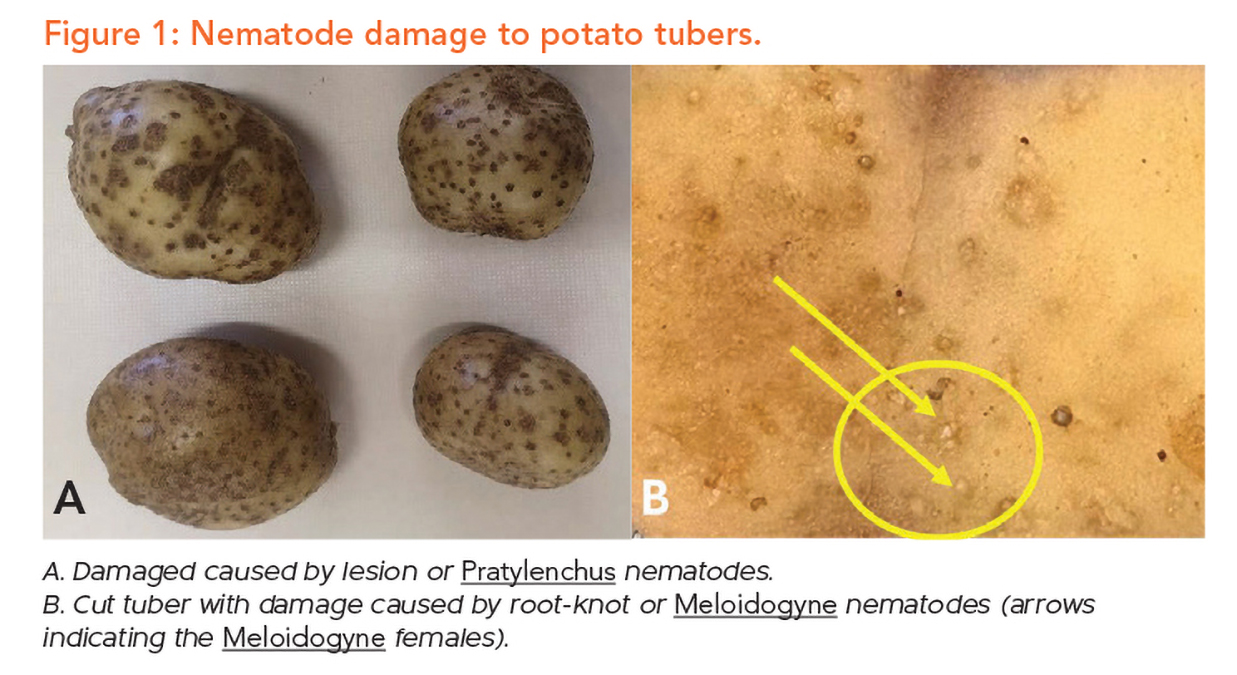
The most prevalent plant-parasitic nematodes in South African potato fields are root-knot nematodes (Meloidogyne spp.) and lesion nematodes (Pratylenchus spp.), shown in Figure 1. Among the root-knot nematodes, the species most frequently encountered are M. incognita, M. javanica, and M. enterolobii. In the case of lesion nematodes, P. bolivianus is common in the Western Cape, while in other regions species such as P. vanderbergae and P. brachyurus are more frequently observed.
Control methods and challenges
The primary control methods for nematodes include the use of nematicides, typically applied before or at planting. In some regions, soil fumigation is carried out prior to planting. In terms of crop protection expenses, nematicides account for 45% of a typical potato producer’s crop protection input cost (Potatoes SA, March 2024).
Evolving legislation is increasingly restricting the use of older, more effective chemical nematicides, the so-called highly hazardous products (HHPs). Although a number of new-generation nematicides have been registered for use on potatoes, they often lack the robustness of older products.
Their efficacy is highly dependent on precise timing and application conditions. For example, their efficacy diminishes if applied too early or late.
Under high nematode pressure, fumigation is recommended prior to application. Moreover, incorrect application can significantly reduce performance. While similar considerations apply to older chemistries, they tend to be more forgiving and consistently effective.
Reducing nematode pressure
To enhance the performance of newer nematicides, it is essential to reduce nematode densities in the field before planting. Although cultural practices alone may not provide complete control, incorporating them into a broader management strategy can significantly reduce nematode pressure and improve the efficacy of chemical treatments throughout the season.
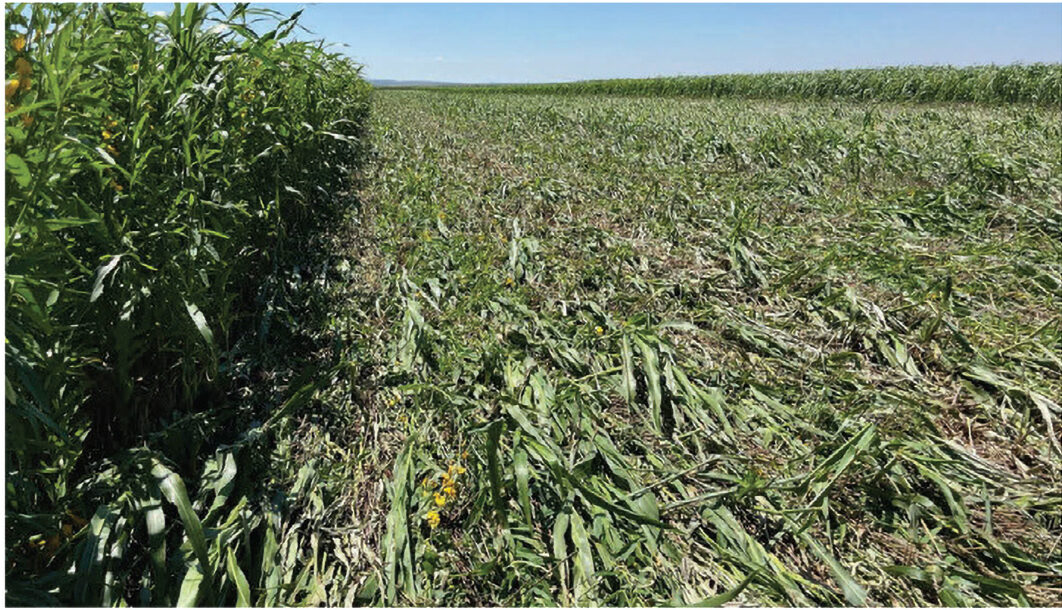
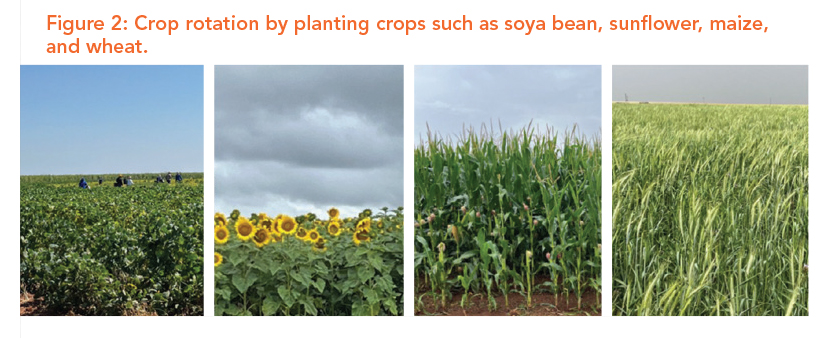
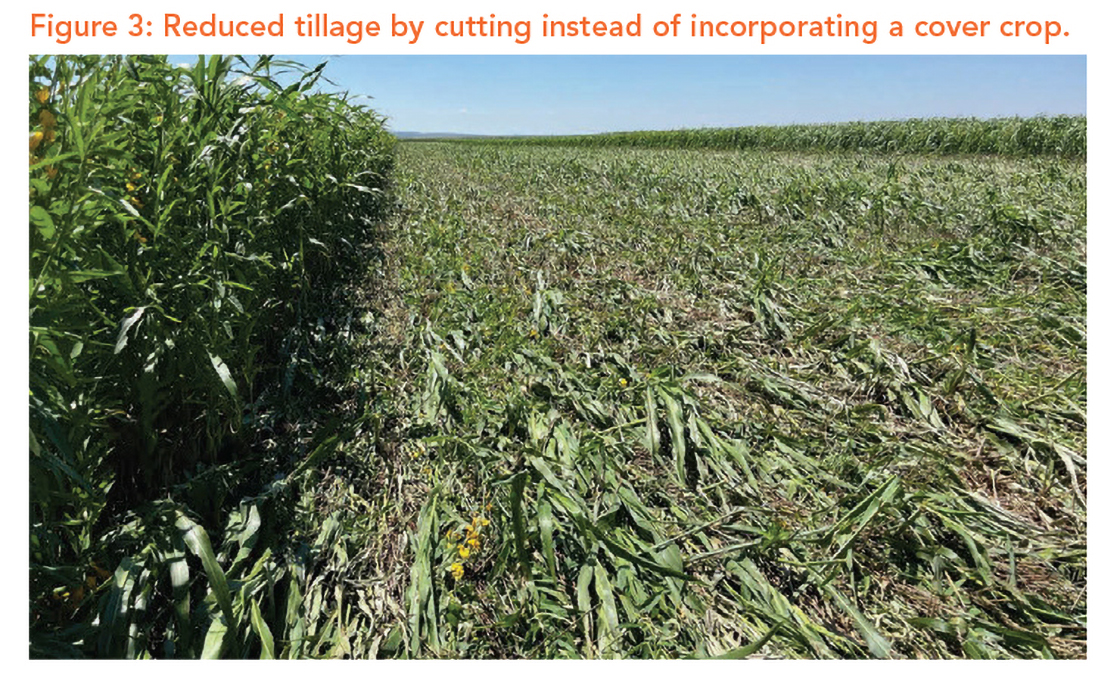
Key cultural strategies include crop rotation (Figure 2), reduced tillage systems (Figure 3), implementing intercropping, making use of cover crops, and extending the intervals between potato plantings.
Some of these practices are already integral to potato production, such as the three- to five-year waiting period between potato crop cycles and the use of crop rotation of four to five years. However, the effectiveness of crop rotation depends on the susceptibility of the rotational crops to nematodes. For instance, maize and soya bean – both commonly used in rotations – are often susceptible to nematodes, which can inadvertently increase nematode populations.
Root-knot and lesion nematodes have a wide host range, making it challenging to identify suitable rotational crops that suppress their populations. Nevertheless, incorporating non-host cover crops between maize and soya bean seasons and especially prior to planting potatoes can help reduce nematode pressure.
Understanding cover crops
Cover crops provide a wide range of agronomic benefits, including
- Improved water retention and soil structure.
- Reduced soil compaction.
- Enhanced nutrient cycling and organic matter.
- Increased biodiversity, both above and below ground.
- Suppression of pests and diseases.
When selecting cover crops, it is essential to define the primary objective: what do you want the cover crop to achieve? Based on these goals, appropriate species or mixtures can be chosen. Increasingly, cover crop mixtures are recommended, as they can address multiple challenges simultaneously.
For nematode suppression, the key is to select cover crops that are resistant to or poor hosts for nematodes. This helps reduce nematode populations in the soil, particularly before planting susceptible crops such as potatoes.
Our research project aimed to evaluate the host status of around 20 summer and 20 winter cover crop species against root-knot and lesion nematodes. The trials were conducted over a three-year period under controlled glasshouse conditions at Stellenbosch, Nelspruit, and Potchefstroom.
Each cover crop was tested against individual nematode species, mixed populations of Meloidogyne species, and combinations of Meloidogyne and Pratylenchus species. This approach was necessary because different nematode species vary in their infectivity. For a cover crop to be considered resistant or a poor host, the relevant species of Meloidogyne and Pratylenchus should be unable to reproduce on it.
Methodology
Cover crops were inoculated with nematodes (Figure 4 and 5) and allowed to grow for two months for Meloidogyne species and three months for Pratylenchus species. This period allowed for two nematode reproductive cycles. Afterwards, the roots were harvested, washed, and the nematodes extracted. Populations were then quantified, and a reproduction factor (Rf) was calculated.
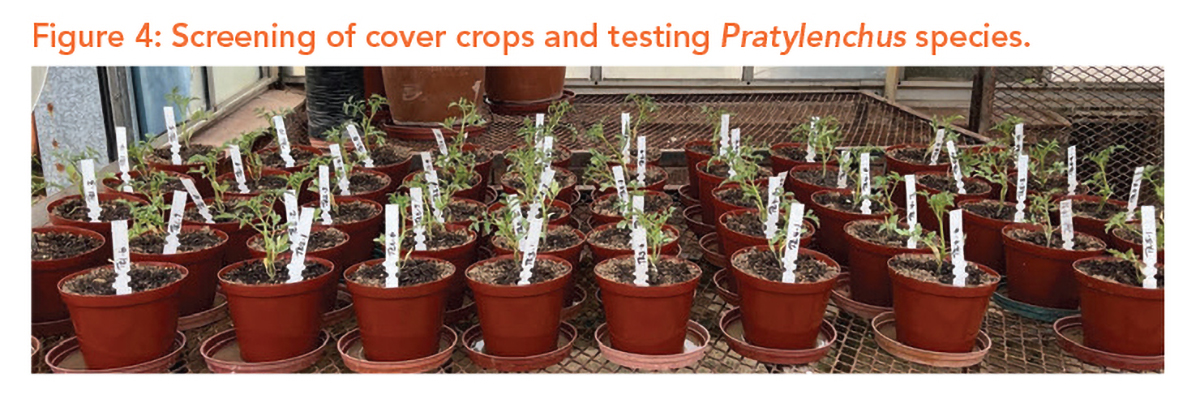
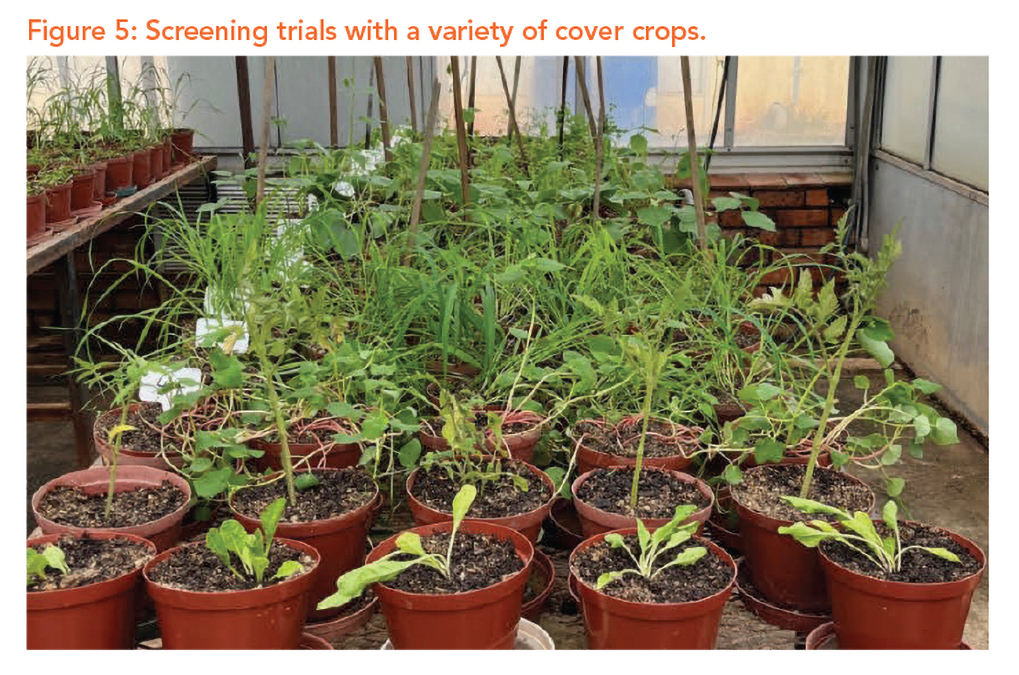
Based on the Rf values, cover crops were classified as:
- Good hosts: Plants in which nematodes are able to reproduce, potentially increasing the nematode population in the soil.
- Moderate hosts: Plants in which nematodes have some ability to reproduce.
- Poor hosts: Plants in which the tested nematodes are unable to reproduce.
Each experiment was repeated to ensure reliability, and mixed-species trials were included to reflect real-world field conditions where multiple nematode species often coexist.
Key findings
Several cover crop species were identified as poor hosts to all tested nematode species. These results are summarised in Table 1.
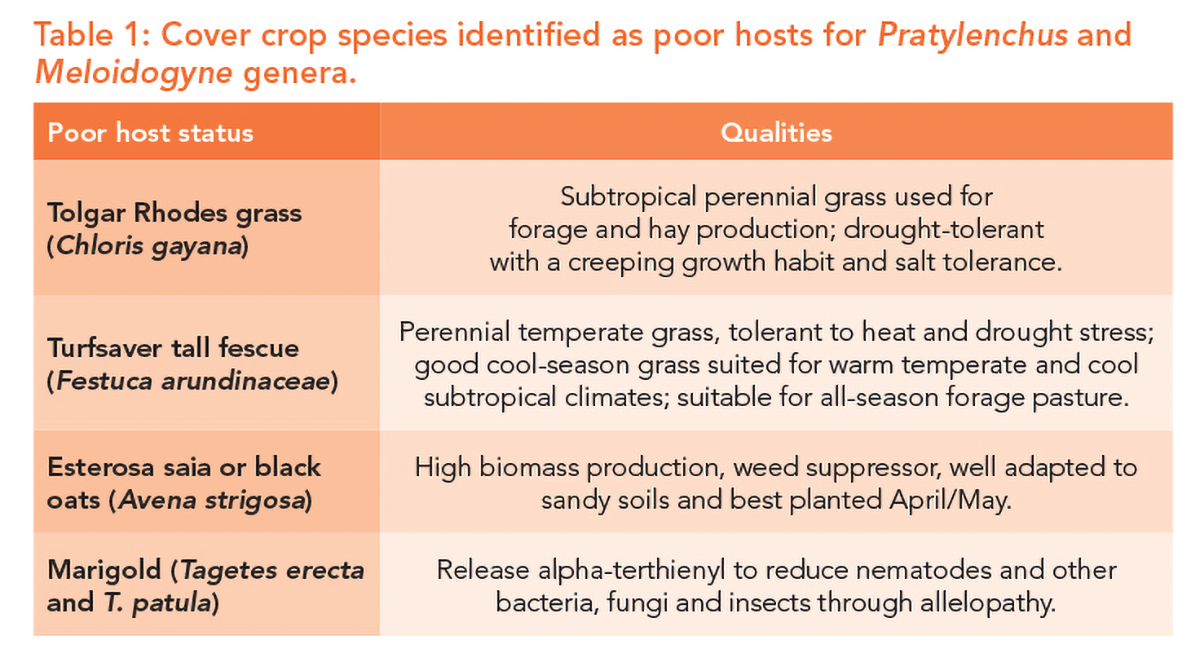
In general, Brassicas and grasses have shown to be poor to moderate hosts for Meloidogyne and Pratylenchus nematodes, making them suitable candidates for nematode management when the nematode pressure is low to moderate. It is important that selection should consider factors such as nematode pressure in the field, seasonality of planting, soil type, and crop rotation history.
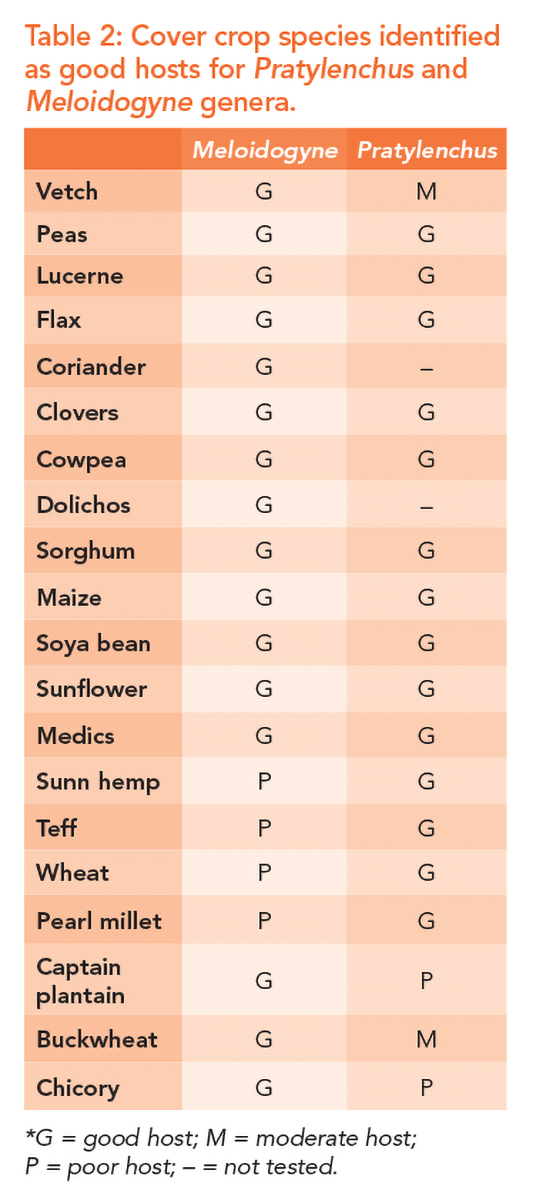
Good hosts should be avoided in fields with a history of nematode infestation, especially where both Meloidogyne and Pratylenchus are present. A list of these cover crops is provided in Table 2.
Selection of cover crops
It is essential for producers to understand the severity of their nematode problem, which can be determined by taking regular, representative nematode samples.
Annual monitoring of planted fields is recommended. The number and species of nematodes present will guide the selection of an appropriate cover crop.
For fields with low to moderate nematode populations, mixtures of poor to moderate hosts are generally effective and easier to select. However, in fields under high nematode pressure, careful selection is critical.
If potatoes are to be planted after the cover crop, it is vital to choose non-hosts or very poor hosts to prevent nematode buildup. Table 2 lists cover crops that are unsuitable for potato production.
Ongoing studies
We are currently investigating the impact of including a susceptible crop in a cover crop mixture. In this experiment, mixtures of four non-hosts with one susceptible crop were planted, while the proportion of the susceptible crop was reduced to ½, ⅓, and ¼ of its normal planting density. The plants were inoculated with nematodes and grown for two months.
Nematode populations are currently being counted to assess the impact of the susceptible crop. This study will help determine whether a susceptible crop can be included in mixtures without significantly increasing nematode populations, or whether reducing its concentration mitigates nematode buildup.
A field trial is planned to validate these findings. It will involve selecting a highly infested site, planting various cover crop mixtures, following with a potato crop, and using replicates to ensure statistical reliability. – Dr Mieke Daneel, Rinus Knoetze, Nancy Ntidi, Itani Guga, Rachel Mohlala, Grace Tefu, and Driekie Fourie
For more information, email Dr Mieke Daneel at mieke@arc.agric.za