
Glyphosate hormesis: Benefits and risks
Estimated reading time: 7 minutes
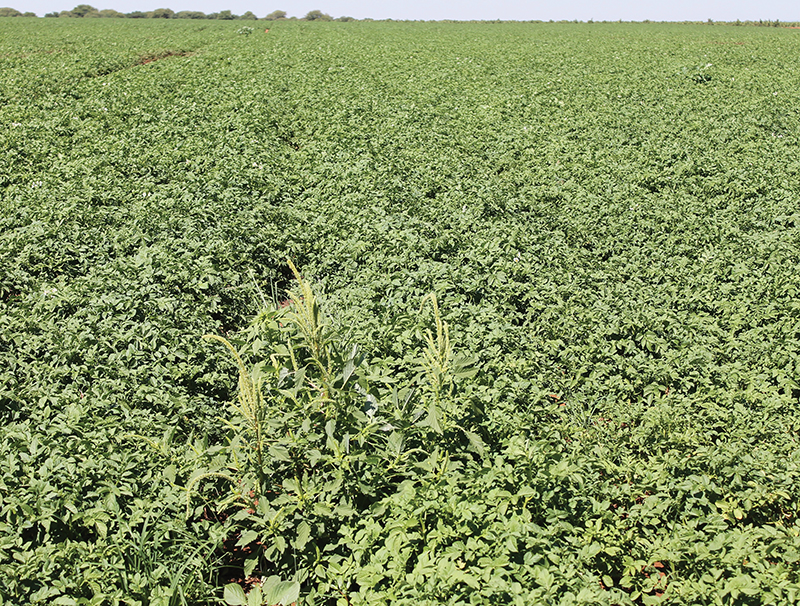
Despite being lambasted by increasing cases of glyphosate-resistant weeds and negative press regarding human health concerns, glyphosate retains the titles it has earned over the past quarter of a century or so, namely ‘a once-in-a-100-year herbicide’ and ‘the world’s top-selling herbicide’.
Although glyphosate’s extraordinary weed-control capabilities have been somewhat tempered over the past 20 years by the scourge of glyphosate-resistant weeds, it remains a mainstay tool in most weed management strategies.
With the benefit of hindsight and perched atop the veritable mountain of current knowledge about herbicide resistance in general, the ‘wicked weed’ problem of herbicide resistance currently dominating crop production could have been predicted and perhaps even averted to some extent.
Understanding glyphosate
Although first introduced to the market as far back as 1975, glyphosate remains the sole member of HRAC Group 9, i.e. an inhibitor of the enzyme 5-enolpyruvylshikimate-3-phosphate synthase (EPSPS). This, in itself, is a remarkable achievement.
Glyphosate is also known as N-(phosphonomethyl) glycine, a name that hints at its simple molecular structure, namely a phosphate group (H2PO4) attached to the amino acid glycine (C2H5NO2), which occurs naturally in all plants and is essential for normal growth and development.
In animals, glycine is synthesised from other amino acids and is crucial for protein synthesis, especially collagen production, alongside various other vital functions. In plants, glycine serves as a source of nitrogen, helps reduce stress, and promotes growth and yield. It is also important in photosynthesis and chlorophyll formation and can increase a plant’s tolerance to several environmental stressors.
The breakdown (degradation) of glyphosate in the soil environment is well understood, but its fate within plants remains somewhat of a mystery. What is certain is that glyphosate’s phytotoxic effects persist far longer in plants than in the soil. In soil, microbes rapidly degrade glyphosate into its basic building blocks, meaning its persistence is minimal to non-existent.
However, in soils with very low to negligible microbial activity due to low organic matter content, such as the aeolian (wind-blown) soils of the western and northwestern Free State, as well as parts of North West province, glyphosate is known to have a measure of transient persistence (approximately 7 to 14 days), which may damage sensitive crops.
Hormesis effect of glyphosate
Hormesis can be defined as the stimulatory effect of a subtoxic concentration or dose of a chemical compound that is toxic at higher doses.
This definition applies to all types of chemicals, including caffeine, nicotine, and ethanol. Pesticide-induced hormesis has been observed in insects, fungi, and plants exposed to ultralow doses of insecticides, fungicides, and herbicides, respectively.
Patents exist for improving crop yield through the application of low doses of herbicides: glufosinate (1998), glyphosate (2000), and acetolactate synthase (ALS)-inhibiting herbicides (2015). Hormesis research over the past decade or so has shown that ultralow-dose herbicide stressors can improve crop health and yield.
Still, these effects are often variable under field conditions and appear to be influenced by various interacting environmental and plant factors.
The biochemical and physiological mechanisms of herbicide hormesis have not yet been elucidated, with interactions among environmental, biochemical, and physiological factors adding to the complexity. General scientific opinion holds that hormetic effects represent plants’ adaptive responses to mild stress, manifesting as overcompensation in growth and development. While herbicides with a wide range of mechanisms of action exhibit hormetic effects, glyphosate stands out as the most reported for consistent growth-promoting effects.
Glyphosate’s use as a sugarcane ripening agent is a rare example of the practical use of sublethal herbicide dosing to manipulate crop yield. A sublethal glyphosate dose applied to sugarcane near harvest prevents sucrose from being metabolised in meristematic tissue, thereby increasing its concentration.
Although no commercially viable exploitation of the hormesis phenomenon to increase crop yield with ultralow herbicide dosages has thus far been realised, research on the topic has increased dramatically of late.
Hormesis in weed management
Herbicides have long been associated with the ‘species switch’ phenomenon, whereby prolonged use of a specific herbicide mechanism of action leads to shifts or changes in the relative abundance of particular weed species.
For example, grass weeds may become dominant over time due to the extensive use of an herbicide(s) that controls only broadleaf weeds, such as those in the triazine group.
Species shifts can also occur within the same plant family. For instance, the grass species Digitaria nuda (naked crabgrass) has likely become the dominant grass weed in some regions of South Africa, replacing the more familiar Digitaria sanguinalis (crab fingergrass). This is likely because it is more tolerant to the acetanilide group of herbicides (e.g. metolachlor), which are highly popular and widely used as pre-emergence grass herbicides. The same holds for various other herbicide types and weed species.
When any herbicide is applied at a specific dosage in the field, the weeds present at the time of spraying, particularly those that have not yet emerged, are exposed to varying amounts of the chemical. Firstly, no sprayer delivers an identical number of droplets per square metre across the entire sprayed area. In addition, the variable architecture of plants affects how many droplets are intercepted.
Variable weed exposure is worsened by soil-applied herbicides, as numerous soil factors influence herbicide uptake by roots, which themselves vary widely in physical distribution and absorption efficiency.
Thus, considerable unavoidable variability is introduced even after the most stringent quality checks, ultimately leading to the spray solution exiting the sprayer nozzles.
Fortunately, herbicides in general are designed to overcome the vagaries caused by botanical and environmental factors through their high potency and efficacy. However, at any given moment following application, some weed plants are exposed to much lower dosages than others. This occurs both among individuals of the same species and between different species.
Consequently, it is plausible that herbicide hormesis can enter the weed control fray at the lowest levels of weed exposure.
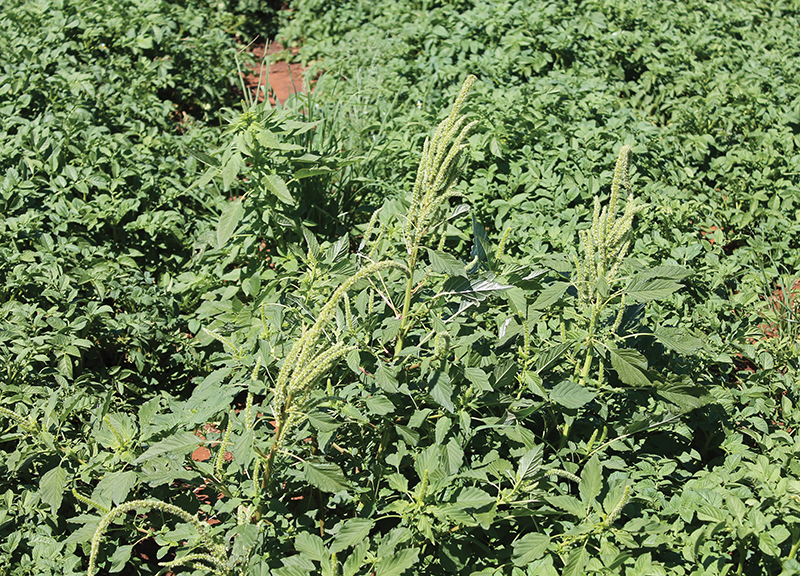
Weed plants whose productivity is increased through herbicides’ hormetic effects may outperform some of their compatriots in the weed cohort, thus perhaps making them more tolerant to the herbicide(s) compared to those individuals not benefiting from hormesis.
Herbicide resistance
Does such a differential herbicide effect matter in a practical sense? It certainly could make a difference in weed control efficacy, as it is common knowledge that weed plants differ in their tolerance to herbicides depending on their stage of development, i.e. individuals at a more advanced growth stage or with greater biomass tend to have greater tolerance to herbicides in general.
Could this situation increase the risk of herbicide resistance? Again, the answer is that it might, particularly if a single mechanism of action herbicide(s) is/are involved, and this practice is repeated over several growing seasons.
The progression of herbicide resistance in crop fields follows this trend: Susceptible (initially) → tolerant (transient phase) → resistant (eventually). The percentage distribution of these three classes of weed response will vary over time, from field to field, and farm to farm, depending on herbicide use practices.
For example, starting with a single mode-of-action herbicide, such as glyphosate, as the sole weed control method may initially provide perfect weed control. However, repeating this practice over three to five seasons could shift the weed response of particular species or even some individuals within a species, into the ‘herbicide-tolerant’ zone.
Further adherence to the same practice will likely push some tolerant individuals into the ‘herbicide-resistant’ class. In a worst-case scenario, herbicide-resistant individuals of one or more weed species could eventually dominate the weed spectrum. Measures to prevent and mitigate herbicide resistance are well documented and much preached, therefore it is essential that users of herbicides heed the guidelines. – Dr Charlie Reinhardt
Dr Charlie Reinhardt is a former professor and head of the Department of Plant Production and Soil Science at the University of Pretoria (UP), current research leader in the South African Herbicide Resistance Initiative (SAHRI) at UP, and an independent consultant on weeds and herbicides. Contact him at 083 442 3427 or dr.charlie.reinhardt@gmail.com